Union Mills’ Terrain Profile: Why Tracked Equipment Matters
Rutherford County’s foothills terrain—where Union Mills, Gilkey, and surrounding communities are located—presents challenges that separate competent contractors from those who create dangerous situations and expensive failures. Slopes that would be simple grading projects in flat Piedmont or Coastal Plain areas become complex engineering problems when grades exceed 15-20%. Rocky soil that breaks standard equipment buckets requires purpose-built machines. And mountain storms deliver rainfall intensities that overwhelm drainage systems designed for gentler terrain.
- Slope Stability & Equipment Safety: Operating heavy equipment on slopes requires tracked machines with low centers of gravity and operators who understand working angles. Wheeled backhoes and skid steers that work fine on flat ground become unstable on 20-30 degree slopes—tipping sideways, sliding downhill, or losing traction at critical moments. Professionals in our network operate tracked excavators and bulldozers designed for slope work, understand safe working angles for different soil conditions, and know when grades exceed equipment limitations requiring engineered solutions.
- Rocky Foothills Soil: Unlike Piedmont clay that excavators can dig or Coastal Plain sand that moves easily, foothills soil includes decomposed granite, bedrock outcrops, and embedded boulders. Standard residential-grade equipment struggles with this material—buckets bend, hydraulic cylinders strain, and contractors make excuses about “unexpected conditions” that anyone with mountain experience would have anticipated. Professionals in our network bring equipment sized for rocky excavation and understand when rock hammers or alternative approaches become necessary.
- Mountain Storm Intensity: Rutherford County experiences intense rainfall events where 2-3 inches fall in hours, overwhelming drainage systems and creating flash flooding on steep slopes. Grading and drainage solutions that work in areas with gentler rain patterns fail catastrophically in mountain conditions. Professionals in our network design water management for mountain storm intensity, not textbook formulas based on flatland conditions.
Common Site Development Issues in Union Mills
1. Steep Driveway Washouts: When Gravity Wins
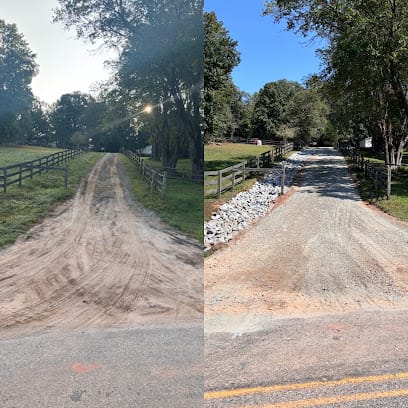
Mountain properties around Union Mills, Gilkey, and Rutherfordton often feature steep driveways—necessary to gain elevation from road level to building sites. When driveways are graded without proper engineering, the first major storm reveals the problem: water channelizes down the center, washing away gravel, creating deep ruts, and leaving the driveway impassable. Repeated gravel applications provide temporary fixes until the next storm repeats the cycle.
The problem intensifies on driveways exceeding 12-15% grades (roughly 7-8 degrees). At these slopes, water velocity during storms overcomes most gravel’s resistance to movement. Round river gravel washes away immediately. Even crusher run (angular stone that normally locks together) can be displaced by high-velocity water flow. Without proper water management—water bars, turnouts, crown grading—steep driveways become maintenance nightmares requiring annual regrading and gravel replacement.
Professionals in our network engineer driveways for mountain conditions from the start. They install water bars (diagonal berms) every 50-100 feet on steep grades to intercept runoff and divert it off the driveway before velocity builds. They crown driveways so water sheds to both sides rather than channelizing down the center. They use angular crusher run that interlocks mechanically rather than relying on weight alone. And for grades approaching 15-18%, they evaluate whether switchbacks are necessary—accepting longer driveway length to reduce maximum grade and prevent washout problems.
2. Land Clearing on Slopes: Safety and Erosion
Clearing wooded mountain properties requires different equipment and techniques than flatland clearing. On slopes exceeding 20 degrees, wheeled equipment becomes dangerous—skid steers and wheeled loaders lose traction on side slopes, tip when working across grades, and create hazards for operators. Standard clearing approaches that work in flat areas—pushing trees over with bulldozers, piling debris for burning—become impractical or dangerous on slopes.
Forestry mulching using tracked mulchers provides safer, more effective clearing for sloped terrain. These machines remain stable on grades that would defeat wheeled equipment, grind trees and stumps to mulch that stays in place preventing erosion, and eliminate debris piles that would be dangerous to burn on slopes. The resulting mulch layer provides immediate erosion control—critical in mountain terrain where bare soil on slopes erodes aggressively during the first rain.
Professionals in our network operate tracked forestry mulchers capable of working on 25-30 degree slopes safely. They understand which trees to preserve for long-term erosion control, how to work across slopes without creating unstable conditions, and when grades exceed safe limits requiring alternative approaches like selective hand clearing. They also understand that clearing mountain property isn’t just about removing vegetation—it’s about managing erosion through careful timing, leaving root systems for soil stability, and establishing ground cover before storm season.
3. Septic Installation in Rocky Mountain Soil
Mountain properties present unique septic challenges: shallow soil depth over bedrock limits drainfield options, rocky conditions make excavation difficult and expensive, slopes complicate gravity-flow designs, and rocky soil can damage tanks and pipes during installation. Properties that look perfect for development often have septic limitations that only become apparent during excavation—bedrock at 3 feet when you need 5 feet for conventional drainfields, boulders where the tank needs to go, or slopes so steep that pump systems become necessary.
Professionals in our network bring tracked excavators capable of digging through rocky foothills soil and experience with mountain septic challenges. They evaluate properties realistically during planning—identifying areas with adequate soil depth, planning for rock excavation costs, and recommending engineered solutions (mound systems, pump systems) when conventional gravity designs won’t work. They also understand that on sloped properties, tank and drainfield placement becomes critical—improper locations create access problems for future pumping or risk system failure when equipment can’t reach components.
4. Erosion Control on Disturbed Mountain Slopes
The biggest mistake contractors make on Union Mills-area properties: clearing and grading without immediate erosion control. On flat ground, you might postpone seeding until convenient. On mountain slopes, the first rain after soil disturbance creates erosion that can destroy weeks of work—gullies that form in hours, sediment that washes onto neighbor properties triggering complaints and county violations, and slope failures where disturbed soil slumps downhill.
Effective erosion control in mountain terrain requires immediate action after grading: installing silt fences at low points to trap sediment, applying straw mulch or erosion control blankets to exposed soil, establishing temporary seeding within days of final grading, and creating drainage features that slow water velocity. Professionals in our network integrate erosion control into every phase of site work—not as an afterthought, but as simultaneous operations that prevent problems rather than reacting to failures.
Mastering Foothills Terrain: The Tracked Equipment Advantage
All Trax’s perfect 5.0-star reputation comes from understanding that mountain terrain requires specialized equipment and operator skills that standard residential contractors don’t possess. When slopes exceed safe limits for wheeled equipment, when rocky soil breaks standard machines, and when erosion control means the difference between successful projects and expensive failures, tracked equipment and mountain experience become non-negotiable.
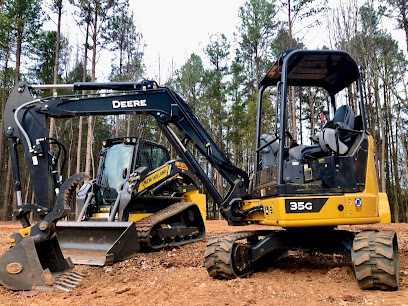
Tracked Excavators for Slope Work: Professionals in our network operate tracked excavators (not wheeled backhoes) with low centers of gravity and wide track bases that remain stable on slopes up to 30 degrees. These machines can work across hillsides, excavate on grades, and maintain traction in conditions where wheeled equipment would slide. For mountain property work—clearing slopes, grading hillside building pads, excavating septic systems on grades—tracked equipment provides the stability and capability that makes projects possible rather than hypothetical.
Forestry Mulching on Steep Ground: Tracked forestry mulchers equipped with slope-capable undercarriages clear wooded mountain properties safely and efficiently. Unlike bulldozers that push trees (creating dangerous situations on slopes) or crews with chainsaws and chippers (slow and expensive), forestry mulchers grind vegetation to mulch in place—providing immediate erosion control while clearing efficiently. Professionals in our network operate mulchers capable of grinding 12-inch trees on 25-degree slopes, leaving properties ready for development with erosion protection already established.
Driveway Engineering for Mountain Conditions: Mountain driveway construction requires more than grading and spreading gravel. Professionals in our network understand water management critical for steep grades: water bar placement that intercepts runoff before velocity builds, crown grading that sheds water to sides, proper base material compaction that prevents rutting, and appropriate gravel selection (angular crusher run vs. round stone). They also know when grades require switchbacks rather than straight climbs—accepting longer driveway length to achieve sustainable grades.
Rocky Soil Excavation Capability: Foothills soil conditions require excavators sized for rocky material—machines with adequate hydraulic power, buckets designed for rock, and operators who understand how to excavate around boulders rather than fighting them. Professionals in our network bring 20-30 ton tracked excavators (not 5-ton mini excavators) capable of moving rock, extracting embedded boulders, and completing mountain excavation projects efficiently rather than struggling with undersized equipment.
Complete Site Services for Rutherford County Properties
Our directory connects Union Mills-area property owners with professionals who provide comprehensive site development services for mountain and foothills terrain:
- Land Clearing & Forestry Mulching: Tracked forestry mulching capable of working on slopes up to 30 degrees. Complete vegetation removal grinding trees, stumps, and brush to mulch that provides immediate erosion control. Selective clearing preserving desirable trees and erosion-critical vegetation. Access path creation for equipment and construction vehicles. Site preparation that leaves properties ready for development with ground cover established.
- Excavation & Rock Work: Tracked excavator services using machines sized for rocky foothills soil. Basement and foundation excavation accounting for bedrock limitations. Septic system excavation including rock removal and tank/drainfield placement on sloped terrain. Utility trench excavation for water, electric, and sewer lines. Boulder removal and disposal or placement as decorative features. Equipment capable of working on slopes and in conditions where wheeled machines fail.
- Septic System Installation: Complete new system installation for mountain properties including site evaluation for soil depth and bedrock, engineered solutions for challenging conditions (mound systems, pump systems for steep slopes), permit coordination with Rutherford County Environmental Health, and installation using tracked equipment capable of accessing difficult sites. Understanding of mountain septic challenges and realistic assessment of property limitations.
- Steep Driveway Construction & Repair: Mountain driveway engineering including proper grade design, water bar installation for runoff management, crown grading to shed water, appropriate base material and compaction, and crusher run selection for steep grades. Washout repair addressing root causes rather than temporary gravel replacement. Switchback design and construction for properties where straight grades would be unsustainable. Maintenance programs preventing erosion through proper water management.
- Site Grading & Pad Preparation: Building pad preparation on sloped terrain including cut-and-fill operations, retaining wall base excavation, proper compaction to prevent settlement, and drainage design that manages mountain storm intensity. Yard area grading with appropriate slopes for drainage. Equipment capable of precise grading on hillsides without creating stability problems. Understanding of soil compaction and erosion control critical for mountain sites.
- Erosion Control & Water Management: Silt fence installation, erosion control blanket placement, temporary and permanent seeding, and straw mulching for exposed soil. Water bar construction for driveways and access paths. Swale installation to manage stormwater on slopes. French drain and curtain drain systems for wet areas or spring management. Solutions designed for mountain storm intensity rather than flatland conditions.
Why Locals Trust All Trax (5.0 Stars)
Based on Thermal City Road, All Trax has earned a perfect 5.0-star reputation by providing the tracked equipment capability and operator skill that Rutherford County’s foothills terrain demands. Our directory connects you with professionals who deliver safe, high-quality results on mountain properties where less experienced contractors create dangerous situations or expensive failures.
Operator Skill on Slopes: Operating heavy equipment on mountain terrain isn’t just about running machines—it’s about understanding slope stability, knowing safe working angles for different soil conditions, recognizing when grades exceed equipment limitations, and executing work without creating hazards. A perfect 5.0-star rating reflects hundreds of slope projects completed without accidents, equipment damage, or the dangerous shortcuts that less experienced operators attempt. Professionals in our network have the mountain experience and judgment that keeps projects safe and successful.
Equipment Appropriate for Conditions: Contractors who show up with wheeled backhoes for mountain work either don’t understand the terrain or are gambling with safety. Professionals in our network operate tracked excavators, tracked bulldozers, and tracked forestry mulchers designed for slope work—machines with low centers of gravity, wide track bases for stability, and undercarriages engineered for hillside operation. This equipment represents significant capital investment, but it’s what mountain terrain requires for safe, efficient work.
Understanding Mountain Challenges: A 5.0-star rating doesn’t come from working easy properties—it comes from successfully handling difficult conditions. Professionals in our network understand foothills challenges: rocky soil that breaks standard equipment, erosion that starts within hours of disturbance, storm intensity that overwhelms inadequate drainage, and slopes that require engineering rather than optimism. They price realistically for mountain conditions, plan for rock excavation, and implement erosion control proactively—preventing the “unexpected conditions” that cause projects to fail or costs to explode.
Local Knowledge & Accountability: Union Mills, Gilkey, Rutherfordton, and surrounding Rutherford County communities are close-knit areas where reputation matters. A 5.0-star rating reflects years of completed projects where contractors delivered what they promised, handled challenges professionally, and maintained accountability when issues arose. In mountain communities, word travels fast about contractors who cut corners, damage properties through careless operation, or disappear when problems develop. Perfect ratings reflect consistent performance over time.
Serving Union Mills and Rutherford County Foothills
From Thermal City Road in Union Mills, our network serves the entire Rutherford County foothills region—mountain properties in Gilkey, sloped homesites around Rutherfordton, wooded acreage near Marion, and challenging terrain throughout Mill Spring, Bostic, and surrounding communities. Whether you’re a property owner clearing land for your mountain dream home, a builder constructing on challenging lots, or a homeowner needing steep driveway repairs after storm washouts, you’ll find professionals with the tracked equipment and slope expertise that Rutherford County terrain demands.
In terrain where traction determines whether equipment can work safely, where slopes exceed standard contractor capabilities, and where mountain storms reveal inadequate engineering within hours, working with contractors who have appropriate tracked equipment and operator experience isn’t optional—it’s the difference between successful projects and expensive failures. Raw mountain acreage becomes buildable homesites through skilled operation of purpose-built machines—one precisely graded slope at a time.
Ready to Start Your Mountain Property Development?
Whether you need steep wooded slopes cleared safely, driveways engineered to withstand mountain storms, septic systems installed in rocky soil with shallow bedrock, or complete site development on terrain that challenges standard contractors, our directory connects you with professionals who bring the tracked equipment and mountain expertise that Rutherford County’s foothills terrain requires.
Call All Trax at (828) 375-7556 or Find Vetted Union Mills Heavy Equipment Professionals in our Directory. Compare providers, read reviews from Rutherford County property owners, and schedule service with confidence knowing you’re working with contractors who operate tracked equipment designed for slope work—delivering safe, high-quality results on mountain properties where wheeled equipment and flatland experience create problems rather than solutions.