Mt Gilead’s Terrain Profile: Uwharrie Mountain Challenges
Montgomery County’s geography is defined by the Uwharrie Mountains—North America’s oldest mountain range, worn down over 500 million years to rolling hills and ridges with granite bedrock close to the surface. This ancient geology creates site development challenges distinct from both the Piedmont’s clay and the Coastal Plain’s sand: shallow soil depth over bedrock, rocky excavation that breaks lesser equipment, steep slopes requiring engineered grading, and hardwood forests dense enough to challenge even heavy machinery.
- Shallow Bedrock Depth: Unlike areas where soil extends 6-10 feet deep, Uwharrie terrain often has granite bedrock at 2-4 feet. This limits options for basements, creates challenges for septic drainfield placement, and means every excavation project hits rock sooner than contractors from flatland areas expect. Professionals in our network bring rock-capable equipment—excavators with hydraulic hammers, bulldozers with ripper attachments—and understand when blasting becomes necessary for deeper cuts.
- Steep Slope Challenges: Properties around Lake Tillery and throughout the Uwharrie foothills often feature 15-30% grades or steeper. Building on slopes requires cut-and-fill grading to create level pads, engineered retaining solutions to prevent erosion, and careful water management to control runoff. Amateur operators create drainage problems and erosion; experienced professionals shape terrain to work with gravity rather than fighting it.
- Dense Hardwood Forests: Uwharrie’s oak-hickory forests include mature hardwoods with root systems that challenge lightweight clearing equipment. Surface clearing removes trees, but stumps and root masses require heavy machinery to extract completely. Professionals in our network use forestry mulchers that grind stumps to mulch, tracked excavators that can pull deep root systems, and understand when to leave root masses for erosion control on slopes.
Common Site Development Issues in Mt Gilead
1. Rocky Soil Excavation: When Dirt Turns to Stone
The most common surprise for property owners developing Uwharrie land: what looks like soil on the surface often turns to decomposed granite and bedrock within 2-4 feet. Standard excavation equipment—backhoes sized for residential work, small bulldozers—can’t handle this material. Buckets bend, hydraulic systems strain, and projects grind to a halt while contractors bring in equipment they should have had from day one.
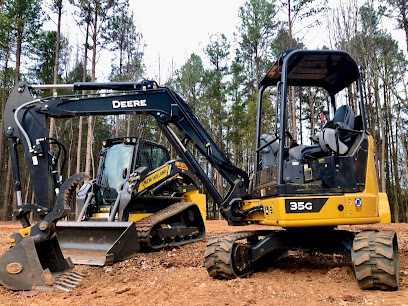
Professionals in our network arrive prepared for Uwharrie conditions. They bring tracked excavators (not wheeled backhoes) with buckets designed for rocky material, hydraulic hammers for breaking bedrock when necessary, and bulldozers with ripper attachments for loosening compacted stone layers. When they quote a job, they’re pricing based on rocky excavation rates—not hoping they’ll get lucky and hit soft soil all the way down.
For septic system installation, this rocky reality means careful site selection. You can’t just pick the most convenient flat spot and expect to dig drainfield trenches. Professionals evaluate the property during initial clearing, identifying areas with adequate soil depth over bedrock and planning tank and drainfield placement accordingly. Sometimes this means locating systems farther from the house than ideal, or using pump systems to reach suitable areas—but these engineered solutions beat discovering mid-installation that your chosen location has 18 inches of soil over solid granite.
2. Steep Slopes: Engineering Water Management
Lake Tillery properties and Uwharrie foothill homesites frequently feature dramatic slopes—great for views, challenging for site development. Building pads require significant cut-and-fill work: cutting into the uphill slope to create a level area, using that material to fill and extend the downhill edge. Get the grading wrong and you create problems: water that ponds near foundations, erosion that undermines fills, or slopes too steep for safe access.
Experienced operators understand that grading steep terrain isn’t just about making it flat—it’s about managing water. They create positive drainage away from building pads, install swales to redirect runoff around cut slopes, and compact fills in layers to prevent settlement. They know that the angle of repose for fill material in Uwharrie’s clay-rock mix, understand when retaining walls become necessary, and can identify soils suitable for steep slopes versus those that will slump after the first heavy rain.
For septic systems on sloped properties, professionals often recommend or require pump systems. Gravity-fed drainfields on steep slopes create hydraulic loading problems—effluent flows too quickly to the bottom laterals, overloading those lines while upper laterals remain dry. Pump systems with pressure distribution solve this by forcing even flow across all laterals regardless of slope. It’s a more expensive installation, but it’s the engineered solution that works in Uwharrie terrain.
3. Erosion Control: The Clay and Gravity Problem
Red clay on steep Uwharrie slopes erodes aggressively once you remove vegetation. A single heavy rain after clearing can create gullies 2-3 feet deep, washing away topsoil and undermining driveways, building pads, and septic systems. Contractors who clear and grade without implementing erosion control create expensive repair problems—and may face county violations if sediment reaches streams or neighboring properties.
Professionals in our network integrate erosion control into every phase of site work. During clearing, they preserve vegetation buffers along drainage paths and property boundaries. During grading, they install silt fences at low points to trap sediment, create temporary swales to control water flow, and rough-grade slopes to prevent channelized flow. Before leaving a site, they seed exposed soil, apply straw mulch or erosion control blankets, and ensure water drains in controlled paths—not as sheet flow that creates gullies.
For properties being developed in phases (clearing one year, building the next), professionals can leave root masses and stumps in strategic locations for temporary erosion control, grinding them out later once permanent vegetation is established. This phased approach prevents the common scenario where a beautifully graded lot turns into an eroded wasteland after a single wet season.
4. Building Pad Preparation: Getting the Foundation Right
Uwharrie properties often require significant earthwork to create level building pads. Unlike flatland sites where you might grade 6-12 inches, mountain and foothill lots may need 3-6 feet of cut or fill to establish proper building areas. This creates foundation challenges: are you building on undisturbed bedrock (excellent), compacted fill (acceptable if done properly), or poorly compacted material that will settle over time (disaster)?
Experienced excavation contractors understand the difference between “making it look flat” and “preparing a foundation-worthy pad.” They excavate to suitable bearing material—either bedrock or dense native soil—before filling. They compact fill material in 8-12 inch lifts, testing density as they go. They create positive drainage away from the pad perimeter. And they document cut and fill depths so builders and inspectors understand what’s native material versus engineered fill.
For pads requiring significant fill depth, professionals may recommend geotechnical testing to verify compaction meets building code requirements. In Montgomery County’s rocky terrain, some building departments require compaction testing for fills exceeding certain depths. Working with contractors who understand these requirements prevents the nightmare scenario of failing foundation inspections after your pad is complete.
Taming the Uwharrie Terrain: Integrated Site Development
Successful property development in Mt Gilead, Troy, Albemarle, and the Lake Tillery area requires coordinating land clearing, excavation, grading, and septic installation as an integrated process. When the same contractor handles all phases with equipment sized for Uwharrie conditions, you get efficiency and accountability that using multiple contractors can’t match.
Heavy Equipment for Rocky Conditions: Professionals in our network bring tracked excavators (20-30 ton class) capable of digging through decomposed granite, bulldozers with ripper attachments for breaking up compacted layers, and forestry mulchers that can grind 12-inch hardwood stumps. This isn’t suburban-grade equipment struggling with mountain terrain—these are machines sized for the Uwharrie’s rocky reality.
Clearing Without Burning: Montgomery County’s proximity to Uwharrie National Forest and residential development near wooded areas makes burn permits difficult to obtain and risky to use. Forestry mulching eliminates this problem by grinding trees, stumps, and brush into mulch that’s spread on-site. This creates an immediate erosion control layer, returns organic matter to soil, eliminates burn pile liability, and allows immediate progression to grading without waiting for permits or weather windows.
Grading for Drainage and Function: Flat pads aren’t enough in Uwharrie terrain—you need engineered drainage that prevents water from pooling near foundations, roads, or septic systems. Professionals in our network use laser levels and GPS guidance to establish precise grades, create swales that redirect runoff around vulnerable areas, and shape terrain to work with natural drainage patterns rather than fighting them.
Septic Installation in Challenging Soil: When excavation crews understand bedrock depths and soil conditions from having cleared and graded the property, septic installation becomes more efficient. They’ve already identified suitable drainfield locations, understand where rock will be encountered, and can plan tank placement and line routing accordingly. This integrated knowledge prevents costly redesigns or compromised installations.
Complete Earthwork Services for Montgomery County
Our directory connects Mt Gilead-area property owners with professionals who provide comprehensive site development services for Uwharrie terrain:
- Land Clearing & Forestry Mulching: Heavy-duty vegetation removal using tracked mulchers that grind trees, stumps, and brush to mulch. Clearing dense hardwood forests including oak, hickory, and pine. Selective clearing that preserves desirable trees while removing undergrowth and invasive species. Stump grinding and root removal for areas requiring clean excavation. Creates immediate erosion control layer and eliminates burn permit requirements.
- Excavation & Rock Work: Tracked excavator services for digging basements, footings, utility trenches, and septic systems in rocky Uwharrie soil. Hydraulic hammer attachments for breaking bedrock when necessary. Rock removal and disposal or on-site placement as decorative features or erosion control. Equipment capable of handling decomposed granite and solid bedrock—not lightweight machines that fail when hitting rock.
- Site Grading & Pad Preparation: GPS-guided bulldozer work for creating building pads, driveway routes, and yard areas. Cut-and-fill grading that uses excavated material efficiently and creates proper drainage. Laser-level precision for establishing foundation-grade pads with verified compaction. Slope stabilization and retaining wall base preparation for properties requiring engineered solutions.
- Septic System Installation: Complete new system installation including site evaluation for soil depth and bedrock, permit acquisition, tank placement in rocky terrain, drainfield construction with engineered solutions for shallow soil, and final inspection coordination. Pump systems and mound systems for properties where conventional gravity systems won’t work. Installation techniques that account for Uwharrie’s rocky conditions and prevent rock damage to tanks and lines.
- Driveway Construction & Repair: All-weather access routes with proper base material for mountain terrain, drainage structures including culverts and roadside swales, and grades suitable for steep approaches common around Lake Tillery. Gravel or crusher run driveways that shed water rather than eroding. Approach angles and turning radii that accommodate delivery trucks, equipment, and emergency vehicles on sloped properties.
- Erosion Control & Water Management: Silt fence installation, temporary and permanent swale construction, sediment basin excavation, and stormwater management for properties with challenging drainage. Seeding and mulching programs that establish vegetation on disturbed slopes. French drain and curtain drain installation for wet areas or where springs emerge from bedrock. Long-term solutions that prevent erosion and protect property investments.
Why Locals Trust Hurley’s Earthworx (5.0 Stars)
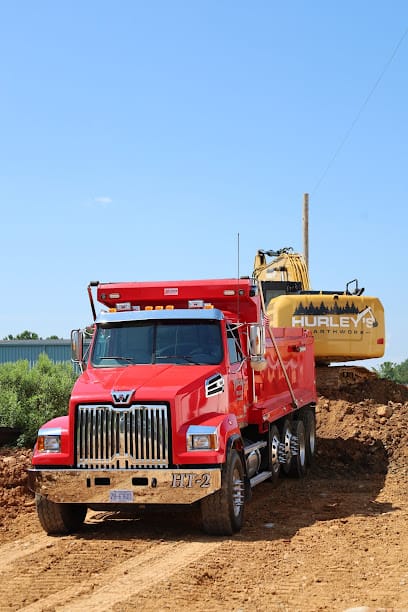
Located on NC-73 West, Hurley’s Earthworx has earned a perfect 5.0-star reputation by providing the skilled heavy equipment operation that Montgomery County’s Uwharrie terrain demands. Our directory connects you with professionals who do what they say they’re going to do—show up when promised, bring equipment sized for the job, and complete work that lasts through mountain weather and rocky ground.
Operator Skill & Experience: Running heavy equipment in Uwharrie’s rocky, sloped terrain requires operator skill beyond what suburban flatland work develops. Professionals in our network understand how to grade cut slopes at stable angles, how much material excavators can move in decomposed granite versus bedrock, and when slopes exceed safe working angles for tracked machines. They’ve worked enough Montgomery County properties to know where bedrock typically outcrops, which areas tend to have springs, and what the rocks look like when you’re about to hit solid granite.
Equipment Investment: A 5.0-star reputation doesn’t come from showing up with undersized equipment and hoping for the best. Professionals in our network maintain fleets sized for Uwharrie conditions: 20-30 ton excavators (not 5-ton mini excavators), D6-D7 class bulldozers with ripper attachments (not compact track loaders), and forestry mulchers capable of grinding 12-inch hardwoods. This equipment represents significant capital investment—but it’s what transforms rocky Uwharrie terrain into functional homesites efficiently.
Integrated Project Knowledge: When the same contractor clears your lot, excavates your pad, grades your driveway, and installs your septic system, they develop complete site knowledge. They know where they encountered rock, where soil depth is adequate, where water tends to flow during rain, and where slopes approach stability limits. This integrated understanding prevents problems that arise when clearing contractors hand off to grading contractors who hand off to septic installers—each seeing only their piece of the project without understanding the whole.
Realistic Timelines & Pricing: Contractors who don’t regularly work Uwharrie terrain often underbid jobs based on flatland productivity rates, then struggle to complete work profitably. Professionals in our network price based on realistic rocky-soil production rates, account for equipment wear from rock contact, and include time for engineered solutions like erosion control and drainage management. Their quotes may not be the lowest, but they reflect what the work actually requires—and they deliver on schedule without excuses about “unexpected conditions” that any Uwharrie-experienced contractor would have anticipated.
Serving Mt Gilead and the Lake Tillery Region
From NC-73 West in Mt Gilead, our network serves the entire Montgomery County Uwharrie region—lakefront properties around Lake Tillery and Badin Lake, wooded lots in Troy and Albemarle, and rural acreage throughout the Uwharrie foothills. Whether you’re a property owner preparing inherited land for development, a builder constructing custom homes on challenging terrain, or a homeowner needing septic system installation where bedrock complicates conventional approaches, you’ll find professionals with the heavy equipment and operator skill to handle Uwharrie’s rocky ground.
In terrain where lightweight equipment fails and inexperienced operators create erosion disasters, working with contractors who bring appropriate iron and mountain experience isn’t optional—it’s the difference between successful site development and expensive problems. Raw Uwharrie acreage becomes buildable homesites through skilled earthmoving, one precisely graded cut at a time.
Ready to Start Your Site Development or Septic Installation?
Whether you need land cleared and graded for construction, excavation for basements or utilities in rocky soil, septic system installation where shallow bedrock complicates conventional designs, or driveway construction on steep mountain approaches, our directory connects you with professionals who bring the equipment, operator skill, and Uwharrie terrain experience that Montgomery County properties demand.
Call Hurley’s Earthworx at (910) 975-0518 or Find Vetted Mt Gilead Excavation and Site Preparation Professionals in our Directory. Compare providers, read reviews from Montgomery County property owners, and schedule service with confidence knowing you’re working with contractors who have the heavy iron to move Uwharrie’s rocky earth—and the skill to do it right the first time.