Fort Mill’s Terrain: Why Red Clay Demands Proper Drainage
York County sits in South Carolina’s Piedmont region, characterized by red clay soil—dense, iron-rich earth that defines the landscape from Fort Mill to Rock Hill. This Cecil and Pacolet series clay presents persistent drainage challenges: fine particles pack tightly, creating ground that sheds water across the surface rather than absorbing it. When rain falls on red clay, it runs off instead of soaking in, pooling in low spots, eroding slopes, and saturating areas where water accumulates.
- Rapid Development Impact: Fort Mill’s explosive growth over the past two decades created thousands of new subdivisions—many graded quickly without proper attention to drainage. Homes built on lots where water naturally wants to flow now fight constant drainage battles because the original grading didn’t account for how water moves across the property.
- Septic System Vulnerability: Drainfields need unsaturated soil to function. When surface water pools over or near a drainfield, it prevents effluent from percolating, causing system backups. In York County’s clay soil, this happens quickly—a single poorly graded swale directing water toward your drainfield can cause system failure within months.
- Foundation Threats: Standing water against foundations creates hydrostatic pressure, forcing moisture through concrete and causing basement leaks, crawlspace flooding, and structural damage. Red clay’s poor absorption means water doesn’t dissipate naturally—it requires engineered drainage solutions.
- Erosion Acceleration: Clay soil erodes rapidly when water flows across slopes. Unsealed driveways wash out, landscaping erodes, and gullies form quickly during heavy rain. Proper grading and erosion control measures prevent these ongoing maintenance headaches.
Common Drainage & Site Preparation Challenges in Fort Mill
1. Standing Water & Soggy Yards: The Grading Problem
When yards stay wet for days after rain—creating muddy areas where grass won’t grow, preventing children from playing outside, and breeding mosquitoes—the culprit is almost always improper grading. Properties should be graded so water flows away from structures and toward designed drainage points. But many Fort Mill homes, particularly in rapidly built subdivisions like Baxter Village or Indian Land developments, were graded for construction efficiency rather than long-term drainage. Low spots collect water, poorly designed swales direct flow toward buildings instead of away, and compacted clay prevents what little absorption might otherwise occur. Fixing this requires regrading—reshaping the property’s surface to create positive drainage away from structures and toward appropriate discharge points.
2. Drainfield Saturation: When Surface Water Kills Septic Systems
Septic drainfields operate by dispersing effluent into unsaturated soil where bacteria break down contaminants. When surface drainage directs water toward the drainfield area, it saturates the soil, eliminating the air spaces needed for bacterial action and preventing effluent from percolating. In York County’s clay soil, this creates immediate problems—toilets back up, drains slow down, and sewage may surface in the yard. The solution isn’t septic system repair; it’s drainage correction. Installing French drains or curtain drains uphill from the drainfield intercepts surface water before it reaches the septic area, keeping the soil unsaturated and allowing the system to function properly. This drainage work often costs $2,000-$5,000 but prevents the $15,000-$25,000 expense of drainfield replacement caused by water damage.
3. Erosion & Washout: Red Clay’s Destructive Movement
Unpaved driveways in Tega Cay or Rock Hill wash out with every heavy rain, creating ruts and depositing sediment into storm drains. Slopes erode, exposing tree roots and undermining landscaping. Swales become gullies, cutting deeper channels with each storm. Red clay erodes aggressively when water flows across unprotected surfaces because the fine particles suspend easily in moving water. Controlling this erosion requires multiple approaches: proper grading to manage water velocity, riprap or stone in areas where erosion is active, vegetation establishment to hold soil, and drainage systems that direct water flow without creating erosive velocities. Simply dumping gravel on a problem area rarely works—the gravel sinks into clay, and erosion continues underneath.
4. Site Preparation for New Construction: Getting It Right From the Start
Building on undeveloped land in Indian Land or Springfield requires more than clearing trees. Proper site preparation includes: analyzing existing drainage patterns and designing grading that maintains or improves them, clearing vegetation and removing stumps without compacting soil excessively, establishing erosion control measures before construction begins, and creating building pads with proper slopes for foundation drainage. Many construction problems—wet basements, failing septic systems, eroded slopes—trace back to inadequate site preparation. Contractors focused on speed often ignore drainage implications, creating properties that fight water problems from day one. Professional site preparation considers how the property will drain after construction, not just during it.
5. Compacted Clay & Poor Percolation: The Development Legacy
Construction equipment compacts red clay soil, destroying what little natural drainage it had. Subdivisions in Fort Mill’s growth corridor often have severely compacted yards where water sits on the surface because construction traffic compressed the soil into an impermeable layer. Grass struggles to grow, rain doesn’t soak in, and homeowners assume they have “bad drainage” when the problem is compacted soil. Fixing this requires more than surface work—deep tilling or subsoiling breaks up the compacted layer, allowing water infiltration. Combined with proper grading and drainage systems, this restores the property’s ability to manage water.
Complete Drainage & Earthwork Solutions
Our directory connects Fort Mill property owners with KG LandWorx, a provider offering comprehensive excavation and drainage services designed for York County’s red clay challenges:
- Grading & Regrading: Reshaping property surfaces to create positive drainage away from buildings, eliminate standing water, and direct flow to appropriate discharge points. Uses laser-guided equipment for precision grading that ensures water flows where designed. Critical for protecting foundations, drainfields, and property usability.
- French Drain & Curtain Drain Installation: Subsurface drainage systems that intercept and redirect groundwater or surface water before it reaches problem areas. French drains use perforated pipe surrounded by gravel to collect water and direct it away. Curtain drains intercept water flowing downhill before it saturates lower areas. Essential for protecting septic drainfields, preventing basement flooding, and managing water on sloped properties.
- Site Preparation & Land Clearing: Complete site development for new construction—clearing vegetation, removing stumps, rough grading for drainage, and establishing erosion control. Includes analysis of existing drainage patterns and design grading that works with natural water flow rather than against it. Prevents the drainage problems that plague poorly prepared sites.
- Erosion Control & Stabilization: Solutions for properties experiencing active erosion—riprap installation in channels, slope stabilization with retaining structures, vegetation establishment for long-term soil holding, and drainage modifications to reduce water velocity. Addresses both immediate erosion and underlying causes.
- Gravel Driveways & Access Roads: Properly constructed gravel surfaces for driveways and farm roads—includes excavation, fabric installation to prevent gravel sinking into clay, proper base material, and drainage design to prevent washout. Durable solutions for properties where paved driveways aren’t practical or desired.
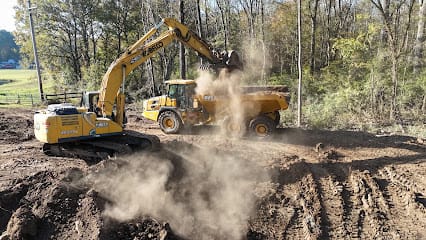
- Excavation Services: Heavy equipment work for utility installation, foundation excavation, pond construction, and general earthmoving. Operates equipment sized appropriately for residential and light commercial projects—machines that can access Fort Mill and Tega Cay properties without destroying landscaping.
- Drainage System Repair: Correction of failing or inadequate existing drainage—replacing collapsed drain pipes, regrading swales that don’t function properly, extending drainage systems to handle increased water flow, and addressing drainage problems that develop over time.
Why Fort Mill & York County Trust KG LandWorx (4.7 Stars)
Problem-Solving Focus: Many excavation contractors simply move dirt where told. KG LandWorx approaches drainage work as problem-solving—analyzing why water behaves the way it does on your property, understanding how red clay soil affects solutions, and designing earthwork that addresses causes rather than just symptoms. This engineering mindset separates effective drainage solutions from temporary fixes that fail after the next heavy rain.
Precision Earthwork: Modern excavation uses laser-guided equipment and GPS grading systems to achieve precise slopes—critical for drainage work where half-degree differences determine whether water flows correctly. Their 4.7-star reputation reflects this precision approach. They grade properties to specific tolerances, ensuring water drains as designed rather than hoping gravity sorts it out.
Red Clay Expertise: Years of working in York County’s red clay means understanding how this soil behaves—how it compacts, how it erodes, how it responds to different drainage solutions. They know which approaches work in Piedmont clay and which fail despite working in other soil types. This specialized knowledge prevents the trial-and-error approach that wastes homeowner money.
Septic System Protection: Unlike general excavation contractors who focus solely on dirt moving, KG LandWorx understands the relationship between surface drainage and septic system longevity. They know where drainfields typically locate on Fort Mill properties, how surface water threatens these systems, and how to design grading and drainage that protects septic infrastructure. For properties with septic systems, this knowledge prevents expensive system failures caused by water damage.
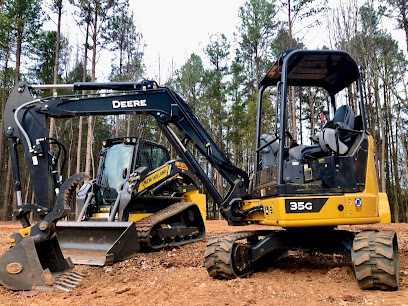
Equipment for the Job: Drainage and grading work requires appropriate equipment—machines powerful enough to reshape terrain but controlled enough for precision work on residential properties. KG LandWorx operates a fleet sized for Fort Mill area projects, avoiding both the inadequate equipment of handyman operations and the excessive machinery of commercial contractors that can’t access residential lots without destroying everything.
Serving Fort Mill Parkway to Rock Hill
KG LandWorx’s Fort Mill Parkway location positions them perfectly to serve York and Lancaster County’s growth corridor. From Tega Cay’s lakefront properties—where drainage often requires sophisticated solutions due to lot configurations and proximity to water—to Indian Land’s rapidly developing residential areas where new construction demands proper site preparation, they serve properties at every development stage.
Baxter Village’s compact lots present unique drainage challenges—houses close together, limited space for water management, and systems that must work efficiently in constrained areas. Rock Hill’s mix of established neighborhoods and new developments means varied drainage needs—some properties fighting decades-old drainage problems, others preventing issues during new construction.
Springfield and Caroline Crossing represent Fort Mill’s continued expansion—areas where getting site preparation right the first time prevents the chronic drainage issues that plague older subdivisions. Whether you’re fixing a long-standing wet yard problem, preparing land for construction, or protecting your septic system from surface water damage, you’re working with a contractor who understands York County’s red clay and has the equipment to shape it correctly.
Dealing With Standing Water or Planning Site Work?
Call KG LandWorx at (980) 748-5139 or Request Service Online for drainage solutions, site preparation, grading, or excavation services in Fort Mill and throughout York County.
In red clay territory, effective water management requires more than moving dirt—it demands understanding how water behaves on your terrain and engineering solutions that work with your property’s natural characteristics. Our vetted provider delivers the precision earthwork and drainage expertise that earned them a 4.7-star reputation solving Fort Mill’s toughest water problems.