Rock Hill’s Red Clay Profile: Why Heavy Equipment and Expertise Matter
York County sits in South Carolina’s Piedmont region, dominated by dense red clay soil mixed with fractured granite and quartz rock. This combination creates excavation challenges that light-duty equipment cannot handle and requires operators who understand soil mechanics, drainage patterns, and the relationship between site preparation and long-term infrastructure performance. For land development, this creates three technical requirements:
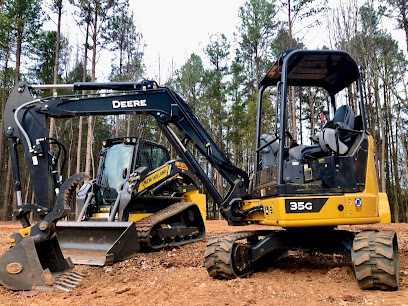
- Heavy-Duty Equipment for Dense Clay and Rock: York County’s red clay is cohesive, plastic when wet (becoming sticky and difficult to work), and often contains rock fragments from underlying granite bedrock. Excavating through this material requires: powerful excavators with hydraulic force sufficient to break through compacted clay and rock (not light backhoes that struggle and waste time), bulldozers with adequate weight and horsepower to grade and compact clay effectively, and operators who understand how to work clay at proper moisture levels (too wet and it becomes unworkable mud, too dry and it’s concrete-hard). Light equipment takes days to accomplish what proper heavy machinery completes in hours—and often creates poor results (inadequate compaction, rough grading, incomplete excavation). Land Management Services, LLC operates professional-grade equipment appropriate for York County conditions, completing work efficiently and to specifications that prevent settling, erosion, and drainage failures.
- Forestry Mulching to Preserve Topsoil: Traditional land clearing with bulldozers—pushing trees over and scraping vegetation away—destroys topsoil (the organic-rich surface layer critical for landscaping and erosion control), creates massive debris piles requiring expensive hauling and disposal, and leaves sites scarred and prone to erosion. Forestry mulching uses specialized equipment (mulching heads attached to excavators or dedicated forestry mulchers) to grind trees, stumps, and underbrush into fine mulch that’s spread across the site. This preserves topsoil, eliminates debris hauling costs, provides immediate erosion control (mulch layer protects soil from rain), and creates usable sites faster than conventional clearing. For Rock Hill properties, forestry mulching is particularly valuable on wooded lots being developed for homes—clearing building footprints and septic areas while preserving desirable trees and minimizing environmental impact.
- Precision Grading for Drainage and Septic Health: York County’s red clay drains slowly—water percolates at 60-120 minutes per inch compared to 20-40 minutes in sandy soils. This means surface water management is critical: sites must be graded to channel rainfall away from buildings and septic drainfields, preventing saturation that causes system failures and foundation problems. Precision grading creates: positive drainage (minimum 2% slope away from structures and septic areas), perimeter swales (shallow channels intercepting upslope runoff and directing it to appropriate outlets), and proper elevation relationships (drainfields positioned higher than surrounding areas to prevent pooling). Land Management Services, LLC approaches grading as engineering—not just pushing dirt around—using laser levels or GPS-guided equipment to achieve exact slopes and elevations that protect infrastructure investments.
If you’re building in Fort Mill’s newer developments with municipal services and relatively flat lots, site prep may be straightforward. But if you’re developing raw land in Rock Hill, clearing wooded properties in Newport or Catawba, or working with sloped terrain in Lesslie where red clay and rock create excavation challenges and drainage is critical for septic systems, you need contractors with heavy equipment expertise and an understanding of how site preparation affects everything built on it.
Common Land Development and Excavation Issues in Rock Hill & York County
1. Raw Land to Build-Ready Site: Complete Development Preparation
The most comprehensive service Land Management Services, LLC provides is transforming raw, undeveloped land into construction-ready homesites. This integrated process includes: initial site assessment (walking properties with owners/builders to determine optimal building locations, septic placement, and driveway access), land clearing (removing trees, stumps, and vegetation using forestry mulching or conventional methods depending on site conditions and owner preferences), rough grading (establishing drainage flow patterns and creating building pad elevation), septic area preparation (clearing and grading drainfield locations with proper slope to prevent water accumulation), building pad excavation (creating level areas for foundations with proper elevation above surrounding grade), driveway grading (establishing access routes with appropriate slope and base preparation), drainage infrastructure (installing swales, culverts, or French drains managing surface water), and finish grading (final smoothing and contouring preparing sites for landscaping and construction).
This comprehensive approach prevents the problems common when multiple contractors work independently: clearing companies that damage areas where septic systems will be located (compacting soil with heavy equipment or mixing topsoil with subsoil), grading contractors who don’t understand septic setback requirements (positioning building pads in locations forcing expensive septic redesigns), and septic installers discovering sites weren’t graded for proper drainage (requiring additional work or accepting marginal conditions that lead to future failures). Land Management Services, LLC coordinates the entire sequence, ensuring each phase supports the next and the finished site functions as an integrated system.
Cost varies dramatically by property characteristics: small cleared lots (under 1 acre, minimal clearing needed) run $5,000-$12,000 for grading, pad creation, and drainage work. Wooded lots (1-3 acres requiring clearing, grading, and septic prep) run $15,000-$35,000. Larger properties (3-5+ acres with extensive clearing, challenging terrain, or complex drainage requirements) run $35,000-$75,000+. The investment creates the foundation for everything else—homes, septic systems, driveways, and landscaping all depend on proper site preparation.
2. Forestry Mulching for Efficient Land Clearing
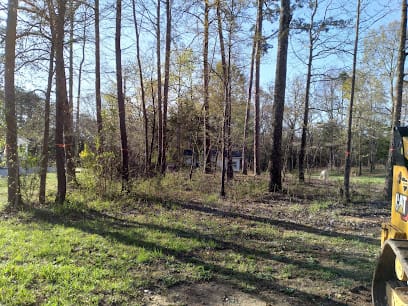
York County’s wooded properties—common in Newport, Catawba, and rural Rock Hill areas—require clearing before development begins. Traditional bulldozer clearing is destructive and expensive: trees are pushed over, roots are torn from soil, topsoil is scraped away with vegetation, massive debris piles accumulate requiring hauling and disposal ($3,000-$8,000 for typical residential lots), and sites are left barren and erosion-prone. Forestry mulching offers a superior alternative for many properties.
Mulching equipment (dedicated forestry mulchers or excavator-mounted mulching heads) grinds trees up to 8-12 inches diameter, stumps, underbrush, and vegetation into fine mulch spread across the site. Benefits include: preserved topsoil (no scraping or destruction of organic layer), eliminated debris hauling (everything is mulched in place), immediate erosion control (mulch layer protects soil from rain), selective clearing capability (removing invasive species or underbrush while preserving desirable trees), and faster completion (mulching 1-2 acres per day versus days of bulldozer work plus hauling time).
Ideal applications: clearing underbrush and small trees from wooded lots while preserving mature oaks or specimen trees, removing invasive vegetation (kudzu, privet, honeysuckle) from overgrown properties, creating cleared areas for buildings and septic while maintaining natural buffers, and preparing sites for pasture or landscaping by eliminating unwanted vegetation efficiently. Cost: $1,500-$4,000 per acre depending on vegetation density and terrain accessibility. For properties where selective clearing and topsoil preservation matter, mulching costs less than conventional clearing once hauling and disposal are factored in.
3. Site Grading for Septic System Success
Proper site grading before septic installation is the difference between systems that function for 25-30 years and systems that fail within 5-10 years from hydraulic overload. York County’s red clay drains slowly—any surface water accumulating near drainfields saturates soil, prevents effluent absorption, and causes backups. Land Management Services, LLC grades sites specifically for septic success: analyzing natural drainage patterns (where does water flow currently, where will it go after grading?), positioning drainfield areas on high ground (avoiding natural drainage paths and low spots), creating positive drainage away from drainfields (minimum 2% slope channeling water to swales or natural outlets), installing perimeter swales (intercepting upslope runoff before it reaches septic areas), and coordinating with septic designers (ensuring grading supports specific system requirements for tank placement, drainfield elevation, and reserve area protection).
This engineering approach prevents common failures: drainfields placed in low areas that flood every rain (requiring expensive relocation or system replacement), surface water channeled onto drainfields by improper grading (causing premature biomat formation and soil sealing), and building pads positioned poorly relative to septic areas (forcing suboptimal system placement or expensive regrading). Cost for septic-focused grading is included in comprehensive site prep or runs $2,000-$6,000 as standalone service depending on lot size and terrain complexity.
4. Building Pad Excavation and Preparation
Creating level building pads on sloped York County properties requires: excavating into hillsides (cutting into slopes to create flat areas), filling low areas (importing or redistributing soil to achieve desired elevations), and compacting fill material properly (preventing settling that damages foundations). Red clay’s properties make this technically demanding: excavated clay must be processed (breaking up clumps, achieving proper moisture content) before reuse as fill, compaction requires heavy equipment (vibratory rollers or plate compactors) and proper technique (lifts no thicker than 6-8 inches, each compacted to 95% Standard Proctor Density for structural areas), and elevation control must be precise (ensuring finished pads drain properly and meet foundation specifications).
Land Management Services, LLC creates building pads that: provide adequate elevation above surrounding grade (preventing water accumulation around foundations), achieve proper compaction (preventing settling that cracks foundations or causes structural problems), and integrate with site drainage systems (positioned to shed water rather than collect it). Cost: $3,000-$10,000 for typical residential building pads depending on size, elevation change required, and amount of fill needed. For walkout basements or sites with significant slope, costs increase to $10,000-$25,000 as excavation and retaining wall requirements grow.
5. Drainage Correction for Existing Properties
Many Rock Hill properties—particularly older homes in established neighborhoods or properties developed before modern drainage standards—experience chronic wet yard problems, standing water, or flooded septic drainfields. These aren’t unfixable defects; they’re drainage engineering problems solvable through proper excavation and grading. Land Management Services, LLC diagnoses drainage failures by analyzing site topography (identifying where water enters, accumulates, and should exit), and implements solutions including: perimeter swales (excavating shallow channels around property boundaries intercepting upslope runoff), French drains (installing perforated pipe in gravel-filled trenches collecting and channeling subsurface water), regrading problem areas (creating positive slope where water currently pools), installing catch basins and drainage pipes (collecting surface water and piping it to appropriate outlets), and correcting negative grading around foundations or septic areas (reversing slopes that direct water toward rather than away from infrastructure).
These solutions transform unusable, perpetually wet properties into functional yards and protect septic systems from hydraulic overload that causes failures. Cost depends on scope: simple swale installation runs $1,500-$4,000, comprehensive drainage systems with multiple components run $5,000-$15,000, and major regrading projects addressing fundamental site problems run $15,000-$30,000. The investment protects property values (wet yards reduce marketability and usability) and prevents septic failures (saturated drainfields cost $15,000-$25,000 to replace).
6. Excavation for Septic System Installation
While Land Management Services, LLC doesn’t install septic systems (they’re excavation and site prep specialists, not septic contractors), they provide the excavation work septic installers require: trenching for drainfield laterals (digging precise trenches to specified depths with proper slope and width), tank placement excavation (creating pits sized for septic tanks with adequate working room), distribution box positioning (excavating for d-boxes at specified elevations relative to laterals), and access trenching (creating pathways for piping connecting tanks to drainfields). In York County’s red clay with rock, this excavation requires: equipment powerful enough to break through compacted clay and occasional rock layers, operators skilled enough to achieve precise depths and slopes (critical for gravity septic systems), and understanding of septic requirements (knowing what tolerances matter and what flexibility exists).
Coordinating with septic installers, Land Management Services, LLC prepares sites so installation proceeds smoothly without delays from inadequate excavation, equipment failures, or unexpected site conditions. Cost for septic excavation is typically included in comprehensive site prep packages or billed as part of septic installation contracts when working with coordinated teams.
Complete Land Management Solutions for York County
Our directory connects you with Land Management Services, LLC because they provide integrated excavation and site preparation:
- Land Clearing Services: Removing trees, stumps, brush, and vegetation from development sites using forestry mulching (for selective clearing and topsoil preservation) or conventional methods (for complete clearing and grubbing). Debris disposal included, sites left clean and ready for grading. Equipment includes forestry mulchers, bulldozers, excavators, and material hauling trucks. Cost: $1,500-$4,000 per acre for mulching, $3,000-$8,000 per acre for conventional clearing including debris removal.
- Site Grading and Drainage Engineering: Creating proper surface water flow patterns protecting buildings and septic systems. Services include positive grading (establishing slopes that channel water away from infrastructure), perimeter swale installation (intercepting upslope runoff), building pad creation (excavating and filling to achieve desired elevations), and finish grading (final smoothing for landscaping). Laser-level or GPS-guided equipment ensuring precise elevations and slopes. Cost: $2,000-$15,000 depending on lot size, terrain complexity, and drainage requirements.
- Excavation Services: Digging for building foundations, septic systems, drainage infrastructure, and site development. Basement excavation, septic trenching, utility line installation, pond creation, and custom excavation projects. Equipment includes excavators (ranging from compact units for tight access to large machines for major earthmoving), bulldozers for grading and material movement, and dump trucks for hauling. Cost varies by project scope from $2,000 for minor excavation to $50,000+ for major earthmoving.
- Septic System Site Preparation: Clearing, grading, and drainage work specifically designed to support septic system installation and long-term function. Positioning drainfield areas on high ground, creating positive drainage away from septic components, installing perimeter swales preventing surface water intrusion, and coordinating with septic designers ensuring site conditions support system requirements. Prevents the drainage failures that cause expensive septic replacements. Cost: included in comprehensive site prep or $2,000-$8,000 as focused service.
- Forestry Mulching: Efficient land clearing preserving topsoil and eliminating debris disposal costs. Grinding trees, stumps, and underbrush into fine mulch spread on-site. Ideal for selective clearing, invasive species removal, and projects where topsoil preservation matters. Faster and often less expensive than conventional clearing when hauling costs are considered. Cost: $1,500-$4,000 per acre depending on vegetation density.
- Drainage Problem Correction: Solving chronic wet yards, standing water, and flooded septic drainfields through excavation and grading. Installing swales, French drains, catch basins, and drainage pipes. Regrading problem areas eliminating water accumulation. Protecting property values and septic system longevity. Cost: $1,500-$30,000 depending on problem severity and solution complexity.
Why York County Trusts Land Management Services, LLC (5.0 Stars)
Perfect Rating Through Precision and Professionalism: Land Management Services’ 5.0-star reputation reflects consistent delivery of precise, professional excavation and site work. They don’t create messes and leave—they complete work to specifications, clean up thoroughly, and leave properties graded smooth and ready for the next construction phase. Equipment operators understand tolerances and techniques producing quality results rather than rough approximations. This precision prevents problems that plague sites developed by contractors who prioritize speed over accuracy: uneven grading causing drainage problems, inadequate compaction leading to settling, and poor cleanup leaving properties torn up and unprofessional-looking.
Understanding Red Clay and Rock Excavation: York County’s red clay mixed with rock requires heavy equipment and operator expertise that generic contractors often lack. Light equipment struggles, wasting time and producing poor results. Inexperienced operators fight clay instead of working with it—attempting excavation when clay is too wet (creating mud pits) or too dry (like concrete). Land Management Services, LLC owns equipment appropriate for York County conditions and employs operators who understand clay behavior, timing work for optimal soil moisture and using techniques that work efficiently rather than fighting the material. This expertise completes jobs faster, at lower cost, and with better results than contractors using undersized equipment or inexperienced crews.
Septic-Focused Site Preparation: Generic excavation contractors grade sites for buildings without considering septic system requirements—positioning drainfield areas in low spots, failing to create proper drainage, or compacting soil in locations where septic components will be installed. Land Management Services, LLC approaches site prep with septic health as a primary consideration: analyzing drainage patterns before grading begins, positioning drainfield areas strategically (high ground, proper slope, protected from surface water), creating grading that supports long-term system function, and coordinating with septic designers ensuring site conditions match system requirements. This prevents the expensive failures that occur when sites are graded poorly and septic systems installed without regard for drainage.
Complete Site Solutions: The value proposition is integration: instead of hiring a clearing company, waiting for completion, hiring a grading contractor, coordinating their schedule, and hiring excavators for specific tasks—you hire Land Management Services, LLC once. They clear, grade, excavate, and prepare sites completely, managing the entire sequence without gaps or coordination failures. For homeowners building in Rock Hill or developers managing multiple lots, this streamlined approach eliminates scheduling nightmares and ensures each phase supports the next rather than creating problems the next contractor must fix.
Treating Property with Respect: The 5-star reviews consistently mention property respect: equipment operators who avoid damaging trees designated for preservation, cleanup that leaves sites looking professional rather than torn up, and communication that keeps owners informed throughout the process. Land Management Services, LLC treats properties like their own—protecting features that matter, cleaning up debris, and delivering finished work that owners are proud to show rather than embarrassed by. This care differentiates them from contractors who create messes, damage property carelessly, and leave owners dealing with problems after they’ve been paid.
Ready for Professional Land Development in York County?
Contact Land Management Services, LLC at (803) 517-7436 or request service through our directory. Whether you’re developing raw land in Rock Hill, clearing wooded properties in Newport, grading sites in Catawba, preparing for septic installation in Lesslie, or managing any excavation challenge in York or Southern York County where dense red clay and rocky soil demand heavy equipment expertise, you’re connected with the 5-star professionals who engineer land rather than just moving dirt.
Don’t trust your property to contractors with inadequate equipment or insufficient expertise. Don’t accept rough grading that creates drainage problems plaguing properties for decades. Don’t separate site preparation from septic planning when they’re fundamentally integrated. Find the rugged, capable, precise contractors who transform raw land into build-ready sites—leaving properties graded smooth, draining properly, and ready for homes and infrastructure that last.