Graham’s Site Development Profile: Clay and Clearing
Alamance County’s geography creates specific site development challenges requiring contractors who understand both heavy excavation and septic system installation. Dense woods covering many undeveloped properties need substantial clearing before construction or septic work proceeds. Piedmont red clay—slow-draining and prone to compaction—complicates both grading for proper drainage and septic system installation. And properties throughout Graham, Saxapahaw, Snow Camp, and surrounding areas often require complete site transformation: clearing trees, grading terrain establishing drainage, excavating for utilities or structures, and installing septic systems—all requiring heavy equipment and clay-specific expertise.
- Red Clay Management Challenges: Alamance County’s Piedmont red clay drains slowly (60-90 minutes per inch percolation rate) and compacts easily under equipment traffic or wet-weather work. For site grading, this means establishing positive drainage through engineered grades rather than relying on soil percolation. For septic systems, it means larger drainfields than sandy soils require and careful installation techniques preventing compaction that would further reduce permeability. Professionals in our network understand these clay-specific requirements and implement proper techniques throughout projects.
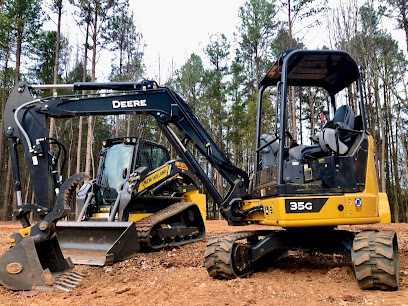
- Dense Woods and Clearing Requirements: Many Alamance County properties arrive as wooded acreage requiring substantial clearing before development proceeds. Dense hardwood forests with mature trees and thick undergrowth demand heavy equipment—bulldozers clearing vegetation, excavators removing stumps, and forestry mulchers grinding material to manageable mulch. Clearing isn’t just removing trees—it’s preparing ground for subsequent grading and construction without creating erosion or compaction problems affecting drainage and septic system function.
- Integrated Site Development Efficiency: Properties requiring clearing, grading, excavation, and septic installation benefit from single contractors handling all phases rather than coordinating separate specialists. When clearing crews don’t understand septic placement requirements, they create problems that grading contractors must fix. When grading contractors don’t consider subsequent septic installation, they create conditions complicating system placement. Professionals in our network handle integrated site development—planning all phases together and executing work efficiently without coordination gaps creating problems.
Common Site Work Issues in Graham
1. Failed Drainfields in Clay Soil: Replacement Challenges
Alamance County properties with aging septic systems often experience drainfield failures—wet spots over field areas, sewage odors, slow drains, or complete backups indicating the drainfield can no longer absorb effluent. In Piedmont red clay, drainfield failures occur when biomat buildup combines with soil compaction reducing already-slow percolation to the point where wastewater can’t disperse. Unlike sandy soils where failures sometimes respond to restoration efforts, clay soil failures often require complete drainfield replacement—expensive and requiring substantial excavation.
Drainfield replacement in clay presents specific challenges: finding suitable areas with adequate soil depth (clay often has shallow bedrock), sizing replacement fields larger than originals to account for clay’s slow percolation, excavating without creating smearing or compaction that would reduce permeability further, and implementing proper installation techniques. Contractors unfamiliar with clay often undersize replacement fields (leading to rapid re-failure) or create compaction during installation (reducing the new field’s effectiveness immediately).
Professionals in our network handle drainfield replacement in clay soil routinely: conducting soil evaluations identifying suitable replacement areas, sizing fields appropriately for clay percolation rates, excavating carefully to preserve soil characteristics, installing using techniques that don’t compact clay, and implementing erosion control protecting investments. Their clay-specific experience prevents the failures that occur when contractors apply sandy-soil techniques to Piedmont clay conditions.
2. Site Grading and Drainage: Engineering Water Management in Clay
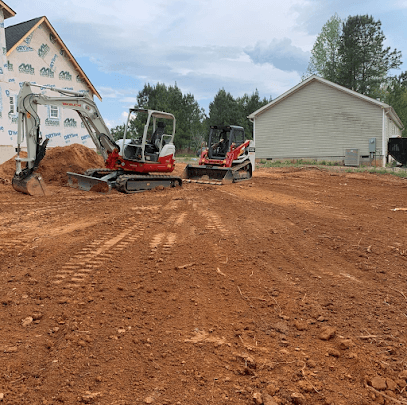
Alamance County’s red clay doesn’t absorb water quickly, meaning site grading must establish positive drainage directing water away from structures, roads, and septic system components. Inadequate grading creates persistent problems: water pooling near foundations, driveways eroding during storms, septic drainfields staying saturated reducing treatment capacity, and yard areas remaining muddy swamps after rain. Clay’s slow percolation means these aren’t temporary wet-weather inconveniences—they’re chronic problems requiring grading corrections to resolve.
Proper site grading in clay requires understanding how water moves across surfaces when soil absorption is minimal. Professionals in our network use laser levels and GPS guidance establishing precise grades directing water to swales, drainage structures, or natural low points. They understand minimum slopes preventing ponding while avoiding excessive grades causing erosion. And they implement erosion control immediately after disturbing clay because once vegetation is removed, clay erodes aggressively during the first rain—creating gullies and sediment problems that proper protection prevents.
3. Land Clearing for New Home Construction: Foundation for Development
Wooded Alamance County properties—common throughout Graham, Saxapahaw, Snow Camp, and rural areas—require substantial clearing before home construction or septic installation proceeds. Dense hardwood forests including oak, hickory, and pine create clearing challenges requiring heavy equipment capable of handling large trees, removing stumps to grade level, and processing debris efficiently. Contractors with undersized equipment or inadequate experience struggle with these conditions, creating delays and incomplete clearing requiring additional work before construction can begin.
Effective clearing prepares properties for subsequent development phases without creating problems. Professionals in our network clear selectively when appropriate (preserving desirable trees, removing invasive species and undergrowth), remove stumps allowing proper grading, process debris through forestry mulching (creating immediate erosion control layer) or hauling (for clean sites), and time work avoiding wet periods when clay becomes unworkable. They also understand that clearing and grading must consider subsequent septic placement—not just removing trees wherever convenient but planning clearing patterns accounting for where systems will be located.
4. Septic System Installation in Red Clay: Proper Techniques Matter
Installing septic systems in Alamance County’s red clay requires techniques different from sandy-soil installations. Clay’s slow percolation demands larger drainfields (often 1.5-2x the area required in sand), careful excavation that doesn’t smear trench walls reducing permeability further, proper backfill materials that won’t migrate into clay creating barriers, and timing that avoids wet periods when clay is plastic and unworkable. Contractors applying standard techniques regardless of soil type create systems that fail prematurely or never function properly.
Professionals in our network install septic systems in clay soil routinely: sizing drainfields appropriately for measured percolation rates (not generic estimates), excavating trenches with walls scarified (roughed up) to restore permeability lost during digging, using proper aggregate sizes that provide drainage without migrating, and implementing installations during proper soil moisture conditions. They understand that doing clay installations correctly costs more (larger fields, careful techniques, proper timing) but delivers systems functioning reliably for decades rather than failing within years.
Complete Site Development: Integrated Excavation and Septic
Lloyd’s Excavation and Septic Services’ perfect 5.0-star reputation reflects an integrated approach to site development—handling clearing, excavation, grading, and septic installation as coordinated efforts rather than separate unrelated tasks. When contractors understand how different site development phases interact and possess equipment for all necessary work, projects proceed efficiently without coordination gaps creating problems.
Heavy Equipment for Clay and Clearing: Alamance County’s red clay and dense woods demand appropriate heavy equipment. Professionals in our network operate bulldozers clearing vegetation and grading terrain, tracked excavators removing stumps and digging trenches, forestry mulchers grinding debris to manageable mulch, and dump trucks hauling material when necessary. This equipment fleet handles both the clearing establishing access and the excavation preparing for septic installation and construction—not lightweight machines struggling with conditions or calling subcontractors for work beyond their capabilities.
Clay-Specific Techniques Throughout Projects: Understanding red clay’s characteristics affects all site work phases. During clearing: avoiding wet-weather work that creates rutting and compaction. During grading: establishing positive drainage accounting for minimal soil absorption. During septic installation: sizing systems appropriately, excavating carefully, and timing work for proper soil conditions. Professionals in our network implement clay-specific techniques throughout projects rather than applying generic approaches regardless of soil type—preventing problems that contractors unfamiliar with clay create through improper methods.
Integrated Planning Preventing Rework: When clearing, grading, excavation, and septic installation occur under single contractors, planning considers all phases simultaneously. Clearing establishes access patterns accounting for where septic systems will be located. Grading creates proper elevations for gravity-flow septic while establishing drainage. Excavation spoil is used efficiently for fill areas rather than hauling and replacing unnecessarily. This integration prevents the rework occurring when sequential contractors work independently: clearing crews creating drainage problems that grading must fix, or grading establishing elevations that complicate septic placement.
Precision Grading Standards: A 5.0-star rating reflects attention to detail beyond merely completing work. Professionals in our network use laser levels and GPS guidance establishing precise grades within inches—not “eyeballing it” and hoping results are adequate. They compact fills properly preventing settlement. They establish drainage that actually functions rather than creating new problems. This precision shows in finished results: properties that drain properly, septic systems placed at optimal elevations, and grading that doesn’t require correction when construction reveals inadequacies.
Complete Excavation & Septic Services
Our directory connects Graham-area landowners with professionals providing comprehensive site development services:
- Septic System Installation & Replacement: Complete new system installation including soil evaluation for clay percolation, system sizing appropriate for measured rates, excavation using proper techniques preventing compaction, drainfield installation with scarified trenches and proper materials, and final inspection coordination. Drainfield replacement for failed systems including site evaluation, proper sizing, and clay-specific installation techniques. Understanding that clay installations require larger systems and more careful work than sandy-soil equivalents.
- Land Clearing & Forestry Work: Complete site clearing removing trees, stumps, and undergrowth preparing properties for development. Selective clearing preserving desirable specimens while removing problem vegetation. Forestry mulching grinding material to mulch providing immediate erosion control. Stump removal to grade level allowing proper site grading. Debris hauling when clean sites are required. Equipment appropriate for Alamance County’s dense hardwood forests—not machines struggling with mature trees.
- Site Grading & Excavation: Precision grading using GPS and laser levels establishing proper drainage in clay soil. Building pad preparation with appropriate elevations and positive drainage. Driveway grading with crown for water shedding. Swale and berm construction managing stormwater. Excavation for basements, utilities, and septic systems. Understanding of how to work red clay during different moisture conditions achieving proper compaction without creating impermeability.
- Driveway Construction: Complete driveway installation from rough grading through base material placement and final surface. Proper grades for drainage preventing erosion and standing water. Base material selection and compaction for long-term stability. Gravel or crusher run installation for all-weather access. Understanding that clay driveways need proper engineering—not just spreading stone and hoping it works.
- Utility Trenching & Infrastructure: Excavation for water lines, electric services, and other utilities requiring underground installation. Trenching coordinated with septic installation when both occur on properties. Proper depth, bedding, and backfill for different utility types. Coordination with utility companies for inspections and connections. Equipment capable of precise excavation rather than crude trenches requiring extensive hand-finishing.
- Erosion Control & Drainage Solutions: Silt fence installation, straw mulching, and temporary seeding protecting disturbed clay soil. Swale construction redirecting surface water away from structures and septic components. French drain installation for persistent wet areas. Permanent vegetation establishment preventing long-term erosion. Understanding that clay erodes aggressively once vegetation is removed—proactive protection rather than reactive fixes after problems develop.
Why Locals Trust Lloyd’s Excavation and Septic Services (5.0 Stars)
Located on NC-87, Lloyd’s Excavation has earned a perfect 5.0-star reputation by delivering the precision site development and septic installation that Alamance County’s challenging terrain demands. Our directory connects you with professionals who operate heavy equipment skillfully, understand red clay characteristics intimately, and maintain quality standards ensuring projects function properly rather than creating problems discovered later.
Precision Grading and Professional Standards: A perfect 5.0-star rating doesn’t happen accidentally—it requires consistent excellence across all projects. Professionals in our network maintain high standards: using GPS and laser levels for precise grading, implementing proper compaction techniques, establishing drainage that actually functions, and executing septic installations following proper procedures for clay soil. They understand that quality work costs slightly more than shortcuts but delivers results lasting decades rather than requiring correction within years.
Heavy Equipment Fleet and Operator Skill: Alamance County’s red clay and dense woods require appropriate equipment operated skillfully. Professionals in our network maintain equipment fleets including bulldozers for clearing and grading, tracked excavators for trenching and stump removal, forestry mulchers for debris processing, and trucks for material hauling. More importantly, they employ operators with experience working clay soil and challenging terrain—not entry-level personnel learning on customer properties. Skilled operation shows in finished results: smooth grades, properly compacted fills, and installations meeting specifications.
Clay Soil Expertise Across All Services: Understanding red clay affects all site work: clearing timing avoiding wet periods, grading establishing drainage accounting for slow percolation, septic installations sizing and executing properly for clay conditions, and erosion control protecting disturbed soil. Professionals in our network work in clay daily, understanding its characteristics through experience rather than treating it like generic “dirt” and encountering problems. This expertise prevents failures that contractors unfamiliar with clay create through improper techniques.
Integrated Service Eliminating Coordination: Property owners developing land appreciate contractors handling clearing, grading, excavation, and septic installation under single contracts. This integration eliminates schedule gaps waiting for next contractors, prevents finger-pointing when problems arise about who caused issues, and ensures all phases consider downstream requirements. Professionals in our network deliver complete site development from raw woods to ready-to-build parcels—not partial work requiring other contractors to complete projects.
Serving Graham and Southern Alamance County
From NC-87 in Graham, our network serves the entire southern Alamance County region—wooded properties around Saxapahaw requiring clearing and site preparation, rural homesites near Snow Camp and Eli Whitney needing septic installations, and developing areas throughout Graham, Haw River, Elon, and surrounding communities. Whether you’re a landowner preparing property for construction, a builder developing custom homes requiring complete site preparation, or a homeowner replacing failed septic systems in challenging clay soil, you’ll find professionals who handle integrated excavation and septic projects—operating heavy equipment skillfully and understanding red clay characteristics thoroughly.
In terrain where heavy clay drains slowly and compacts easily, where dense woods require substantial clearing, and where drainage must be engineered rather than hoped for, working with contractors possessing appropriate equipment and clay-specific expertise separates successful projects from expensive problems. Complete site development requires integrated capability handling all phases under single contractors who understand how clearing affects grading, how grading affects septic placement, and how clay characteristics affect everything.
Ready to Start Your Site Development?
Whether you need wooded property cleared for construction, precision site grading establishing proper drainage in clay soil, new septic systems installed using proper clay-specific techniques, failed drainfields replaced with appropriately-sized systems, driveways constructed with proper engineering for all-weather access, or complete site development from raw woods to ready-to-build parcels, our directory connects you with Alamance County professionals who operate heavy equipment skillfully and understand red clay characteristics thoroughly—delivering the precision work that earns perfect 5.0-star ratings through quality results rather than shortcuts creating future problems.
Call Lloyd’s Excavation and Septic Services at (336) 338-3287 or Find Vetted Graham Excavation and Septic Professionals in our Directory. Compare providers, read reviews from Alamance County landowners who found integrated site development and clay soil expertise, and schedule with confidence knowing you’re working with contractors who handle the tough dirt work transforming raw land into functional property—operating with skill and maintaining standards ensuring projects function properly for decades rather than requiring correction within years.