Angier's Soil Profile: Why Clay Beneath Sandy Loam Changes Everything
Angier sits in the rolling Piedmont where Norfolk and Cecil soil series dominate. These soils are notoriously deceptive—the top 8-18 inches present as sandy loam with good drainage, leading builders and homeowners to assume easy septic conditions. But dig deeper, and you hit dense clay subsoil that percolates at 75-120 minutes per inch, well below North Carolina's preferred threshold. This two-layer profile causes unique problems that contractors unfamiliar with Harnett County often miss.
- Deceptive Percolation Rates: Initial soil testing during construction may show acceptable percolation in the sandy topsoil, but the drainfield laterals sit in the clay subsoil where effluent struggles to disperse. This leads to hydraulic overload during wet seasons, with soggy yards and backup events that puzzle homeowners who were told their soil "drains well."
- Transitional Soil Challenges: The Norfolk/Cecil transition zone varies across Angier—properties in Weatherford may have 12 inches of sandy loam before hitting clay, while lots in Kathryn's Retreat might have 18-24 inches. This variability means neighboring homes can have drastically different septic performance, even with identical system designs.
- Tree Root Aggression in Clay: Angier's signature crepe myrtles, along with established oaks and pines throughout neighborhoods like Wellington and Johnson's Landing, have root systems that seek moisture aggressively. In clay soil where water is scarce, roots penetrate lateral line perforations and form dense mats that block effluent flow. This is the #1 service call in Angier—tree root intrusion into drainfield laterals.
- Neill's Creek Watershed Sensitivity: Properties draining into Neill's Creek and its tributaries face additional nitrogen and phosphorus limits. The creek feeds the Cape Fear River system, making septic system nutrient loading a regulatory concern. Harnett County Environmental Health requires enhanced treatment for installations within 500 feet of stream buffers or in identified watershed protection zones.
Common Septic Issues in Angier
1. Tree Root Intrusion: The Crepe Myrtle Problem
Tree root intrusion is the defining septic challenge in the "Town of Crepe Myrtles." Crepe myrtle root systems are shallow but aggressive, spreading 1.5-2 times the canopy width in search of moisture. When planted within 25 feet of drainfield laterals—a common scenario in older Weatherford and Wellington homes—roots inevitably find perforations in the pipes and invade. Symptoms include slow drains (especially in bathrooms farthest from the tank), gurgling sounds when water drains, and sewage odors near the drainfield. Oak and pine roots cause similar issues in wooded properties near Neill's Creek. Once roots establish inside laterals, they form mats that completely block flow, requiring hydro-jetting or lateral replacement.
2. Hydraulic Overload in Clay Subsoil
Hydraulic overload occurs when wastewater reaches the drainfield faster than the clay subsoil can absorb it. In Angier's Norfolk/Cecil soils, the sandy topsoil allows effluent to move quickly to the laterals, but the clay layer beneath creates a bottleneck. Symptoms include standing water or mushy ground over the drainfield (particularly after rain), sewage surfacing in the yard, and backups during high-water events. New developments in Kathryn's Retreat often use chamber systems to increase soil contact area and compensate for slow clay percolation, but older conventional systems in established neighborhoods struggle during wet spring and winter months.
3. Biomat Acceleration in Dense Clay
Biomat is a biological slime layer that forms where effluent meets soil in the drainfield. In sandy soils, biomat growth is slow and manageable. In Angier's clay subsoil, biomat accelerates because oxygen penetration is limited—the dense clay creates anaerobic conditions where harmful bacteria thrive. Excessive biomat clogs lateral pipe perforations and seals the soil interface, making the drainfield impermeable. Symptoms include persistently slow drains across all fixtures, toilets that won't flush properly, and wet spots that never dry even in summer. Once advanced biomat forms, hydro-jetting the laterals provides temporary relief, but severe cases require complete drainfield abandonment and replacement.
4. Effluent Filter Clogging in High-Use Households
The effluent filter is the "kidney" of the septic system, trapping solids before they reach the drainfield. In Angier homes with garbage disposals (common in newer Kathryn's Retreat developments) or large families, effluent filters clog faster than the recommended 6-month cleaning interval. A clogged filter causes immediate backups—toilets won't flush, showers drain slowly, and washing machines overflow. Many homeowners don't know their system has an effluent filter, leading to expensive emergency calls. Regular filter cleaning during routine pumping prevents 90% of these issues.
Complete Septic Solutions for Angier Homeowners
- Septic Tank Pumping & Sludge Removal: In Harnett County's slow-draining clay subsoil, solids accumulate faster because effluent doesn't exit the tank efficiently. Contractors in our network recommend pumping every 2-3 years for families of 4+ in Angier, and every 18-24 months if you have a garbage disposal. The annual Crepe Myrtle Festival brings visitors and increased water usage—consider scheduling pumping in late winter (January-February) before spring rains and summer events. Proper pumping removes both the floating scum layer and settled sludge layer—fly-by-night pumpers often skip the sludge, leaving your system half-full.
- Hydro-Jetting for Tree Root Removal: Given Angier's aggressive tree root environment, high-pressure water jetting (3,000+ PSI) is the most effective non-invasive treatment for clogged laterals. Professionals use specialized root-cutting nozzles that clear crepe myrtle, oak, and pine roots from perforated pipes without excavation. This is particularly critical in Weatherford and Wellington where mature trees dominate landscapes. Hydro-jetting should be paired with bio-barrier fabric installation (a root-repelling material placed over laterals) to prevent re-infestation. Expect to hydro-jet every 2-3 years in heavily wooded areas.
- Bio-Barrier Root Protection Installation: For properties with established trees near drainfield areas, contractors install bio-barrier fabric—a physical barrier containing herbicide that prevents root penetration without harming trees. This is a proactive solution for new installations or after hydro-jetting clears existing roots. Properties near Gregory Vineyards or wooded areas around Johnson's Landing benefit significantly from bio-barrier protection, extending drainfield life by 10-15 years.
- Effluent Filter Cleaning & Maintenance: In Angier's clay soil where hydraulic overload is common, a clogged effluent filter causes immediate system failure. Professionals in our directory clean filters every 6-12 months during routine service—this single component prevents thousands in emergency repair costs. For Kathryn's Retreat homes with garbage disposals, quarterly filter inspections are recommended during the first year to establish a proper maintenance schedule.
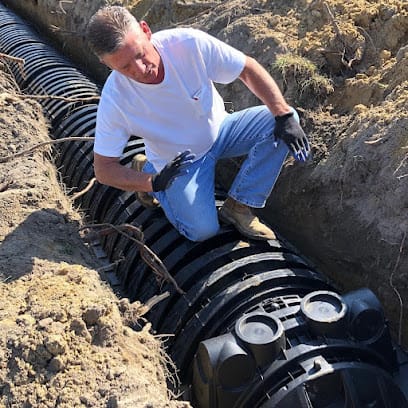
- Chamber System Installation for Clay Conditions: New developments in Angier increasingly use chamber systems (plastic leach chambers instead of gravel/pipe) to increase soil contact area in clay subsoil. Chambers provide 30-50% more effluent absorption surface than conventional pipe-and-gravel systems, making them ideal for Norfolk/Cecil soils. Contractors handle design, permitting, and installation for new construction or full drainfield replacements in established neighborhoods where clay percolation is problematic.
- Aerobic Treatment Unit (ATU) Upgrades for Watershed Compliance: Properties within the Neill's Creek watershed may require advanced treatment to meet nitrogen and phosphorus reduction mandates. ATUs use oxygen injection to break down waste more completely before it reaches the drainfield, reducing nutrient loading by 60-80%. Local professionals handle installation, Harnett County permitting, and the required annual maintenance contracts mandated by North Carolina. ATU upgrades typically cost $8,000-$15,000 but are sometimes the only compliant solution for watershed-restricted properties.
- Riser Installation & Access Upgrades: Older Angier homes near the Town Square often have buried tank lids requiring excavation for every pump-out. Contractors install risers (green or black lids at ground level) for easy access, reducing service costs and encouraging proper maintenance. This is a $400-$800 upgrade that pays for itself in saved digging fees. For properties with effluent filters, dual risers (one for pumping, one for filter access) are recommended.