Archdale's Soil Profile: Why Piedmont Red Clay Changes Everything
Archdale sits squarely in the Piedmont's Cecil soil series belt—the red clay that defines central North Carolina's landscape. This soil is iron-rich (giving it the distinctive red color), dense, and notoriously slow to percolate. While surface layers may appear manageable during dry weather, the clay content becomes problematic once saturated. Water doesn't drain downward through Cecil clay efficiently; instead, it moves laterally, creating surface pooling and hydraulic overload conditions that standard drainfield designs struggle to handle.
- Slow Percolation Rates: Cecil clay in Archdale typically percolates at 90-150 minutes per inch—well above North Carolina's recommended 60-minute threshold. This means drainfields must be 30-50% larger than those in sandy soil regions to handle the same household wastewater volume. Undersized fields installed before modern percolation testing standards (common in Bush Hill Historic District) fail prematurely during wet seasons.
- Surface Water Management Critical: Rolling Piedmont terrain in Archdale means surface water runoff during storms compounds clay soil's natural drainage limitations. Properties in Creekside and Heathwood near I-85 often experience hydraulic overload after heavy rain—not because the septic system failed, but because stormwater saturates the clay, eliminating the soil's remaining absorption capacity.
- Randleman Lake Watershed Sensitivity: Much of Archdale drains into Randleman Lake via Muddy Creek and smaller tributaries. This reservoir supplies drinking water to Greensboro, High Point, and surrounding communities, making septic system nutrient loading a critical concern. Randolph County Environmental Health enforces enhanced treatment standards for properties within the watershed—conventional gravity systems may not meet nitrogen and phosphorus reduction requirements without supplemental treatment.
- Riparian Buffer Setbacks: Properties near Muddy Creek or tributaries feeding the Deep River system face strict setback requirements—typically 50-100 feet from stream banks where no ground absorption systems can be installed. This forces many Archdale homeowners into pump system installations, moving effluent uphill to compliant drainfield locations on higher, drier ground.
Common Septic Issues in Archdale
1. Hydraulic Overload in Red Clay
Hydraulic overload occurs when wastewater reaches the drainfield faster than the soil can absorb it—the defining septic challenge in Archdale's dense Cecil clay. Symptoms include standing water or mushy ground over the drainfield (especially after rain), sewage odors near the leach field, or drains that back up during wet weather events. In neighborhoods like Oakwood Forest where conventional gravity systems were sized for smaller 1980s households, modern water usage (multiple bathrooms, high-efficiency washers running daily loads, garbage disposals) overwhelms undersized fields. The clay simply cannot percolate effluent fast enough, causing surface breakout and potential contamination of Muddy Creek tributaries.
2. Biomat Buildup Accelerated by Clay
Biomat is a biological slime layer that forms naturally where effluent meets soil in the drainfield. In sandy soils, biomat growth is slow and oxygen penetration keeps it manageable. In Archdale's red clay, biomat accelerates because the dense soil restricts oxygen—anaerobic bacteria thrive, creating thick biomat that clogs lateral pipe perforations and seals the soil interface. Once advanced biomat forms, the drainfield becomes impermeable, forcing effluent to surface or back up into the home. Symptoms include persistently slow drains across all fixtures, toilets that won't flush properly, and wet spots that never dry. Hydro-jetting laterals provides temporary relief, but severe cases require complete drainfield abandonment and replacement—a $15,000-$25,000 fix.
3. Watershed Compliance Violations
Properties within the Randleman Lake watershed face stricter septic standards than the rest of Randolph County. Conventional systems that meet state code may not satisfy watershed-specific nutrient reduction requirements. Nitrogen and phosphorus loading from aging septic systems is a primary concern for reservoir water quality. Randolph County Environmental Health conducts periodic watershed inspections—systems showing signs of failure (surfacing effluent, lush grass over drainfield, odors) within the watershed zone face mandatory repair or upgrade orders. Many Archdale homeowners discover during real estate transactions that their conventional system requires ATU conversion to meet current watershed standards, adding $8,000-$15,000 to closing costs.
4. Pump System Failures Near Creek Buffers
Properties in Archdale near Muddy Creek or other tributaries often require pump systems to move effluent uphill from low-lying collection tanks to drainfields on higher ground (to meet riparian buffer setbacks). These pumps are critical components—when they fail, the system backs up immediately. Symptoms include a high-water alarm buzzing, sewage backing up into the home despite recent pumping, or the pump running continuously without moving water. Common causes include electrical failures (tripped breakers, blown fuses), pump motor burnout (typically after 10-15 years), or float switch malfunctions. Properties in Bonnie Place and near Creekside Park that were engineered with pump systems require specialized maintenance—float switches should be tested annually, and pump motors inspected every 3-5 years.
Complete Septic Solutions for Archdale Homeowners
- Septic Tank Pumping & Sludge Removal: In Randolph County's slow-draining red clay, solids accumulate faster because effluent doesn't exit the tank efficiently. Contractors in our network recommend pumping every 2-3 years for families of 4+ in Archdale, and every 18-24 months if you have a garbage disposal. Properties within the Randleman Lake watershed should maintain diligent pumping schedules—a full tank can lead to solids reaching the drainfield, accelerating biomat formation and risking watershed contamination. Proper pumping removes both the floating scum layer and settled sludge layer—fly-by-night pumpers often skip the sludge, leaving your system half-full.
- Effluent Filter Cleaning: The effluent filter is the "kidney" of your septic system, trapping solids before they reach the drainfield. In Archdale's clay soil where hydraulic overload is common, a clogged filter causes immediate backups. Professionals in our directory clean filters every 6-12 months during routine service—this single component prevents thousands in drainfield damage. For Creekside and Heathwood homes with garbage disposals, quarterly filter inspections are recommended during the first year to establish proper maintenance schedules.
- Hydro-Jetting for Lateral Lines: When biomat buildup or root intrusion clogs your drainfield laterals, high-pressure water jetting (3,000+ PSI) can restore flow without excavation. This is particularly effective in Archdale where red clay accelerates biomat formation. Hydro-jetting extends drainfield life by 5-10 years when caught early—before biomat completely seals the soil interface. Properties in Bush Hill Historic District with aging conventional systems benefit significantly from preventive hydro-jetting every 5-7 years.
- Aerobic Treatment Unit (ATU) Installation for Watershed Compliance: Properties within the Randleman Lake watershed often require advanced treatment to meet nitrogen and phosphorus reduction mandates. ATUs use oxygen injection to break down waste more completely before it reaches the drainfield, reducing nutrient loading by 60-80% compared to conventional septic tanks. Local professionals handle installation, Randolph County permitting, and the required annual maintenance contracts mandated by North Carolina. ATU upgrades typically cost $10,000-$18,000 but are sometimes the only compliant solution for watershed-restricted properties in Oakwood Forest and near Muddy Creek.
- Pump System Installation & Repair: For properties near riparian buffers or low-lying lots where gravity flow to compliant drainfield locations isn't possible, contractors install pump systems. These systems collect effluent in a chamber, then pump it uphill to drainfields on higher ground (meeting required setbacks from Muddy Creek and tributaries). Pump systems require specialized maintenance—float switches, check valves, and pump motors must be inspected annually. Professionals in our network respond to pump failures within 2-4 hours, preventing sewage backups into homes.
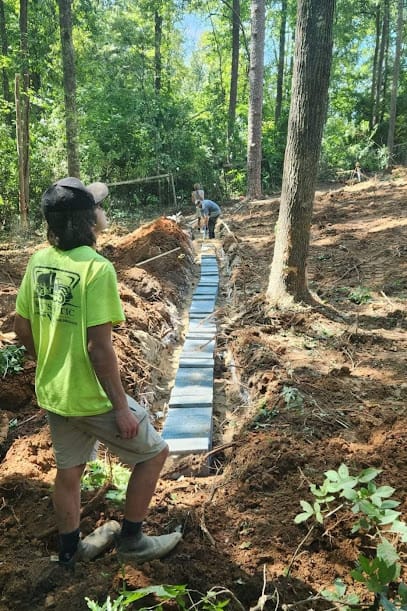
- Drainfield Expansion for Clay Soil: Older Archdale properties, particularly in Bush Hill Historic District, often have undersized drainfields installed before modern percolation testing requirements. When hydraulic overload becomes chronic (wet spots, surface breakout, persistent backups), the solution is drainfield expansion—adding lateral lines to increase soil contact area. In red clay, this often means doubling the original field size. Contractors handle soil testing, design, Randolph County permitting, and installation. Expect costs of $8,000-$15,000 depending on lot constraints.
- Riser Installation & Access Upgrades: Older Archdale homes often have buried tank lids requiring excavation for every pump-out. Contractors install risers (green or black lids at ground level) for easy access, reducing service costs and encouraging proper maintenance. This is a $400-$800 upgrade that pays for itself in saved digging fees. For properties with effluent filters or pump systems, dual/triple risers (for pumping, filter access, and pump chamber access) are recommended.
- Watershed Inspection & Compliance Services: For properties selling within the Randleman Lake watershed, contractors provide pre-listing septic inspections to identify compliance issues before real estate transactions. These inspections check tank integrity, effluent filter condition, drainfield performance, and watershed-specific treatment requirements. Addressing issues proactively prevents deal-killing surprises during buyer due diligence. Inspection costs range from $300-$600 but can save tens of thousands in emergency repairs or forced ATU installations during closing.