Barnardsville's Soil Profile: Why Big Ivy Mountain Terrain Changes Everything
Barnardsville sits at elevations ranging from 2,400 to 3,500+ feet in the Blue Ridge Mountains' interior ranges, where the Hayesville and Fannin soil series dominate. These mountain loams are weathered from ancient metamorphic rock (schist, gneiss, and mica-rich formations), creating soils with moderate drainage—percolation rates of 50-90 minutes per inch are workable under ideal conditions. But "ideal" doesn't exist in Big Ivy. The defining challenges are soil shallowness (typically 12-24 inches before encountering bedrock or saprolite), extreme slopes (30-40% grades common on ridges and cove edges), and the mica content that makes these soils unstable when saturated. The narrow hollows carved by Big Ivy Creek, Paint Fork, and Stoney Fork create limited flat ground—most homes sit either on steep slopes or in creek bottoms, neither suitable for conventional drainfields.
- Extremely Shallow Soil Depth: The Hayesville and Fannin series in Barnardsville's upper elevations rarely exceed 24 inches before hitting solid bedrock or saprolite (weathered rock that hasn't fully decomposed to soil). Many properties in Dillingham and Burleson's Cove encounter bedrock at 12-18 inches—less than half the depth needed for conventional drainfield laterals. North Carolina requires 12-24 inches vertical separation between drainfield components and bedrock. This leaves minimal or zero workable soil depth, forcing installations into drip distribution (shallow systems requiring only 12-18 inches), mound systems (elevating the treatment zone above bedrock with imported sand), or pump-to-remote-location designs where suitable soil exists elsewhere on the property.
- Extreme Slope Angles and Narrow Hollows: Big Ivy is characterized by steep mountain slopes dropping 30-40% or more from ridgelines into creek bottoms. Properties along Paint Fork Road and Stoney Fork hollow face grades where gravity overwhelms any conventional drainfield—effluent moves downslope faster than soil can absorb it, causing "daylighting" (sewage surfacing mid-slope). The narrow hollows provide limited flat areas—most buildable land is either steeply sloped or in the creek floodplain (unbuildable for septic). This forces pump system installations to move effluent from low-lying homes uphill to ridgetop drainfields, or requires terracing and berming that's expensive on rocky mountain terrain.
- Mica Content and Soil Instability: Hayesville and Fannin soils in Barnardsville are unusually rich in mica—a platy mineral that weathers from the region's schist bedrock. Mica gives these soils a shiny, flaky appearance and creates problems for septic systems. When saturated, mica-rich soils become unstable and prone to slumping or sliding. Drainfield excavations on slopes in Dillingham or near Carson Mountain can trigger landslides if erosion controls aren't properly implemented. Additionally, mica's platy structure creates preferential flow pathways—effluent can move laterally along mica layers rather than percolating downward, causing unpredictable failure patterns.
- Ivy Creek Watershed Sensitivity: Big Ivy Creek is one of Western North Carolina's most pristine mountain streams—a designated wild trout fishery with reproducing populations of native brook trout and introduced rainbow trout. The creek feeds the French Broad River, but more importantly, it's a community treasure for anglers and conservationists. Properties bordering Big Ivy Creek or its tributaries (Paint Fork, Stoney Fork) face strict riparian buffer setbacks (typically 50-100 feet from stream banks) where no ground absorption systems can be installed. Additionally, Buncombe County Environmental Health requires advanced treatment (ATUs or sand filters) for properties within 200 feet of trout streams to prevent nutrient loading and bacterial contamination that would destroy the fishery.
Common Septic Issues in Barnardsville
1. Legacy Straight Pipes: The Big Ivy Challenge
"Straight piping"—direct discharge of untreated sewage to creeks, surface spreading on the ground, or pipes ending at the hillside—is the defining septic problem in Barnardsville's remote mountain communities. Through the 1970s and 1980s, many Big Ivy properties were developed before Buncombe County septic oversight reached these areas. Homeowners built simple systems: toilets and sinks draining to pipes that discharged into the nearest creek or hollow. Decades later, these unpermitted straight pipes contaminate Big Ivy Creek, Paint Fork, and Stoney Fork with raw sewage—a health hazard and environmental crisis. Symptoms include visible sewage discharge at pipe outlets (often visible from creek beds), toilet paper accumulation on creek banks downstream, and fecal coliform readings 100-1000x safe levels in stream testing. North Carolina now prohibits straight piping with fines up to $25,000 per day, but enforcement in remote areas is complaint-driven. Real estate transactions trigger inspections—straight pipe discovery forces buyers to walk away or sellers to fund $20,000-$40,000 emergency system installations.
2. Slope Daylighting in Steep Terrain
Daylighting on extreme slopes is endemic throughout Barnardsville. When drainfields are installed on grades exceeding 25-30% (common on ridges above Dillingham Road or slopes descending into Stoney Fork hollow), gravity pulls effluent downslope faster than mica-rich soil can absorb it. Instead of percolating downward, wastewater follows mica layers and bedrock interfaces laterally until it surfaces mid-hillside. Symptoms include wet spots or flowing effluent 20-50 feet downslope from the original drainfield location, sewage odors in lower portions of property, erosion gullies carved by constant effluent flow, and contamination of downslope springs or creek tributaries. Properties throughout Big Ivy with pre-1990s gravity systems experience chronic daylighting—the steep terrain simply cannot support conventional absorption without pump controls or extensive terracing.
3. Shallow Bedrock System Failures
When drainfield laterals are installed in Barnardsville's shallow mountain soils (12-18 inches common) without adequate vertical separation from bedrock, systems fail rapidly. Effluent encounters impermeable rock and has nowhere to go—it spreads laterally along the soil-bedrock interface or surfaces. Symptoms include wet spots appearing within days of system startup, rapid saturation during rain (bedrock channels stormwater into the drainfield zone), and systems that work briefly then fail permanently as biomat seals the minimal soil available. Properties in Burleson's Cove and along Paint Fork Road with conventional systems installed before mandatory bedrock testing often discover 12-15 inch bedrock during failure investigations. The compliant solution is drip distribution (designed for 12-18 inch soil depth), mound systems (elevating above bedrock with engineered fill), or pump-to-alternate-location where deeper soil pockets exist upslope.
4. Pump System Failures in Remote Mountain Terrain
Pump systems are essential for most Barnardsville properties—moving effluent from creek-bottom homes uphill to suitable drainfield sites, or pumping from low-lying tanks to elevated treatment areas above riparian buffers. These systems are critical in Big Ivy where power outages from mountain storms are frequent (ice, wind, trees falling on lines). Symptoms of pump failure include high-water alarms buzzing, sewage backing up despite recent pumping, or pumps running continuously without moving water. Common causes include power failures (Barnardsville experiences 3-5 multi-hour outages annually), pump motor burnout (mountain systems work harder due to vertical lift requirements), float switch failures from debris, or check valve problems allowing backflow. When pumps fail in remote Dillingham or Stoney Fork locations, response times are longer—properties can experience 6-12 hour sewage backups before service arrives on winding mountain roads.
Complete Septic Solutions for Barnardsville Homeowners
- Septic Tank Pumping & Sludge Removal: In Buncombe County's remote mountain terrain, regular pumping is critical—system failures in Big Ivy cause immediate environmental damage to trout streams. Contractors in our network recommend pumping every 2-3 years for families of 4+ in Barnardsville, and every 18-24 months if you have a garbage disposal. Properties with pump systems should schedule pumping before winter—frozen pump chambers are common at Big Ivy elevations (2,400-3,500 feet), and full tanks increase freeze risk. Access can be challenging on steep driveways—contractors use specialized trucks for mountain terrain. Proper pumping removes both the floating scum layer and settled sludge layer—remote mountain properties can't afford half-measures that leave systems vulnerable.
- Straight Pipe Replacement & Full System Installation: For properties in Stoney Fork, Paint Fork, or other Big Ivy areas with legacy straight pipes, contractors design complete septic systems from scratch. This involves septic tank installation (1,000-1,500 gallons typical), pump chamber installation (required for most mountain terrain), drainfield site selection (often requiring easements to access suitable soil), and connection to existing plumbing. Modern installations in Barnardsville typically use drip distribution (works in shallow soils) or pump-to-remote-flat-area designs (moving effluent to ridgetops or benched areas with adequate soil). Straight pipe replacement costs $20,000-$40,000 depending on terrain difficulty and distance to compliant drainfield sites, but eliminates environmental violations and enables property sales.
- Pump System Installation for Extreme Slopes: For properties where gravity-based drainfields aren't feasible—homes in creek bottoms, steep slopes, or areas with shallow bedrock—contractors install pump systems. These collect effluent in chambers (usually placed lower than the home to allow gravity drainage from plumbing), then pump it uphill or to flat drainfield locations meeting Buncombe County requirements. Pump systems are the primary solution for Big Ivy properties on steep grades. Modern pumps are designed for mountain conditions—high vertical lift capacity (50-100 feet common), backup power options (battery or generator hookups), and cold-weather operation. Professionals handle pump chamber design, electrical work, alarm installation, and drainfield placement. Expect costs of $15,000-$28,000 depending on vertical lift requirements and access difficulty on winding mountain roads.
- Drip Distribution System Installation: When soil depth over bedrock is too shallow for conventional laterals (common throughout Barnardsville), contractors install drip distribution systems—shallow trenches (6-12 inches deep) with pressure-compensating emitter tubing that releases effluent in controlled doses. Drip systems work in 12-18 inches of soil where conventional systems require 36+ inches. This is ideal for Dillingham and Burleson's Cove properties with shallow Hayesville/Fannin soils over bedrock. Drip systems require pump chambers (to pressurize the distribution network), filtration (to prevent emitter clogging), and annual maintenance (flushing lines). Installation costs range from $18,000-$30,000 in Big Ivy due to terrain access challenges, but they're often the only compliant solution for bedrock-constrained mountain lots.
- Sand Filter System Installation for Riparian Areas: Properties within 100-200 feet of Big Ivy Creek, Paint Fork, or Stoney Fork often require advanced treatment beyond conventional septic tanks. Sand filter systems provide secondary treatment—effluent from the septic tank is pumped through a bed of engineered sand where bacterial colonies further break down organics and trap nutrients before discharge to a final drainfield or surface dispersal. Sand filters are particularly effective for Ivy Creek watershed properties where trout stream protection is mandated. These systems handle Big Ivy's cold mountain temperatures better than aerobic treatment units (ATUs), which can struggle at high elevations. Sand filter installations cost $15,000-$25,000 but ensure compliance with riparian buffer and watershed protection requirements.
- Mound System Installation for Shallow Bedrock: When bedrock is encountered at 12-18 inches (common throughout Barnardsville), contractors install mound systems—elevated drainfields using engineered sand fill to achieve proper vertical separation above bedrock. Mound systems require pump chambers (to move effluent up into the elevated treatment zone) and significant fill material (sand must be trucked in on narrow mountain roads). The sand provides excellent treatment and solves bedrock clearance issues. Professionals handle bedrock mapping, mound design, Buncombe County permitting, and construction. Expect costs of $18,000-$32,000 in Big Ivy due to access challenges and material transport on winding roads like NC-197 and Dillingham Road.
- Erosion Control & Slope Stabilization: For existing systems experiencing daylighting or slope failures, contractors install remediation measures before drainfield repairs—silt fencing, riprap channels, terracing, retaining walls, and deep-rooted vegetation. Properties in Big Ivy with chronic daylighting or mica-rich soil slumping often need comprehensive slope stabilization. This work requires mountain soil engineers who understand Blue Ridge geology, design erosion controls meeting Buncombe County stormwater requirements, and implement solutions that don't trigger further landslides. Costs range from $5,000-$12,000 for erosion control, with additional expenses for drainfield relocation if original sites are compromised by slope instability.
- Pump System Maintenance & Emergency Repair: Properties relying on pump systems (most of Barnardsville) require annual maintenance—float switch testing, check valve inspection, pump motor amperage checks, alarm testing, and backup power system verification. Contractors in our network offer maintenance contracts (typically $250-$500 annually) that prevent catastrophic failures. When pumps fail in remote Big Ivy locations, professionals prioritize emergency response—arriving within 4-6 hours on mountain roads. Pump motor replacement costs $1,000-$2,000, but preventive maintenance extends motor life to 15-20 years even under high-lift mountain conditions.
- Ivy Creek Watershed Compliance & Permitting: Properties within 200 feet of Big Ivy Creek or designated trout tributaries require enhanced permits and treatment. Contractors handle watershed-specific permits, riparian buffer surveys, stream setback calculations, and system designs meeting Buncombe County's trout stream protection standards. This includes advanced treatment specification (sand filters or ATUs), erosion control plans, and monitoring well installation if required. Compliance work costs $800-$1,500 in permitting and design fees, but ensures environmental protection for Western North Carolina's premier wild trout fishery and prevents regulatory violations.
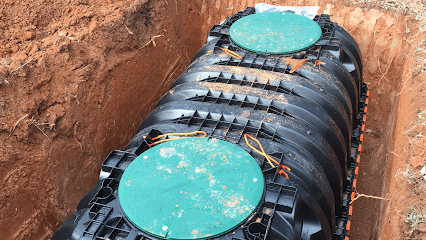
- Riser Installation & Mountain Access Upgrades: Older Barnardsville properties, particularly legacy homes in Paint Fork and Stoney Fork, often have buried tank lids requiring excavation for every pump-out—extremely challenging on steep, rocky terrain. Contractors install risers (green or black lids at ground level) for easy access, reducing service costs and slope disturbance. This is a $500-$1,000 upgrade critical for mountain properties where excavation can trigger erosion or landslides. For properties with pump systems, triple risers (pumping access, pump chamber access, control panel access) are essential for winter maintenance access when snow and ice make mountain slopes treacherous.
- Real Estate Transfer Inspections & Straight Pipe Documentation: Barnardsville property sales require functional, permitted septic systems—straight pipe discovery kills deals or forces emergency installations. Contractors provide pre-listing inspections documenting system type, permit status, and compliance with current codes. For properties with straight pipes, professionals provide installation quotes and timelines so sellers can address issues before listing or negotiate pricing with buyers. Inspection costs range from $400-$800 but protect sellers from post-closing liability and buyers from inheriting $30,000+ septic emergencies in remote Big Ivy locations where system installation is complex and expensive.