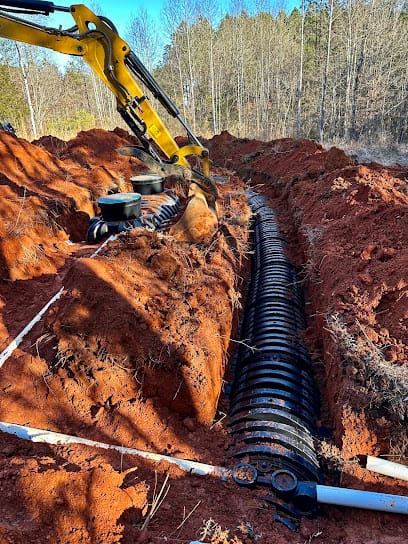
Boomer's Soil Profile: Why Wilkes County Clay Changes Everything
Boomer sits in Wilkes County's foothills where the Wilkes and Pacolet soil series dominate—red clay soils weathered from ancient metamorphic bedrock. These soils present a deceptive challenge: the top 6-12 inches may be sandy loam or silt, leading homeowners to assume good drainage, but dig deeper and you hit dense red clay subsoil that percolates at 90-150 minutes per inch—well above North Carolina's recommended 60-minute threshold. This clay layer sits frustratingly shallow (9-12 inches typical), creating a barrier that traps effluent in the upper soil profile during wet weather. Combined with Boomer's foothill terrain (slopes of 10-25% common along NC-268 and around Little Brushy Mountain) and W. Kerr Scott Reservoir's watershed protection requirements, septic system design here requires specialized knowledge of clay soil management and slope engineering.
- Extremely Slow Percolation in Clay Subsoil: The Wilkes and Pacolet series in Boomer typically percolate at 90-150 minutes per inch once you reach the clay layer at 9-15 inches depth. This means drainfields must be significantly larger than those in sandy soil regions—often 50-75% more absorption area to handle the same household wastewater volume. Properties along Warrior Creek and Beaver Creek with conventional systems sized for 1980s-1990s households now struggle with modern water usage (multiple bathrooms, high-efficiency washers, garbage disposals) overwhelming undersized fields. The clay simply cannot percolate effluent fast enough, causing surface breakout and soggy yards during Wilkes County's wet spring and winter months.
- Shallow Clay Layer Depth: Unlike deeper Piedmont clay soils where usable topsoil extends 18-24 inches before hitting heavy clay, Boomer's foothill soils transition to clay at 9-12 inches. This shallow transition leaves minimal depth for proper drainfield laterals—conventional installations require 12-18 inches of soil above laterals and 12-24 inches below for proper treatment and separation. When clay sits at 10 inches, there's no workable depth for standard systems, forcing installations into pressure distribution designs (evenly dispersing effluent across the field to prevent localized saturation) or requiring fill additions to increase depth above the clay barrier.
- Foothill Slope Challenges: Properties throughout Boomer—particularly along NC-268's winding corridor and on Little Brushy Mountain's slopes—face grades of 10-25%. On these slopes, gravity pulls effluent downhill faster than clay soil can absorb it, causing "daylighting" (sewage surfacing mid-slope below the drainfield). Older gravity systems installed before modern slope engineering standards experience chronic daylighting during wet weather. North Carolina now requires pressure distribution systems for slopes over 10-15%—pumps move effluent to elevated distribution boxes, then pressurized lines deliver it evenly across the drainfield, preventing downslope flow and ensuring even absorption in slow clay soils.
- W. Kerr Scott Reservoir Watershed Sensitivity: The W. Kerr Scott Reservoir provides drinking water and recreation for Wilkes County and surrounding areas. Properties within 100 feet of the reservoir shoreline or tributary streams (Warrior Creek, Beaver Creek, and smaller unnamed branches) face strict septic setbacks and enhanced treatment requirements. Wilkes County Environmental Health prohibits ground absorption systems within the 100-foot buffer—properties must pump effluent to drainfield locations beyond the setback, often requiring uphill pumping to compliant sites. Additionally, watershed properties often require effluent filters or advanced pretreatment to prevent nitrogen and phosphorus loading that could degrade reservoir water quality.
Common Septic Issues in Boomer
1. Hydraulic Overload in Clay Soil During Wet Weather
Hydraulic overload occurs when wastewater volume exceeds the drainfield's absorption capacity—the defining septic challenge in Boomer's slow-percolating clay soils. When Wilkes County receives 2-3 inches of rain (common during spring and winter storms), the clay subsoil becomes saturated and loses nearly all absorption capacity. Even properly functioning drainfields experience temporary hydraulic overload. Symptoms include soggy ground or standing water over the drainfield during/after rain, sewage odors near the leach field during wet weather, backups that occur only during rainy periods (not during normal dry-weather usage), and systems that work perfectly in summer but fail every winter. Properties along Warrior Creek and Beaver Creek near the reservoir experience this routinely—the combination of slow clay percolation and proximity to water bodies (raising local groundwater) creates saturated conditions that conventional drainfields can't overcome.
2. Slope Daylighting on Foothill Terrain
Daylighting on slopes is endemic throughout Boomer's foothill landscape. When drainfields are installed on grades exceeding 10-15% (common along NC-268 and on Little Brushy Mountain), gravity overwhelms the clay soil's already-limited absorption capacity. Effluent follows the path of least resistance—downslope—rather than percolating downward into saturated clay. Symptoms include wet spots or flowing effluent appearing 10-30 feet downslope from the original drainfield location, sewage odors in lower portions of property, erosion channels carved by constant effluent flow, and contamination of downslope springs or stream tributaries. Pre-1990s systems installed with simple gravity designs experience chronic daylighting—the combination of slope and clay soil creates pathways where effluent surfaces rather than absorbing. Modern solutions require pressure distribution systems or terraced drainfields with berms controlling flow.
3. Reservoir Setback Violations
Properties near W. Kerr Scott Reservoir or along Warrior Creek and Beaver Creek tributaries face strict 100-foot setbacks from water bodies where no ground absorption systems can be installed. Many older Boomer properties have systems that predate these watershed regulations—drainfields installed 30-50 feet from the reservoir or creek banks, violating current codes. Setback violations are discovered during real estate transactions, property improvements requiring permits, or complaint-driven inspections. When violations are identified, Wilkes County Environmental Health issues repair orders requiring complete system relocation beyond the buffer zone. This often necessitates pump system installation (moving effluent uphill from existing tanks to new compliant drainfield locations), costing $15,000-$30,000. Properties selling near the reservoir face these issues routinely—buyers walk away or negotiate significant price reductions when non-compliant systems are discovered.
4. Biomat Acceleration in Saturated Clay
Biomat is a biological slime layer that forms where effluent meets soil in the drainfield. In Boomer's clay soils, biomat formation accelerates because the dense, saturated clay restricts oxygen penetration—anaerobic bacteria thrive, creating thick biomat that clogs lateral pipe perforations and seals the soil interface. Once advanced biomat forms in clay, the drainfield becomes nearly impermeable, forcing effluent to surface or back up into the home. Symptoms include systems that worked adequately for 5-8 years suddenly failing completely, soggy spots that never dry even during summer drought, persistent slow drains across all fixtures, and toilets that won't flush properly. Properties throughout Boomer with aging conventional systems in clay soil experience this—the slow percolation combined with inadequate maintenance (infrequent pumping) allows biomat to progress unchecked. Treatment requires hydro-jetting the laterals if caught early, or complete drainfield replacement ($12,000-$20,000) in severe cases.
Complete Septic Solutions for Boomer Homeowners
- Septic Tank Pumping & Sludge Removal: In Wilkes County's slow-draining clay soils, solids accumulate faster because effluent doesn't exit the tank efficiently—the clay acts as a barrier preventing proper drainfield function. Contractors in our network recommend pumping every 2-3 years for families of 4+ in Boomer, and every 18-24 months if you have a garbage disposal. Clay soil properties require diligent maintenance schedules—skipping pumping for 5-7 years (common in rural areas) leads to solids reaching the drainfield, accelerating biomat formation and risking complete system failure. Proper pumping removes both the floating scum layer and settled sludge layer. Properties near W. Kerr Scott Reservoir should maintain strict schedules—watershed protection makes system failures particularly problematic.
- Pressure Distribution System Installation: For properties on Boomer's foothill slopes (10-25% grades along NC-268, Little Brushy Mountain, or hilly Warrior Creek areas), contractors install pressure distribution systems to prevent daylighting and ensure even effluent dispersal in clay soil. These systems use pump chambers to move effluent to elevated distribution boxes, then pressurized perforated pipes deliver it evenly across the drainfield—preventing gravity-driven downslope flow. Pressure distribution is essential in clay soil where localized saturation causes failures; even dispersal gives the slow-percolating clay maximum opportunity to absorb effluent. Installation costs $12,000-$22,000 depending on slope severity and pump requirements, but it's often the only compliant solution for foothill terrain with clay subsoil.
- Drainfield Expansion for Clay Soil: Older Boomer properties, particularly those in Warrior Creek and Beaver Creek areas with systems installed before mandatory clay soil sizing requirements, often have undersized drainfields. When hydraulic overload becomes chronic (soggy yards, surface breakout, seasonal backups), the solution is drainfield expansion—adding lateral lines to increase clay soil contact area. In Wilkes County clay, this often means doubling the original field size to achieve adequate absorption capacity. Contractors handle percolation testing, design calculations based on actual clay percolation rates, Wilkes County permitting, and installation. Expect costs of $10,000-$18,000 depending on lot constraints and access difficulty on foothill terrain.
- Pump System Installation for Reservoir Setbacks: Properties within 100 feet of W. Kerr Scott Reservoir or tributary streams cannot have ground absorption systems in the buffer zone. Contractors install pump systems to move effluent from existing tanks (often in the buffer) to new drainfield locations beyond the 100-foot setback. This typically requires uphill pumping on Boomer's sloped terrain—moving effluent from creek-bottom or reservoir-adjacent properties to compliant sites on higher ground. Pump systems include collection chambers, high-capacity pumps (handling vertical lift requirements), alarm systems, and pressure distribution to the relocated drainfield. Installation costs $15,000-$28,000 depending on distance and elevation change, but ensures watershed compliance and protects reservoir water quality.
- Effluent Filter Installation & Maintenance: The effluent filter is the "kidney" of your septic system, trapping solids before they reach the drainfield. In Boomer's clay soil where hydraulic overload is common and biomat forms rapidly, effluent filters are critical for system longevity. Wilkes County Environmental Health mandates filters on most new installations and repairs within the W. Kerr Scott watershed. Professionals in our directory install filters on older systems lacking them ($400-$900), and clean existing filters every 6-12 months during routine service. For properties on clay soil near the reservoir, effluent filters provide essential protection—reducing solids reaching the drainfield by 60-80% and preventing rapid biomat formation that causes premature failure.
- Hydro-Jetting for Clay Soil Biomat: When biomat buildup clogs drainfield laterals in Boomer's clay soil, high-pressure water jetting (3,000+ PSI) can restore flow without excavation. In clay soil, biomat is tenacious—it bonds to the clay particles and creates nearly impermeable barriers. Hydro-jetting uses specialized nozzles to scour pipe interiors and break up biomat at the soil interface. This service extends drainfield life by 5-10 years when caught early—before biomat completely seals the clay and forces replacement. Properties along Beaver Creek and throughout the NC-268 corridor with aging conventional systems benefit from preventive hydro-jetting every 5-7 years, especially if maintenance schedules have been neglected.
- Terraced Drainfield Installation for Slopes: For properties on Boomer's foothill slopes where pressure distribution alone isn't sufficient, contractors design terraced drainfields—excavating benches into the hillside to create level platforms where laterals are installed horizontally. Downslope berms contain effluent within each terrace level, preventing daylighting. Terracing is labor-intensive on rocky foothill terrain but essential for properties on Little Brushy Mountain or steep sections of NC-268 where conventional designs fail repeatedly. Terraced installations cost $12,000-$22,000 depending on slope angle and rock excavation requirements, but eliminate chronic daylighting problems that plague older slope-installed systems.
- Fill System Installation for Shallow Clay: When clay subsoil is encountered at 9-12 inches (common throughout Boomer), contractors may install fill systems—adding 12-18 inches of imported sand or sandy loam above the existing grade to create adequate depth above the clay barrier. The fill provides better percolation than native clay and creates proper vertical separation. Fill systems require careful design to prevent erosion and ensure stability, and they must be coupled with pressure distribution to prevent localized saturation. Installation costs $10,000-$18,000 depending on fill volume and site preparation, but provides compliant depth on properties where excavation down to deeper soil isn't feasible due to bedrock or water table constraints.
- Riser Installation & Access Upgrades: Older Boomer properties, particularly in wooded Warrior Creek and Beaver Creek areas, often have buried tank lids requiring excavation for every pump-out—challenging in rocky foothill terrain with mature tree coverage. Contractors install risers (green or black lids at ground level) for easy access, reducing service costs and encouraging proper maintenance. This is a $400-$800 upgrade critical for properties on clay soil where frequent pumping prevents biomat acceleration. For properties with effluent filters or pump systems, dual/triple risers (for pumping, filter access, and pump chamber access) are essential for year-round maintenance access in Wilkes County's mountain winters.
- Watershed Compliance Inspections: For properties selling near W. Kerr Scott Reservoir or along Warrior Creek and Beaver Creek, contractors provide pre-listing septic inspections verifying watershed compliance—proper setbacks from water bodies, effluent filter presence, system functionality (no daylighting or surfacing), and enhanced treatment if required by Wilkes County regulations. Addressing issues proactively prevents deal-killing surprises during buyer due diligence. Inspection costs range from $350-$600, but protecting sellers from post-closing liability on reservoir properties where non-compliance could force $20,000+ emergency system relocations is invaluable.