Cameron's Soil Profile: Why Sandhills Sand Changes Everything
Cameron sits in the heart of North Carolina's Sandhills—a distinctive physiographic region of deep, well-drained sandy soils formed from ancient beach deposits when this area was the Atlantic Ocean's shoreline millions of years ago. The Lakeland and Norfolk soil series dominate, offering sand content of 85-95% and percolation rates of 20-40 minutes per inch—fast drainage that prevents the hydraulic overload common in clay regions. But this blessing comes with curses: the rapid percolation moves effluent through the soil profile so quickly that nitrogen treatment is incomplete, leading to groundwater contamination; the dry, sandy conditions make longleaf and loblolly pine roots aggressively invade drainfields seeking moisture; and the fast drainage lures homeowners into neglecting maintenance, allowing solids to escape and form biomat that seals even the most permeable sand. Cameron's position at the Sandhills-clay transition adds complexity—properties near Crains Creek may have sand over clay at depth, creating perched water tables, while downtown historic homes sit on pure sand extending 20+ feet deep.
- Extremely Fast Percolation and Nitrogen Bypass: The Lakeland and Norfolk series in Cameron percolate at 20-40 minutes per inch—effluent moves from drainfield laterals through the sand profile in hours rather than days. Conventional septic treatment relies on soil bacteria converting nitrogen compounds (ammonia to nitrite to nitrate to nitrogen gas) during effluent's residence time in the drainfield. When percolation is too fast, contact time is insufficient—nitrate reaches groundwater before bacterial denitrification completes. This is problematic in Cameron where private wells are common in Crains Creek and Cypress Creek areas—nitrate contamination above EPA's 10 mg/L limit causes "blue baby syndrome" in infants and increased cancer risks with chronic exposure. Properties on pure Lakeland sand contribute most to this problem.
- Pervasive Pine Root Intrusion: Cameron's landscape is dominated by longleaf pines (North Carolina's state tree) and loblolly pines—species with extensive, aggressive root systems. In the Sandhills' dry sandy soil where moisture is scarce, pine roots seek water aggressively and find septic drainfields irresistible. Root systems can span 50-75 feet from tree trunks, and once roots discover lateral pipe perforations, they penetrate and proliferate inside—forming dense mats that completely block effluent flow. This is the #1 septic service call in Cameron—pine root intrusion requiring hydro-jetting or lateral replacement. Properties throughout Crains Creek, along US-1's pine-lined corridor, and in wooded portions of the Historic District experience root problems within 5-10 years of system installation.
- Rapid Biomat Formation in Abused Sand: Paradoxically, Cameron's fast-draining sand can develop biomat (biological slime layer) as rapidly as clay soil when systems are neglected. When homeowners skip pumping for 5-7 years, solids accumulate, escape the tank, and reach the drainfield. In sand, these solids move quickly to the soil interface and create thick biomat. The oxygen-rich sandy environment allows aerobic bacteria to proliferate rapidly, forming biomat that seals the sand and eliminates permeability. Once biomat forms, the fast-drainage advantage disappears—clogged laterals can't release effluent, causing backups. Properties near Cypress Creek and throughout Cameron with aging systems experience this when maintenance is deferred.
- Sand-Over-Clay Perched Water Tables: Cameron sits at the Sandhills-clay transition zone. Some properties—particularly near Crains Creek moving toward the clay Piedmont—have deep sand (3-6 feet) overlying dense clay subsoil. When effluent percolates rapidly through sand and encounters clay, it cannot penetrate further and accumulates above the clay layer, creating a "perched water table." This saturates the sand from below, causing drainfield failure even in supposedly well-drained soil. Symptoms include wet spots appearing during dry weather (not just after rain), systems that worked for years then suddenly fail, and soggy areas that persist despite sandy surface soil. Soil testing during installation is critical to identify sand-clay transitions.
Common Septic Issues in Cameron
1. Pine Root Intrusion: The Sandhills Enemy
Pine root intrusion is the defining septic challenge in Cameron's longleaf pine landscape. Longleaf and loblolly pines have root systems spanning 50-75 feet seeking moisture in dry Sandhills sand. When roots discover septic lateral lines, they penetrate pipe perforations and proliferate inside—forming dense root mats that completely block effluent flow. Symptoms include slow drains developing gradually over months, gurgling sounds when water drains, sewage odors near the drainfield, and backups that worsen progressively. Properties throughout Crains Creek, along US-1's pine-forested corridor, and in wooded Historic District areas with systems installed within 30 feet of mature pines experience root intrusion within 5-10 years. Treatment requires hydro-jetting (3,000+ PSI water jets with root-cutting nozzles), but without bio-barrier fabric installation (root-repelling material over laterals) or tree removal, roots return within 18-24 months. This is the #1 service call in Moore County's Sandhills region.
2. Nitrate Contamination of Private Wells
Nitrate leaching from septic systems to groundwater is endemic in Cameron's fast-percolating Sandhills sand. When nitrogen from effluent moves through sand at 20-40 minute percolation rates, bacterial conversion processes (nitrification-denitrification) don't have sufficient time to complete—nitrate reaches groundwater before conversion to harmless nitrogen gas. Private wells in Crains Creek and Cypress Creek areas routinely test above 10 mg/L nitrate (EPA's drinking water limit). Symptoms aren't immediately obvious—nitrate is colorless, tasteless, odorless. Only well testing reveals the problem. Infants drinking high-nitrate water develop methemoglobinemia ("blue baby syndrome"), while adults face increased cancer risks with chronic exposure. Properties on pure Lakeland sand with private wells and septic systems are particularly vulnerable. Solutions include shallow drainfield placement (18-24 inches deep to maximize soil contact time) or advanced pretreatment systems.
3. Biomat Sealing in Neglected Sand Systems
Biomat formation in Cameron's sand occurs rapidly when systems are neglected. Homeowners assume fast-draining sand means low maintenance, skip pumping for 5-7 years, and allow solids to accumulate. When solids escape the tank and reach the drainfield, they move quickly through sand to the soil interface. The oxygen-rich sandy environment allows aerobic bacteria to proliferate, forming thick biomat that seals the sand and eliminates permeability. Symptoms include systems that worked flawlessly for 5-8 years suddenly failing completely, standing water over the drainfield despite sandy soil, and backups during normal water usage (not high-demand events). Properties near Cypress Creek and throughout Cameron experience this when maintenance is deferred. Prevention through regular pumping (every 2-3 years) removes solids before they reach the field. Treatment requires hydro-jetting if caught early, or complete drainfield replacement ($10,000-$18,000) in severe cases where biomat has completely sealed the sand.
4. Sand-Over-Clay Perched Water Table Failures
Properties in Cameron's transitional zone—particularly near Crains Creek moving toward the Piedmont clay belt—encounter sand-over-clay soil profiles. Deep sand (3-6 feet) overlies dense clay subsoil. Drainfields installed in the sand work initially as effluent percolates rapidly downward, but when it reaches the clay barrier, it cannot penetrate further. Effluent accumulates above the clay layer, creating a perched water table that saturates the sand from below. Symptoms include wet spots appearing in dry weather (not related to rain), drainfields that worked for years then suddenly fail, and soggy areas that persist despite sandy surface soil. This is discovered during failure investigations when soil testing reveals the clay layer. Solutions require drainfield relocation to areas with deeper sand, or installation above the original grade to maintain separation from the perched water table. This is expensive but necessary on constrained lots with sand-clay transitions.
Complete Septic Solutions for Cameron Homeowners
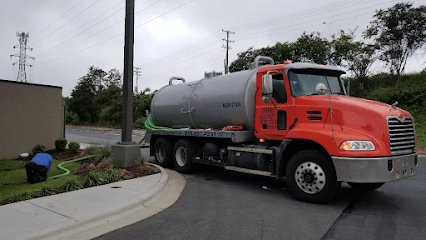
- Septic Tank Pumping & Sludge Removal: In Moore County's fast-draining Sandhills sand, regular pumping is critical to prevent solids from escaping into drainfields and forming biomat. Contractors in our network recommend pumping every 2-3 years for families of 4+ in Cameron, and every 18-24 months if you have a garbage disposal. The fast percolation lures homeowners into neglecting maintenance—"my sand drains great, I don't need to pump"—but this leads to rapid biomat formation when solids eventually escape. Proper pumping removes both the floating scum layer and settled sludge layer (removing sludge, not "cleaning" tanks). Properties with private wells should pump every 2 years minimum—reducing drainfield solids minimizes nitrate leaching risk to groundwater.
- Pine Root Removal & Hydro-Jetting: For properties throughout Crains Creek, along US-1, and in wooded Historic District areas experiencing pine root intrusion, contractors use hydro-jetting (3,000+ PSI) with specialized root-cutting nozzles to clear longleaf and loblolly pine roots from lateral pipes. Hydro-jetting alone is temporary—roots return within 2 years. Permanent solutions require bio-barrier fabric installation—a root-repelling material placed over drainfield laterals that prevents penetration without harming trees. For severe cases near mature pines, tree removal may be necessary (roots from dead pines continue invading systems for 3-5 years as they decay). Root removal with bio-barrier costs $2,500-$7,000 depending on drainfield size and tree proximity, but it eliminates the #1 cause of septic failures in Cameron's Sandhills landscape.
- Drainfield Inspection & Biomat Assessment: For properties experiencing reduced drainage performance in sand soil (early warning sign of biomat formation), contractors provide drainfield inspections—excavating inspection ports to examine lateral pipes and soil interface for biomat buildup. Checking for biomat allows early intervention before complete sealing occurs. If biomat is identified early (partial clogging, not complete sealing), hydro-jetting can restore function. If biomat has completely sealed the sand, replacement is necessary. Drainfield inspections cost $300-$600 but provide actionable information—repair vs. replace decisions based on actual conditions, not guesswork.
- Shallow Drainfield Installation for Nitrogen Treatment: To increase soil contact time and improve nitrogen treatment in Cameron's fast-percolating sand, contractors design shallow drainfields—laterals installed at 18-24 inches depth rather than conventional 30-36 inches. This keeps effluent in the biologically active soil zone longer (the top 18-24 inches where bacterial populations are highest), allowing more complete nitrification-denitrification. Shallow placement is particularly important for properties with private wells in Crains Creek and Cypress Creek where groundwater protection is critical. Shallow drainfield installations cost $8,000-$15,000, recommended for new construction or replacements on properties with documented nitrate concerns.
- Private Well Testing & Nitrate Monitoring: For Cameron properties with private wells and septic systems on Sandhills sand, contractors coordinate well testing for nitrate, bacteria, and septic-related contaminants. Testing every 2-3 years establishes baseline conditions and detects problems early—before health impacts occur. If nitrate exceeds 5 mg/L (half the EPA limit), septic system upgrades may be necessary. Professionals interpret test results, identify likely contamination sources (your system vs. neighbors), and design remediation strategies. Moore County offers subsidized well testing, but comprehensive panels cost $150-$250 through private labs.
- Historic Home System Upgrades: Cameron's Historic District along Carthage Street features homes built in the late 1800s-early 1900s when the town was a railroad hub. These properties often have original or very old septic systems requiring careful rehabilitation. Contractors provide historic-property-sensitive services—working around century-old foundations, preserving mature landscaping, and upgrading systems to modern standards while respecting the character of the homes. This includes baffle replacement, tank rehabilitation, drainfield relocation (often constrained by lot size and historic structures), and riser installation for maintenance access. Historic home system work requires extra care—preserving history while meeting current codes. Professionals in Cameron understand this balance.
- Bio-Barrier Fabric Installation: For properties in pine-dominated areas (most of Cameron), contractors install bio-barrier fabric during new installations or after root-clearing hydro-jetting. This specialized fabric contains herbicide that prevents root penetration without harming trees—roots encounter the barrier and grow around it rather than through drainfield laterals. Bio-barrier installation costs $1,500-$3,000 and extends drainfield life by 15-20 years in Cameron's pine forest landscape. This is proactive protection for Crains Creek properties and wooded areas along US-1 where pine root intrusion is inevitable without barriers.
- Sand Drainfield Rehabilitation: For properties with biomat-sealed sand drainfields (caught before complete failure), contractors provide rehabilitation services—hydro-jetting laterals to remove biomat, resting the field (diverting flow to a reserve area if available), and treating with biological additives that help re-establish healthy bacterial populations. Rehabilitation costs $3,000-$8,000 and can extend field life by 5-10 years if biomat hasn't completely sealed the sand. This is cost-effective compared to complete replacement ($12,000-$20,000) and preserves the investment in existing systems.
- Riser Installation for Sandhills Access: Older Cameron properties often have buried tank lids requiring excavation for every pump-out—labor-intensive in sandy soil that caves easily during digging. Contractors install risers (green or black lids at ground level) for easy access, reducing service costs and encouraging regular maintenance. This is a $400-$800 upgrade critical for Sandhills properties where frequent pumping (every 2-3 years) prevents biomat formation. For properties with older systems requiring regular inspections, risers enable annual checks without excavation.
- Real Estate Transfer Inspections: Moore County requires septic inspections for real estate transfers. For Cameron properties—particularly historic homes with aging systems or properties on transitional soils—contractors provide comprehensive inspections examining tank integrity, drainfield functionality (no biomat sealing), proper sizing for Sandhills conditions, pine root intrusion risk, and well water testing if private wells are present. Addressing issues proactively prevents deal-killing surprises during due diligence. Inspections cost $350-$600 but protect buyers from inheriting $15,000+ system failures on Sandhills properties where biomat or root problems are common, and protect sellers from post-closing liability.