Hildebran's Profile: Why Mill Town Legacy & Red Clay Change Everything
Hildebran sits in Burke County's Western Piedmont foothills as a historic mill town where textile heritage created infrastructure challenges. Cecil and Pacolet red clay provides structural stability but drains slowly, while legacy mill village systems weren't designed for modern water usage patterns.
- Red Clay Slow Permeability: Burke County's Cecil and Pacolet red clay drains at 80-115 minutes per inch—significantly slower than sandy soils. While this clay provides excellent structural stability (homes don't settle), the slow permeability means septic drainfields struggle during heavy usage or wet weather. Effluent moves slowly through clay pores, giving biomat extended time to form. When maintenance is skipped, biomat thickens rapidly in slow-draining clay. Regular pumping (every 2-3 years) prevents solids from escaping into drainfields where they accelerate biomat formation and cause the backups common throughout Hildebran when red clay systems are maintained casually.
- Legacy Mill Village Infrastructure: Henry River District and areas near the Old Hosiery Mills feature homes built for textile workers in the 1920s-1950s. These properties often retain original septic systems: undersized 900-gallon concrete tanks (modern code requires 1,000-1,500 gallons depending on bedrooms), terracotta (clay tile) laterals that crack after 70-100 years, no effluent filters (modern protection devices), and designs assuming minimal water usage (no washing machines, dishwashers, or modern bathrooms). When families with contemporary appliances and water usage patterns live in these homes, the undersized infrastructure fails—tanks fill too quickly, laterals can't handle flow volumes, and systems back up frequently despite pumping.
- Henry River Watershed Protection: Properties near Henry River and its tributaries face setback requirements preventing septic contamination of the waterway. Typical regulations include minimum distances from streams to drainfields (50-100 feet depending on system type), restrictions on drainfield placement in flood zones, and heightened permitting scrutiny for repairs near water. These rules protect the river that gives Hildebran and the mill village their names but create compliance challenges for historic properties where original systems may not meet modern setback requirements.
Common Septic Issues in Hildebran
1. Undersized Tanks in Henry River Mill Village
The #1 septic challenge in Hildebran's historic mill village is undersized tanks overwhelmed by modern water usage. Properties in the Henry River District built for textile workers in the 1920s-1950s typically have 900-gallon concrete tanks—adequate for 1950s usage patterns (minimal bathing, no washing machines, no dishwashers, outdoor clotheslines) but catastrophically undersized for contemporary living. Modern households use 50-70 gallons per person per day. A family of four generates 200-280 gallons daily. In a 900-gallon tank, this leaves minimal retention time for solids to settle—they escape into drainfields within days instead of the weeks needed for proper breakdown. Symptoms include frequent backups (requiring pump-outs every 6-12 months instead of every 3-5 years), constant slow drains, sewage odors, and premature drainfield failures as excessive solids overwhelm laterals. The only permanent solution is tank replacement with properly-sized 1,250-1,500 gallon tanks meeting modern code for bedroom count. Tank upgrades cost $3,000-$5,000 but eliminate the chronic issues and emergency pump-outs that cost similar amounts over a few years. For Henry River District properties, tank sizing assessment should be first step when chronic issues occur—not repeated pump-outs treating symptoms rather than causes.
2. Terracotta Lateral Failures in Historic Properties
Mill village homes in Hildebran's Henry River District often have terracotta (clay tile) laterals from original 1920s-1950s installations. After 70-100 years, these brittle clay tiles crack from age, tree root pressure, and soil movement in Burke County's rolling terrain. Unlike PVC which fails obviously (complete breaks), terracotta deteriorates gradually—small cracks allow effluent to leak before proper treatment, causing localized soil saturation, odors, and premature failures. Symptoms include wet spots in yards even during dry weather, sewage odors near drainfields, suspiciously green grass over certain areas, and slow drains worsening over time. Camera inspection identifies crack locations and extent. Repairs are complicated—terracotta is fragile, so aggressive excavation can shatter intact sections, turning $2,000 localized repairs into $15,000 complete replacements. Contractors in our network use gentle excavation methods preserving as much historic infrastructure as possible while replacing only failed sections. For Hildebran mill village properties, understanding that terracotta has finite lifespan (80-100 years maximum) helps homeowners budget for eventual upgrades rather than being surprised when systems fail.
3. Biomat Buildup in Red Clay
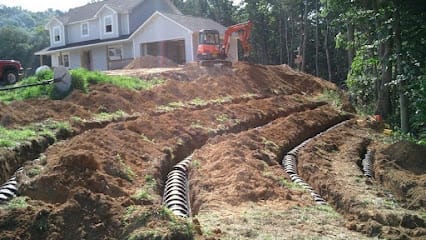
Throughout Hildebran—from Henry River District to US-70 corridor properties—biomat (biological slime on drainfield laterals) accelerates in Cecil and Pacolet red clay's slow-draining environment. When septic tanks aren't pumped every 2-3 years, excessive solids escape into drainfields and feed biomat growth. In Burke County's red clay draining at 80-115 minutes per inch, biomat develops 2-3 times faster than in sandy soils. Once biomat thickness exceeds functional limits, drainfields stop accepting effluent—sewage backs up or surfaces in yards. This is the most common septic failure pattern in Hildebran. Prevention requires disciplined maintenance: pumping every 2-3 years with complete sludge removal. Homeowners who extend intervals to "save money" discover that skipping $400 pump-outs results in $15,000-$25,000 drainfield replacements. In Hildebran's red clay, maintenance isn't optional—it's the difference between 25-year drainfield lifespan and 10-year failure, especially critical for undersized historic systems already stressed by modern usage.
4. Henry River Watershed Setback Compliance
Properties near Henry River and tributaries feeding it must comply with watershed setback rules protecting water quality. When these properties need septic repairs or replacements, drainfield placement must maintain minimum distances from streams (typically 50-100 feet depending on system type and stream classification). Historic mill village properties originally built close to Henry River for water-powered textile operations may have drainfields that don't meet modern setback requirements. When these systems fail, replacements must be relocated to compliant locations—often requiring pump systems to move effluent away from river influence to suitable areas on constrained mill village lots. Burke County Environmental Health enforces these setbacks strictly given Henry River's importance to the community. Contractors in our network understand watershed requirements, design compliant systems for constrained historic lots, and navigate the permitting process.
Complete Septic Solutions for Hildebran Homeowners
- Septic Tank Pumping & Sludge Removal: In Hildebran's Burke County red clay, routine pumping every 2-3 years is essential to prevent biomat acceleration and backups. This is especially critical for Henry River District properties with undersized 900-gallon tanks where limited retention volume means more frequent service prevents constant issues. Our vetted contractors remove both liquid waste and the critical sludge layer at the tank bottom. During pumping, contractors assess tank size adequacy (identifying undersized 900-gallon tanks needing upgrades), inspect for signs of biomat issues, check baffles (especially critical for pre-1980 systems), and evaluate overall condition. Proper disposal at Burke County-approved facilities is verified with documentation. Recommended every 2-3 years for all Hildebran properties in red clay; more frequent schedules for undersized historic tanks until upgrades can be completed.
- Tank Sizing Upgrades for Mill Village Properties: If your Henry River District or mill village property experiences chronic backups, requires pump-outs every 6-12 months, or has a pre-1980 system, tank sizing assessment is essential. Our network contractors evaluate tank capacity versus household size and modern water usage, determine if undersized tanks (900 gallons or less) are causing issues, and recommend properly-sized replacements meeting current Burke County codes (typically 1,250-1,500 gallons for 3-4 bedroom homes). Tank upgrades cost $3,000-$5,000 but eliminate chronic issues and emergency pump-outs costing similar amounts over 2-3 years. For mill village properties, this is often the most cost-effective long-term solution addressing root causes rather than treating symptoms. Installation includes modern effluent filters and risers eliminating excavation for future service.
- Terracotta Lateral Assessment & Selective Repairs: Henry River District and mill village homes with pre-1960 construction likely have terracotta laterals requiring evaluation. Our contractors provide camera inspections documenting terracotta condition, identifying specific crack locations, and assessing whether selective repairs preserve historic infrastructure or complete replacement is necessary. When repairs are possible, contractors use gentle excavation methods protecting intact sections while replacing only failed tiles. This approach costs $2,000-$5,000 for localized repairs versus $15,000-$25,000 for complete drainfield replacement. Success requires experience with fragile historic materials—our network includes professionals who understand the balance between preserving mill town heritage and ensuring functional modern systems.
- Biomat Prevention & Drainfield Restoration: If your Hildebran property experiences slow drainage, sewage odors, or wet spots in the yard, biomat buildup may be compromising your drainfield in red clay. Our contractors assess biomat severity and recommend solutions: immediately increase pumping frequency (every 2 years instead of 3) to reduce solids load, effluent filter cleaning if equipped (or retrofit installation for older systems), hydro-jetting laterals to break up biomat (temporary fix lasting 2-5 years), or in severe cases, drainfield replacement designed for red clay with proper sizing. Early intervention extends drainfield life 5-10 years. In Burke County's slow-draining clay, biomat prevention through religious maintenance is far more cost-effective than drainfield replacement.
- Henry River Watershed Compliance & Setback Solutions: When properties near Henry River need septic installations or replacements, watershed setback rules require drainfield placement at minimum distances from streams. Our contractors design compliant systems meeting setback requirements (50-100 feet typical), install pump systems when necessary to move effluent away from river influence to compliant locations on constrained lots, and manage Burke County Environmental Health permitting with watershed-specific scrutiny. For historic mill village properties originally built close to river, this often requires creative design using pump systems and strategic drainfield placement on limited lot areas. Compliance protects Henry River water quality, prevents enforcement actions, and maintains property values in watershed-adjacent areas.
- Real Estate Transfer Inspections: Buying or selling in Hildebran? Septic inspections are critical for mill village properties with legacy infrastructure. Buyers need to know system age, tank size adequacy (undersized 900-gallon tanks are common deal-breakers), terracotta lateral condition if applicable, biomat status in red clay, Henry River watershed compliance if near waterway, and realistic costs for necessary upgrades. Sellers benefit from documenting system condition and addressing undersized tanks or failing terracotta before listings—especially important for Henry River District properties where infrastructure age is expected but adequacy must be verified. Our network provides comprehensive inspections documenting system specifications, identifying undersized tanks, assessing terracotta condition through camera inspection, evaluating biomat status, and providing realistic upgrade cost estimates. Reports are accepted by all major lenders and title companies.
- Heritage-Conscious System Upgrades: For Hildebran mill village properties, system upgrades can respect historic character while providing modern functionality. Our contractors design solutions preserving mill town heritage: tank upgrades using risers eliminating visible impact on historic yards, selective terracotta repairs preserving original infrastructure where viable, strategic component replacement (filters, baffles, risers) extending system life without complete demolition, and careful excavation protecting mature landscaping. These heritage-conscious approaches cost no more than aggressive replacements but maintain the character that makes Henry River District special while ensuring systems meet modern needs.
- Burke County Mill Town Permitting: All septic work in Hildebran requires Burke County Environmental Health permits with consideration for historic infrastructure and watershed protection. Our contractors work regularly with Burke County, understand mill town property challenges, provide necessary documentation for undersized tank replacements, design compliant systems for Henry River watershed properties, and navigate the permitting process. Local expertise prevents permit denials and project delays that extend months when contractors unfamiliar with Burke County's mill town characteristics attempt generic approaches unsuitable for Hildebran's unique heritage infrastructure and geographical challenges.