Huntersville's Soil Profile: Why Iredell "Black Jack" Clay Changes Everything
Huntersville sits on two primary soil types that create unique septic challenges. The Cecil series red clay is common throughout Mecklenburg County, but it's the Iredell series—locally known as "Black Jack"—that makes Huntersville particularly difficult for conventional septic systems. This shrink-swell clay is notorious among contractors: when wet, it becomes sticky and nearly impermeable (percolation rates of 120-180+ minutes per inch). When dry, it shrinks and cracks into rock-hard clumps. This constant expansion and contraction stresses drainfield components and accelerates system failure.
- Shrink-Swell Behavior: Iredell clay expands when saturated (during spring rains or wet winters) and contracts during dry summers. This movement cracks pipes, shifts distribution boxes (D-boxes), and creates voids around tank lids that allow surface water infiltration. Properties in The Hamptons and along Gilead Road see this cycle damage systems that were properly installed just 10-15 years prior.
- Extreme Slow Percolation: Both Cecil and Iredell clays in Huntersville percolate slowly—often 90-180 minutes per inch compared to the ideal 30-45 minutes. This means effluent sits in the laterals far longer, accelerating biomat buildup (the biological slime layer that eventually clogs the soil). Large homes generating 400-600 gallons per day overwhelm these soils quickly, especially during wet seasons when the clay is already saturated.
- Lakefront Topography: Properties near Lake Norman's southern basin—common along Latta Nature Preserve and the older waterfront neighborhoods—sit on slopes. Gravity pushes effluent downhill faster than clay can absorb it, causing "daylighting" (sewage surfacing at the base of the slope) and triggering watershed contamination concerns. These properties often require pump systems to move effluent uphill to drainfields in flatter, compliant zones.
- High Water Tables Near the Lake: The Lake Norman basin creates seasonal high water tables, especially in low-lying areas near tributaries and feeder creeks. When the water table rises above the drainfield depth, the system essentially fails—effluent has nowhere to go. This is common in the Latta Nature Preserve area during heavy rain years when the lake level is elevated.
Common Septic Issues in Huntersville
1. Hydraulic Overload in Large Homes
Hydraulic overload occurs when a septic system receives more wastewater than it can process and discharge—particularly common in Huntersville where many homes are 3,500-5,000 square feet with 4-5 bedrooms. These properties generate 400-600 gallons per day (or more during holidays when guests visit), but the Iredell clay can only absorb 200-300 gallons per day even in ideal conditions. During wet seasons, that absorption rate drops to nearly zero.
Symptoms include sewage surfacing in the yard (especially downhill from the drainfield), soggy ground over the laterals, unusually green grass patches, and foul odors outdoors. If you notice these signs after heavy rain or when running multiple loads of laundry, your system is overwhelmed. Contractors in our directory often recommend flow diversion (spreading wastewater discharge over the day using timed dosing), drainfield expansion, or in severe cases, converting to an aerobic treatment unit (ATU) that pre-treats effluent before discharge.
2. Lakefront Riparian Buffer Failures
Properties within 575 feet of Lake Norman or tributaries fall under Riparian Buffer Zone regulations enforced by Mecklenburg County. These rules exist to protect water quality—nitrogen and phosphorus from failing septic systems contaminate the lake and harm aquatic ecosystems. The problem: many lakefront homes were built in the 1970s-1990s before these strict rules existed, and their drainfields sit within the now-prohibited buffer zone.
When these systems fail (common in Iredell clay), replacement isn't simple. You can't rebuild a drainfield in the buffer. Instead, contractors in our directory must design pump systems that lift effluent uphill (often 50-100 feet in elevation) to a new drainfield outside the 575-foot zone. This requires duplex pumps (for redundancy), high-head lift stations, pressurized laterals, and often a reserve drainfield area—adding $15,000-$25,000 to standard replacement costs. If you're on a lakefront property with an aging system, budget accordingly.
3. D-Box Settlement and Shift from Shrink-Swell Clay
The distribution box (D-box) is the concrete or plastic box that splits effluent flow evenly between lateral lines. In Huntersville's Iredell clay, the constant shrink-swell cycle causes D-boxes to settle unevenly or shift off-level—when this happens, effluent flows preferentially to the lowest lateral line, overloading that section while leaving others dry. This creates localized drainfield failure even though the rest of the field is fine.
Symptoms include wet spots or sewage surfacing in only one area of the drainfield, while other areas appear normal. If your property is in Macaulay, Gilead Road Corridor, or Monteith Park where Iredell clay is dominant, ask contractors in our directory to check D-box level during routine inspections. Re-leveling a D-box costs $800-$1,500—far cheaper than replacing an entire lateral line.
4. Tree Root Intrusion in Established Neighborhoods
Huntersville's mature neighborhoods—particularly The Hamptons, older Birkdale areas, and homes along McCoy Road built in the 1980s-1990s—have large hardwood trees (oaks, maples, poplars) that predate modern septic installations. Tree roots seek moisture and nutrients, infiltrating cracked pipes or joints in the laterals. Once inside, roots form mats that block flow, causing backups into the home or diverting effluent to one side of the drainfield.
This is especially problematic in Iredell clay where shrink-swell cracking creates easy entry points for roots every summer when the soil contracts. If you notice slow drains that worsen seasonally (roots grow aggressively in spring/summer when water is abundant), or if large trees are within 50 feet of your drainfield, professionals in our directory can hydro-jet the laterals to clear roots and install bio-barriers (root-resistant fabric) during repairs to slow re-intrusion.
5. Effluent Filter Clogging in High-Use Homes
The effluent filter—the "kidney" of your septic system—traps solids before they reach the drainfield. In Huntersville's large homes with multiple bathrooms, high laundry volumes, and often garbage disposals, filters clog faster than in smaller households. A clogged filter triggers high water alarms (if you have a pump system) or causes slow drains and gurgling sounds throughout the house.
Most contractors in our directory recommend cleaning effluent filters every 6-12 months for Huntersville homes—more frequently than the standard 12-18 month interval recommended for smaller households. This simple $150-$250 service call can prevent emergency situations and extend drainfield life by 5-10 years by keeping solids out of the laterals where they accelerate biomat buildup in the already-slow clay soil.
Complete Septic Solutions for Huntersville Homeowners
- Septic Tank Pumping & Sludge Removal: In Huntersville's clay soil with large homes, professionals in our directory typically recommend pumping every 2-3 years—more frequently than the standard 3-5 year interval for smaller households in sandy soils. A family of 4-5 in a 1,500-gallon tank should pump every 2 years. If you have a garbage disposal or frequently host guests, make that every 18 months. Proper pumping means removing both liquids and the sludge layer at the bottom—fly-by-night operators often quote $250-$300 but only pump the liquids, leaving the sludge to build up and overflow into the drainfield.
- Effluent Filter Cleaning & Installation: The effluent filter is critical in Huntersville where large homes generate high solids loads. Filters should be cleaned every 6-12 months—contractors in our directory often include this as part of annual maintenance contracts. Homes built before 1995 may not have filters at all; retrofitting one costs $200-$400 but is the single best investment for protecting your drainfield in Iredell clay where any extra solids will clog laterals within months.
- Hydro-Jetting for Lateral Lines: If tree roots, biomat buildup, or sediment have partially blocked your laterals (symptoms: slow drains, gurgling, wet spots over one section of the drainfield), hydro-jetting uses high-pressure water (3,000-4,000 PSI) to clear the pipes without excavation. This is especially valuable in Huntersville's established neighborhoods where mature trees surround systems. Professionals in our directory can hydro-jet, then install bio-barriers or root-killing treatments to slow re-intrusion. Costs range $800-$1,500 depending on the number of lateral lines.
- Pump System Installation for Lakefront Properties: If you're on a Lake Norman waterfront property facing riparian buffer restrictions, pump systems are often mandatory for replacement drainfields. Contractors in our directory design duplex pump systems (two pumps for redundancy) that lift effluent 50-100 feet in elevation to compliant drainfield locations. These systems include high-water alarms, backup power options, and pressurized lateral distribution. Installation costs $12,000-$25,000 depending on lift requirements and drainfield size, but they're the only way to meet Mecklenburg County watershed regulations.
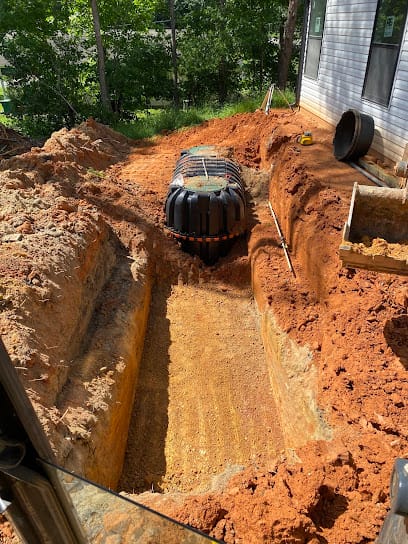
- Drainfield Expansion or Replacement: If your drainfield has failed in Huntersville's Iredell clay (standing water, sewage surfacing, backups into the home), repair is rarely an option—the biomat in the soil is too thick to recover. Replacement requires new perc tests to confirm the existing location is still viable (often it isn't after 20-30 years of use) or finding a new location on the property. In clay soils, drainfields are often 50-100% larger than in sandy areas to compensate for slow percolation. Replacement costs in Mecklenburg County typically run $15,000-$35,000 for standard systems, or $30,000-$50,000+ for lakefront properties requiring pump systems and watershed-compliant designs.
- Aerobic Treatment Units (ATUs) for Problem Properties: For properties with severe soil limitations (extremely slow clay, high water tables, small lots), aerobic treatment units (ATUs) provide an alternative. ATUs use oxygen to pre-treat wastewater before discharge, producing cleaner effluent that places less demand on the drainfield. This allows smaller drainfields or use in marginal soils. ATUs require electricity, annual maintenance contracts, and county permits, but they're often the only viable solution for lakefront properties or homes on undersized lots. Contractors in our directory can design ATU systems compliant with Mecklenburg County Groundwater & Wastewater Services regulations.
- Real Estate Transfer Inspections: Mecklenburg County often requires septic inspections for property transfers, especially for homes built before 1995 or lakefront properties. If you're buying in Huntersville—particularly in The Hamptons, Macaulay, or older Gilead Road neighborhoods—insist on a comprehensive inspection before closing. Contractors in our directory can assess tank condition, check for effluent filters (many older systems lack them), test lateral lines with dye or camera, verify D-box level, and confirm compliance with current watershed buffer rules. A $500-$800 inspection can uncover $20,000+ in needed repairs, giving you negotiating leverage with the seller or the option to walk away.
- Riser Installation for Buried Tanks: Many Huntersville systems installed in the 1980s-1990s have tank lids buried 18-24 inches underground. Digging them up for every pump-out or inspection costs $200-$400 in labor alone. Riser installation brings the lids to ground level with secure, watertight caps (typically green or black plastic). Contractors in our directory charge $400-$800 for two risers (most tanks have inlet and outlet lids), but the convenience and long-term savings make this a smart upgrade—especially for large homes requiring frequent pumping.