Louisburg's Soil Profile: Why Piedmont Red Clay Changes Everything
Louisburg's Cecil and Appling soil series are textbook Piedmont geology: 12-18 inches of sandy loam topsoil that drains beautifully, underlain by 2-6 feet of dense red clay with percolation rates of 45-90 minutes per inch. This two-layer structure creates a "perched water table" effect during wet seasons—effluent percolates quickly through the sandy surface, then pools on top of the clay layer instead of draining deeper. Add granite bedrock outcrops that can appear at 3 feet or 30 feet depth, and Franklin County's rolling terrain, and you're dealing with installation challenges that require soil testing to at least 4 feet depth—not just surface perc tests.
- Perched Water Tables = Winter Failures: Franklin County receives 45+ inches of rain annually, with wet winters saturating that clay subsoil layer. Drainfields installed too shallow (18-24 inches) pool effluent on the clay during January-March, causing backups even in properly sized systems. Contractors need to excavate to 30-36 inches or use pressure distribution to force effluent through the clay layer. Systems designed without considering perched water fail within 5 years.
- Granite Bedrock = Refusal: Near the Tar River and throughout Hickory Rock, granite outcrops force excavation "refusal"—backhoes hit solid rock at 24-36 inches. Standard drainfield trenches can't be dug. Solutions include blasting (expensive and disruptive), mound systems (elevated drainfields built 3-4 feet above bedrock), or pump systems that move effluent to deeper soil pockets. Contractors unfamiliar with Piedmont granite underestimate costs or design systems that can't be built.
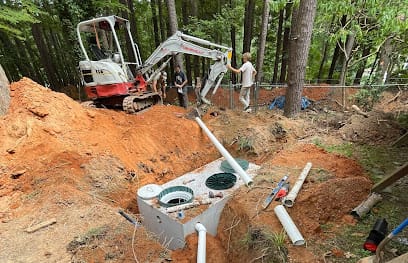
- Red Clay Staining = Aesthetic Issues: Louisburg's red Piedmont clay stains everything. During drainfield excavation, red clay mud tracks through yards, stains driveways, and creates cleanup nightmares. Experienced contractors use silt fencing, tarps, and proper site management to minimize damage—fly-by-night operators leave properties looking like construction zones for months.
Common Septic Issues in Louisburg
1. Lake Royale High-Density Hydraulic Overload
Lake Royale's gated community features small lots (0.5-0.75 acres typical) with homes built in the 1990s-2000s when density standards were looser. Conventional gravity drainfields require 150-200 linear feet of laterals—impossible on these compact parcels. Many older Lake Royale systems are undersized, causing hydraulic overload during high-usage periods (holidays, house guests). Symptoms include slow drains when multiple fixtures run, gurgling sounds after showers, and wet spots appearing in the yard near the drainfield. Franklin County now requires Aerobic Treatment Units (ATUs) or Low Pressure Pipe (LPP) systems for Lake Royale repairs—these advanced systems reduce drainfield size by 40-50%, fitting on small lots. Our directory includes contractors licensed to install and maintain these systems, including annual service contracts required by county permits.
2. Perched Water Table Failures (Historic Downtown & North Ridge)
Homes near Louisburg College and in North Ridge Estates often experience seasonal drainfield failures—systems work perfectly in summer but back up during wet winters (December-March). This is the classic perched water table symptom: effluent percolates through sandy topsoil then pools on the clay layer 18-24 inches down instead of draining deeper. The clay becomes saturated, forcing effluent to surface in the yard or back up into the house. Symptoms include sewage surfacing during rainstorms, toilet backups after heavy rain, and foul odors near the drainfield in wet seasons. Solutions include deeper excavation (30-36 inches to reach more permeable subsoil), pressure distribution systems (which force effluent through clay), or mound systems (elevated above the perched water layer). Contractors in our network understand Piedmont hydrology and design systems that work year-round, not just in dry weather.
3. Granite Bedrock Refusal (Tar River Corridor & Hickory Rock)
Properties near the Tar River and throughout Hickory Rock frequently hit granite bedrock at 24-36 inches—shallow enough to stop conventional drainfield excavation. The backhoe hits solid rock and can't dig trenches. This is "refusal" in septic terminology. Symptoms include systems that pass perc tests but can't be installed as designed—contractors discover bedrock during excavation, requiring redesign and additional costs. Solutions include mound systems (built 3-4 feet above bedrock using imported sand fill), chamber systems (which need less depth than gravel laterals), or blasting (expensive at $3,000-$8,000 but sometimes necessary). The only prevention is deep soil boring (4+ feet) before system design. Our network contractors perform these tests, map bedrock depth, and design systems that work with Piedmont granite geology.
4. Tar-Pamlico Basin Nutrient Restrictions (River Buffer Properties)
Properties within 575 feet of the Tar River or its tributaries fall under Tar-Pamlico River Basin nutrient reduction rules. Conventional septic systems do not meet current nitrogen and phosphorus standards. During repairs, renovations, or real estate transactions, these properties trigger mandatory upgrades to nutrient-reducing technology. Solutions include ATUs (which reduce nitrogen by 50-70%), specialized drainfield designs with deeper treatment zones, or drip irrigation systems (which distribute effluent slowly, allowing better soil treatment). Contractors in our directory navigate these regulations, secure permits from Franklin County Environmental Health, and install compliant systems that protect the Tar River while meeting homeowner needs.
Complete Septic Solutions for Louisburg Homeowners
- Septic Tank Pumping & Effluent Filter Maintenance: In Piedmont red clay with perched water tables, drainfields operate near capacity during wet seasons. Contractors in our directory pump tanks every 3 years for standard households (every 2 years in Lake Royale high-density communities or if you have a garbage disposal). They remove both liquid and solids, properly dispose waste at licensed facilities, and clean the effluent filter—critical in clay soils where clogged filters force effluent backward into the house.
- Aerobic Treatment Unit (ATU) Installation & Maintenance (Lake Royale): ATUs are now standard for Lake Royale repairs and new construction in high-density areas. These systems use oxygen injection to break down waste faster, reducing drainfield size by 40-50%—essential for small lots. Our network includes contractors who install NSF-certified ATUs, design compliant drainfields, connect alarm systems, and provide annual maintenance contracts (inspections, blower service, chlorine tablet replacement) required by Franklin County permits. Expect $10,000-$15,000 installation plus $300-$500/year maintenance.
- Low Pressure Pipe (LPP) Systems for Compact Lots: LPP systems use pumps to distribute effluent evenly across small drainfields, maximizing treatment in limited space. Ideal for Lake Royale lots where conventional gravity systems won't fit. Specialists in our directory design LPP systems with dosing timers, install manifolds with pressure-compensating emitters, and provide pump maintenance—extending system life on challenging lots.
- Mound System Design & Installation (Bedrock Properties): For Hickory Rock and Tar River corridor properties hitting granite bedrock at shallow depths, mound systems are often the only code-compliant option. Our directory includes contractors licensed to design elevated drainfields (3-4 feet above bedrock using imported sand fill), install pump stations to lift effluent to the mound, and provide annual pump maintenance. Mounds require larger lots (1.5+ acres typically) and cost $18,000-$28,000 installed.
- Perched Water Table Remediation (Winter Failure Prevention): If your downtown or North Ridge system fails every winter but works in summer, the clay subsoil is creating perched water conditions. Contractors in our network excavate deeper (to 30-36 inches), install pressure distribution manifolds (forcing effluent through clay), or use chamber systems designed for layered soils. These solutions prevent seasonal backups and extend drainfield life.
- Deep Soil Testing & Granite Mapping: Standard perc tests sample only the top 12 inches—useless in Piedmont soils where clay layers and bedrock hide at 24-48 inches. Our network contractors perform 4-foot test pits and soil borings to map clay depth, identify bedrock, and measure actual percolation rates at installation depth. This prevents "refusal" surprises during construction and ensures drainfield designs match site conditions.
- Tar-Pamlico Basin Nutrient Compliance Upgrades: If you're selling a riverside property or renovating within the Tar River buffer zone, you may need nutrient-reducing technology. Our directory includes contractors who retrofit ATUs, install specialized drainfield designs, or add drip irrigation systems—all approved under Tar-Pamlico Basin rules. They handle permitting with Franklin County Environmental Health and coordinate inspections.
- Real Estate Transfer Inspections (Franklin County): Franklin County requires septic inspections for most property sales. Inspectors evaluate tank condition, measure sludge depth, test drainfield absorption, and verify compliance with current codes—especially critical for Lake Royale properties where undersized systems are common. Our directory connects you with certified inspectors who provide honest assessments and recommend contractors for compliant repairs if upgrades are needed.
- Emergency Drainfield Repairs (Seasonal Backup Response): When your system backs up during Franklin County's wet winters, you need immediate help. Our network includes 24/7 contractors who pump tanks to relieve pressure, assess whether failure is temporary (saturated clay) or permanent (design flaw), and provide emergency repairs. For Lake Royale properties, they coordinate with HOA requirements and navigate gated community access.