Marshall's Terrain Profile: Why Extreme Mountain Slopes Change Everything
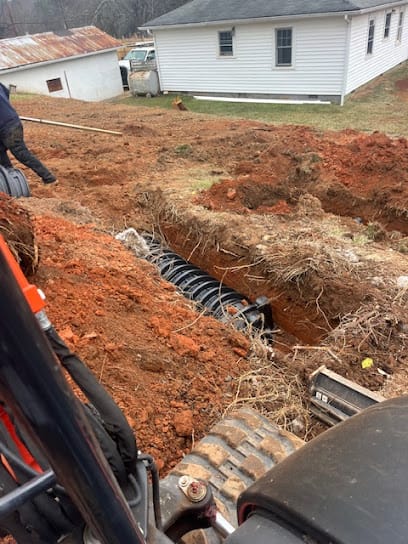
Marshall is built in a narrow valley between steep mountain ridges—the French Broad River bisects the town, creating a "one street wide" downtown with slopes immediately climbing 30-40% on both sides. Madison County's soils are micaceous sandy loam over red clay, filled with mica mineral flakes that act as ball bearings when wet. On Marshall's extreme slopes, saturated micaceous soil loses cohesion and slides downhill. Add bedrock at 18-24 inches (sometimes solid rock, sometimes fractured schist or granite), and you're dealing with the most challenging septic installation conditions in North Carolina. This isn't gentle rolling terrain—it's vertical mountain geography where systems must be engineered to resist gravity, bedrock, and erosion.
- Extreme Slopes (30%+) = Drainfield Sloughing Risk: Most Marshall properties exceed 30% slope—grades where conventional drainfields risk catastrophic failure from downhill sliding ("sloughing"). When micaceous clay saturates during heavy rain, the mica flakes lubricate soil particles, causing entire drainfield sections to slide downhill, rupturing pipes and creating environmental hazards. Madison County requires cut-and-fill permits, erosion control plans, and engineering certifications for slopes >25%. Standard gravity drainfields are prohibited on slopes >40% without specialized design.
- Shallow Bedrock (18-24 inches) = Limited Anchoring: Unlike Piedmont counties with 4-6 feet of soil depth, Marshall hits bedrock at 18-24 inches across most properties. Conventional drainfield trenches require 30-36 inches—impossible when solid rock appears at 20 inches. This forces shallow chamber systems (needing only 18 inches), mound systems (elevated above bedrock), or at-grade designs. Shallow bedrock also limits the depth for anchoring systems on slopes—there's nowhere to secure deadman anchors or retaining walls.
- Micaceous Clay Instability = Slope Failures: Mica content makes Madison County soils uniquely unstable. The flat mineral flakes create slip planes when saturated. On Marshall's steep terrain, this causes gradual downslope creep (systems slowly migrate downhill over years) or sudden failures during storms (entire sections slide at once). This is different from Piedmont clay or Coastal Plain sand—mica makes everything slippery.
Common Septic Issues in Marshall
1. Catastrophic Drainfield Sloughing on Extreme Slopes (Ridgeline Properties)
This is Marshall's #1 septic nightmare. If you live on a ridgeline property with views of the French Broad River valley, your lot likely has slopes exceeding 30-40%. During heavy rain, drainfields installed without proper slope stabilization can slide downhill catastrophically—the entire system (pipes, gravel, soil) breaks loose and moves downslope. Drainfield sloughing is caused by saturated micaceous clay losing cohesion. Symptoms include visible soil movement above the drainfield after rain, pipes rupturing and effluent surfacing mid-slope, sections of the drainfield disappearing downhill, and environmental violations (soil and sewage entering streams or the French Broad). Madison County treats sloughing as an environmental emergency—fines can exceed $25,000 if contamination reaches the river. Prevention requires cut-and-fill terracing (excavating into the upslope and using fill to create level platforms), retaining walls (concrete or gabion walls holding terraces), geotextile reinforcement (fabric layers preventing soil movement), and proper drainage (diverting surface water away from drainfield areas). Contractors in our directory are licensed for mountain slope engineering and coordinate with Madison County Environmental Health on erosion control permits.
2. Shallow Bedrock Installation Failures (Jupiter/Barnardsville & Downtown Areas)
Marshall hits bedrock at 18-24 inches across most properties—far too shallow for conventional 30-36 inch drainfield trenches. Flatland contractors who don't understand mountain geology arrive with backhoes expecting 4 feet of soil and hit solid rock at 20 inches. Symptoms include systems that pass perc tests but can't be installed as designed (bedrock discovered during excavation), recurring system failures (drainfields installed in only 18 inches of soil don't provide adequate treatment), and complete installation abandonment (contractors give up when bedrock is encountered). Solutions include chamber systems (plastic arch chambers requiring only 18-24 inches soil depth), at-grade systems (shallow beds installed on natural grade with minimal excavation), mound systems (elevated 3-4 feet above bedrock using imported sand fill), or blasting (expensive at $5,000-$10,000 but sometimes the only option). The only prevention is deep bedrock mapping before system design—excavating multiple test pits to 3-4 feet, mapping bedrock depth and structure, and designing systems matched to actual site conditions. Our network contractors perform this evaluation as standard practice.
3. Micaceous Clay Lateral Creep (Walnut Creek & River Corridor Properties)
Even on moderate slopes (15-25%), micaceous clay causes gradual downslope movement of drainfield laterals—a phenomenon called "creep." Over 10-15 years, pipes slowly migrate downhill, breaking joints and creating uneven effluent distribution. Symptoms include recurring pipe joint failures requiring repair every 5-10 years, sections of drainfield progressively appearing farther downslope than original installation, wet spots moving downhill over time, and complete lateral displacement (pipes end up 10-20 feet below original position). This is unique to mica-rich mountain soils—it doesn't occur in clay or sand. Solutions include anchoring laterals with deadman anchors (cables connecting pipes to upslope rock anchors), terracing drainfields (creating flat benches perpendicular to slope), using chamber systems (more resistant to movement), or pressure distribution (smaller pipes less prone to migration). Contractors in our network understand micaceous soil behavior and take preventive measures during installation.
4. French Broad River Nutrient Violations (Blannahassett Island & Riverfront Properties)
Properties on Blannahassett Island or along the French Broad River corridor face the state's strictest septic regulations. The French Broad supports Madison County's whitewater rafting and tourism economy—failing septic systems directly threaten water quality and recreation. Conventional systems do not meet current nutrient standards for river buffer zones. Symptoms include permit denials (existing systems don't meet French Broad Basin requirements), inability to repair in place (must upgrade to nutrient-reducing technology), real estate transaction delays (buyers refuse non-compliant riverfront systems), and environmental enforcement (county monitors river quality closely). Solutions include Aerobic Treatment Units (ATUs) (reducing nitrogen by 50-70%), recirculating sand filters (providing secondary treatment), drip irrigation systems (distributing effluent slowly for better soil treatment), or mound systems with extended treatment zones. Madison County requires 100-foot setbacks from the French Broad for new systems—many older riverfront properties violate this and cannot expand or replace systems in original locations. Contractors in our directory navigate these complex regulations and design compliant systems protecting river water quality.
Complete Septic Solutions for Marshall Homeowners
- Septic Tank Pumping & Slope Stability Monitoring: In extreme mountain terrain with unstable micaceous soils, contractors in our directory pump tanks every 3 years for standard households (every 2 years on slopes >25% or with garbage disposals) and inspect drainfield areas for signs of downslope movement, soil creep, erosion, or slope instability. They document system condition with photos—critical for slope properties where failures develop gradually and suddenly become catastrophic. Proper waste disposal at licensed facilities protects the French Broad River.
- Extreme Slope Engineering & Cut-and-Fill Terracing: For properties on slopes >30% (common throughout Marshall), our directory includes contractors licensed to design and permit mountain slope systems: cut-and-fill terracing (excavating into upslope, using fill downslope to create level platforms), retaining walls (concrete, timber, or gabion walls holding terraces), geotextile reinforcement (heavy-duty fabric layers preventing soil movement), surface water management (diverting runoff away from drainfields), and erosion control (silt fencing, sediment traps during construction). These solutions meet Madison County engineering requirements and prevent catastrophic sloughing.
- Shallow Bedrock Chamber System Installation: When bedrock appears at 18-24 inches, chamber systems are often the only viable solution. These use plastic arch chambers replacing gravel/pipe, requiring only 18-24 inches soil depth. Our network specialists design chamber layouts matched to bedrock contours, install chambers on prepared sand beds, and connect systems to pressure distribution manifolds (ensuring even effluent dosing despite limited soil depth). Chamber systems work reliably where conventional drainfields are impossible.
- Micaceous Clay Lateral Anchoring & Stabilization: To prevent downslope creep in mica-rich soils, contractors in our network anchor drainfield laterals using deadman anchors (steel cables connecting pipes to upslope bedrock or concrete anchors), install retaining structures (small walls preventing lateral migration), terrace drainfields into slope (creating flat benches), or use chamber systems (more resistant to movement than pipes). These techniques prevent the gradual downhill migration that causes joint failures in micaceous mountain soils.
- Deep Bedrock Mapping & Site Evaluation: Standard perc tests sample only surface soils—useless in Marshall where bedrock at 20 inches determines system feasibility. Contractors in our network excavate multiple 3-4 foot test pits across the entire proposed drainfield area, map bedrock depth and structure (solid vs. fractured), test actual percolation at installation depth, and design systems based on bedrock reality. This prevents installation failures from unexpected shallow rock.
- French Broad River Basin Nutrient Compliance: For Blannahassett Island properties or riverfront homes, our directory includes contractors who install nutrient-reducing technology: ATUs (aerobic treatment units), recirculating sand filters, drip irrigation systems, or mound systems with extended treatment zones. They handle permitting with Madison County Environmental Health, coordinate French Broad Basin inspections, design systems meeting 100-foot river setbacks, and ensure compliance protecting Marshall's whitewater recreation economy.
- Mound System Installation on Mountain Bedrock: When shallow bedrock makes conventional drainfields impossible, mound systems provide a solution—elevated drainfields built 3-4 feet above natural grade using imported sand fill. Our network specialists design mounds anchored to prevent downslope movement, install pump stations handling mountain elevations, size systems for Madison County's extreme terrain, and provide ongoing pump maintenance. Mounds work on sites where other designs fail.
- Erosion Control & French Broad Protection: Any excavation in Madison County requires erosion control to prevent sediment reaching the French Broad River. Contractors in our directory install silt fencing, sediment traps, and stabilization measures during construction, coordinate erosion control permits with county inspectors, and implement stormwater best management practices. They prevent violations that can halt projects and threaten river water quality.
- Real Estate Transfer Inspections (Madison County): Madison County requires septic inspections for most property sales. Inspectors evaluate tank condition, assess slope stability, measure soil depth to bedrock, test drainfield absorption, verify French Broad setbacks, and identify code violations. Mountain properties with extreme slopes or riverfront locations often reveal significant issues. Our directory connects you with certified inspectors providing honest assessments and contractors for compliant mountain system repairs.
- Emergency Slope Failure & Sloughing Response: When your Marshall system experiences drainfield sloughing, downslope breakout, or catastrophic slope failure, you need immediate mountain specialists. Our network includes 24/7 contractors who respond to environmental emergencies, pump tanks to prevent further contamination, install temporary erosion control, coordinate with Madison County emergency protocols, and design permanent solutions addressing slope and soil conditions. They navigate Marshall's "one street wide" access challenges and French Broad River protection requirements.