Mooresville's Terrain Profile: Why Lakefront Elevation Changes Everything
Mooresville's Lake Norman waterfront properties occupy steep hillsides dropping 30-60 feet from street level (where roads and utilities run) to lake level (elevation 760 feet at full pool). Homes are positioned mid-slope or at water level to maximize lake views and waterfront access—creating the region's signature architectural feature: million-dollar lakefront homes with finished walkout basements opening to docks and beaches. But this vertical geography creates impossible septic logistics. Conventional gravity systems require houses uphill from drainfields (waste flows down naturally to treatment areas). Lakefront homes are downhill from everything—streets, utilities, and the only suitable drainfield locations. Duke Energy manages Lake Norman's shoreline and enforces strict buffer zones: 200-300 feet from full pool elevation (760 ft) where no septic drainfields, repairs, or expansions are permitted. This forces drainfields uphill and inland, often 40-100 feet above houses. Waste cannot flow uphill naturally—requiring sewage ejector pumps (lift stations) pressurizing waste and forcing it through force mains to elevated drainfields.
- Vertical Elevation = Mandatory Lift Stations: Every Lake Norman lakefront home below street level requires a sewage ejector pump (lift station)—a mechanical system pumping waste uphill against gravity. These pumps sit in buried tanks (typically 200-300 gallon capacity) receiving all household waste. When tanks fill to set levels, float switches activate pumps forcing waste through 2-4 inch force mains (pressurized pipes) uphill 20-60 feet elevation to drainfields near street level. Pumps run multiple times daily (8-20+ cycles depending on household size). This mechanical complexity introduces failure modes conventional gravity systems don't have: pump motor burnout (3-7 year lifespan), check valve failures (allowing backflow when pumps stop), float switch malfunctions (pumps don't activate), and force main ruptures (pressurized waste leaking underground). When any component fails, waste backs up into the house—specifically the lowest point (finished basements with $50K-$150K renovations).
- Duke Energy Buffer Zones = Limited Drainfield Locations: Duke manages Lake Norman for hydroelectric power generation and enforces protective buffer zones around the reservoir. Septic drainfields cannot be installed, repaired, or expanded within 200-300 feet of full pool elevation (760 ft). This restriction applies to ALL lakefront properties—eliminating the entire downslope area between houses and water. Drainfields must be uphill and inland. On lakefront lots 100-200 feet deep, this leaves only narrow strips near property lines or street frontage for drainfield placement. When existing systems fail, expansion downslope is prohibited. Repairs must go uphill—often requiring longer force mains, higher vertical pumping, or complete system relocation to marginal upland areas. Variances are rarely granted. Duke enforcement is absolute.
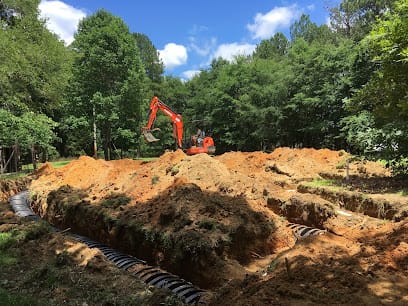
- Disturbed Fill Soils = Unpredictable Performance: Lakefront development involved massive earth-moving—entire hillsides were regraded, cut-and-fill terracing created buildable platforms, and imported fill created flat lawn areas. Properties in The Point, Brawley School Road Peninsula, and other premium developments have 10-30 feet of disturbed fill soil. This fill's percolation capacity is unknown and variable—mixing native clay, imported sand, construction debris, and compacted layers in unpredictable arrangements. Perc tests sample limited points but don't reveal subsurface variability. Drainfields installed in one soil type may transition into different material 20 feet away. Some fill drains well, some barely percolates, creating uneven treatment and premature failures. Only deep profile excavation reveals actual subsurface conditions.
Common Septic Issues in Mooresville
1. Lift Station Pump Failure = Basement Flooding Catastrophe
This is Mooresville lakefront's nightmare scenario—mechanical pump failure causing sewage backup into finished basements within hours. Your lakefront home is everything you dreamed: walkout basement with bar, media room, guest suite opening to dock and beach. The sewage ejector pump runs quietly in a buried tank uphill from the house, forcing waste to the drainfield near street level. Then the pump fails—motor burns out, check valve sticks, float switch malfunctions. Waste stops moving uphill. Gravity takes over. Sewage flows to the lowest point: your finished basement. Within 2-6 hours (depending on household water use), raw sewage backs up through basement toilets, floor drains, and shower drains. By the time you discover it, hardwood is soaked, drywall is contaminated, carpet is ruined. Insurance claims reach $50,000-$150,000 for basement restoration, mold remediation, and HVAC decontamination. This is catastrophic pump failure—preventable mechanical breakdowns causing property damage exponentially exceeding pump repair costs. Symptoms include raw sewage backing up through basement fixtures, sewage odor in lowest level of house, pump alarm sounding (if installed—many don't have alarms), and complete system backup requiring emergency pumping. The root cause is usually pump motor failure (3-7 year lifespan from continuous cycling), check valve failure (allowing backflow), float switch malfunction (pump doesn't activate), or force main rupture (pressurized waste leaking underground). Solutions require immediate emergency pumping (preventing further basement damage), pump replacement (installing new motors, check valves, float switches), duplex pump system upgrades (adding backup pumps that activate when primary pumps fail), high-water alarm installation (alerting homeowners to tank levels before backup into house), backup power systems (generators or battery backup preventing pump shutdown during outages), and preventive maintenance contracts (annual inspections replacing worn components before catastrophic failure). Contractors in our directory understand Lake Norman pump-dependent systems and install the redundancy Lake Norman property values demand—duplex pumps, alarms, and backup power preventing the six-figure basement disasters single-pump failures cause.
2. Duke Energy Buffer Zone Repair Impossibilities
When lakefront drainfields fail and Duke buffer zones prohibit downslope repairs, homeowners face permit nightmares and expensive alternatives. Your 1990s lakefront system is failing—wet spots appear in the yard, drains slow, the health department confirms drainfield failure. The logical repair is expanding the drainfield downslope toward the existing system. Then you discover Duke Energy's 200-300 foot buffer from full pool elevation (760 ft) prohibits ANY septic work in the entire area between your house and the lake. The existing failed drainfield sits partially within the buffer (grandfathered but cannot be expanded). All repairs must go uphill—away from the house, toward property lines or street frontage. Symptoms include permit denials (proposed repairs within Duke buffer), inability to expand existing systems (buffer restrictions), forced uphill relocations (requiring longer force mains, higher pumping), real estate transaction failures (buyers refusing properties with inadequate repair area), and complete system abandonment (some properties physically cannot accommodate compliant repairs). Solutions include uphill drainfield relocation (moving systems to narrow strips near property lines or street setbacks—expensive at $25,000-$40,000), extended force mains (pumping waste 100-200 additional feet uphill to compliant areas—requiring larger pumps, backup systems), advanced treatment reducing size (ATUs, sand filters providing better treatment in smaller footprints fitting marginal upland spaces), off-site shared systems (coordinating with neighbors for community drainfields on adjacent compliant parcels), or sewer connection (converting to municipal sewer if lines are accessible—rare on lakefront). Duke enforcement is absolute—variances are almost never granted. Properties with inadequate compliant repair area face declining values and unmarketable status. Contractors in our directory navigate Duke buffer constraints routinely, design uphill pump-dependent solutions, and coordinate with Iredell County Environmental Health on creative alternatives preventing impossible situations.
3. Disturbed Fill Soil Unpredictable Failures
Premium lakefront developments involved massive earth-moving creating unpredictable subsurface conditions. Your Point or Brawley School Road estate was built on regraded hillside—cut-and-fill terracing created buildable platforms, imported fill leveled yards, and compacted layers supported foundations. Your 15-year-old drainfield is failing prematurely. Excavation reveals the problem: half the laterals are in native Iredell clay (adequate percolation), the other half transitioned into compacted fill (essentially impermeable). The drainfield is half-working, half-dead—creating uneven loading, preferential flow, and localized failures. Standard perc tests didn't reveal this subsurface variability because they sampled limited points. Symptoms include premature system failures (10-15 years instead of 25+), partial drainfield function (some areas work, others saturated), wet spots appearing in unexpected locations (where fill doesn't percolate), and complete replacement required (patching doesn't work when soil variability is fundamental). Prevention requires comprehensive site investigation—excavating multiple deep test pits across entire proposed drainfield area (40-60 inches depth), documenting soil transitions and fill layers, identifying compacted zones, performing percolation tests at multiple depths and locations, and mapping subsurface conditions before system design. When disturbed fill is unavoidable, solutions include complete fill removal and replacement (excavating poor fill, replacing with engineered sand/gravel meeting specifications—expensive at $30-$50 per cubic yard), mound systems above questionable fill (elevating drainfields using imported suitable fill), pressure distribution maximizing treatment (dosing effluent evenly across disturbed areas), or advanced pretreatment compensating for soil limitations (ATUs, sand filters providing treatment independent of questionable fill). Contractors in our network understand lakefront development soil disturbance and perform deep profiling preventing failures from unknown subsurface conditions.
4. Single-Pump Systems Inadequate for Property Values
Many Mooresville lakefront homes have single sewage ejector pumps—adequate for code minimums but inadequate for protecting million-dollar properties from basement flooding risk. Your $1.5M lakefront estate has a single pump in the lift station. It runs reliably—until it doesn't. Pumps fail eventually (motors burn out, check valves stick). With a single-pump system, failure means immediate backup into your basement. No backup, no warning, no grace period. By the time you discover the problem (sewage surfacing in basement bathroom), damage is done. This is inadequate mechanical redundancy for high-value properties. Symptoms aren't failures yet—they're risk exposure. Single-pump systems working fine but offering zero protection against inevitable motor failure. The wake-up call is usually real estate inspection (buyers refusing properties with single pumps) or insurance companies (questioning coverage for preventable pump failures). Solutions require duplex pump system retrofits—installing second pumps in existing tanks (backup pumps activating automatically when primary pumps fail, providing continuous operation during primary pump repairs), high-water alarm systems (alerting homeowners to rising tank levels before basement backup), pump alternation controls (cycling between primary and backup pumps, equalizing wear, ensuring backup functionality), backup power systems (generators or battery backup preventing pump shutdown during power outages—Lake Norman storms routinely cause 4-12 hour outages), and preventive maintenance contracts (annual inspections, component replacement before failure). The investment is $3,000-$8,000 for duplex upgrades. The alternative is $50,000-$150,000 basement restoration after single-pump failure. Contractors in our directory install the redundancy Lake Norman property values demand—treating lift stations like the critical mechanical systems they are, not code-minimum afterthoughts.
Complete Septic Solutions for Mooresville Homeowners
- Septic Tank Pumping & Lift Station Inspection: In pump-dependent Lake Norman systems, contractors in our directory pump tanks every 3 years while inspecting lift station mechanical components—testing pump operation (cycling pumps under load), checking float switches (ensuring activation at proper levels), inspecting check valves (verifying no backflow), examining force mains (looking for leaks or damage), testing high-water alarms (if installed), and documenting pump runtime (assessing remaining motor life). This prevents catastrophic pump failures causing basement flooding.
- Duplex Pump System Installations & Retrofits: For lakefront properties with single pumps, contractors in our network retrofit duplex systems—installing second pumps in existing tanks (or upgrading to larger duplex tanks), connecting backup pumps activating automatically when primary pumps fail, installing alternating controls (pumps take turns, equalizing wear), adding high-water alarms (alerting to failures before basement backup), and providing backup power connections (allowing generator hookup during outages). These protect million-dollar investments from single-point mechanical failures.
- Emergency Pump Failure Basement Flood Response: When pumps fail and basements flood with sewage, time is critical. Contractors in our directory respond 24/7 with immediate emergency pumping (removing sewage from basements and tanks), temporary pump installation (restoring waste removal while permanent repairs are made), rapid pump replacement (installing new motors, check valves, controls—often same-day service), and system upgrades preventing recurrence (duplex pumps, alarms, backup power). They coordinate with restoration companies (water damage specialists), insurance adjusters (documenting mechanical failure vs. neglect), and environmental health (ensuring compliant repairs). Every hour matters when basements are flooded.
- Duke Energy Buffer Zone Navigation & Uphill Relocations: For drainfields failing within Duke buffer zones, contractors in our network design uphill relocations—surveying properties for compliant areas (outside 200-300 ft buffer), designing extended force mains (pumping waste additional distances uphill), sizing pumps for increased vertical lift (20-40 additional feet elevation), installing pressure-rated piping (handling higher pressures), and coordinating permits with Iredell County Environmental Health. They understand Duke enforcement is absolute and design systems that work within buffer constraints—not fight unwinnable variance battles.
- Disturbed Fill Comprehensive Site Investigation: Before designing systems on lakefront fill, contractors in our directory perform deep profile analysis—excavating multiple test pits across entire drainfield areas (40-60 inches depth), documenting soil transitions and fill layers, identifying compacted zones and variable percolation, mapping subsurface conditions (creating accurate profiles), and designing systems matched to actual conditions (not assumptions from limited perc tests). This prevents premature failures from unknown fill variability.
- Terraced Drainfield Installation for Steep Slopes: On lakefront slopes too steep for conventional drainfields, terraced systems work reliably—cutting level platforms into hillsides (creating flat areas for laterals), installing multiple terrace levels (stair-stepping down slopes), pressure-dosing effluent to each terrace (controlling distribution), and anchoring systems (preventing downslope movement). These use steep terrain conventional contractors reject as unsuitable.
- Backup Power Systems & Generator Connections: Lake Norman storms routinely cause 4-12 hour power outages. Without power, lift station pumps don't run—waste backs up. Our directory includes contractors who install backup power—pre-wired generator connections (allowing portable generators to power pumps during outages), automatic transfer switches (starting generators when power fails), battery backup systems (providing 8-24 hours pump operation), and solar-charged battery systems (indefinite operation during extended outages). These prevent backup during storms when plumbers are unavailable and basements are most vulnerable.
- High-Water Alarm Systems & Monitoring: Early warning prevents basement disasters. Contractors in our network install high-water alarms—float switches activating when tanks reach critical levels (before backup into houses), audible alarms (alerting homeowners immediately), remote monitoring (texting alerts when away from home), and dual-zone alarms (warning at moderate levels, alarming at critical levels). These provide 2-6 hour warning before basement backup—time to call emergency service preventing disasters.
- Force Main Pressure Testing & Leak Detection: Underground force main ruptures leak pressurized sewage without visible evidence. Our directory includes contractors who perform force main testing—pressure testing entire force main length (identifying leaks before ground contamination), acoustic leak detection (pinpointing rupture locations), video inspection (examining pipe interiors for cracks), and preventive replacement (upgrading aging PVC or ABS pipes to schedule 40 pressure-rated systems). This prevents environmental violations and pump overwork from undetected leaks.
- Real Estate Transfer Inspections (Lake Norman Lakefront): Iredell County requires septic inspections for property sales. Lake Norman lakefront inspections evaluate lift station mechanical condition (pump operation, check valves, alarms), assess force main integrity (pressure testing), verify Duke buffer compliance (measuring setbacks from full pool elevation), test drainfield absorption (in disturbed fill soils), and identify single-pump inadequacy (buyers demanding duplex upgrades). Lakefront properties routinely reveal pump system deficiencies, buffer encroachments, or disturbed soil failures. Our directory connects you with certified inspectors familiar with lakefront mechanical systems and contractors for compliant upgrades preventing months-long sale delays or deal failures.