Newton's County Seat Profile: Why Historic Infrastructure and Agricultural Growth Change Everything
Newton serves as Catawba County's governmental center—settled in 1845 when the county formed, growing around the courthouse square in classic Southern county seat pattern. Historic downtown features grid-pattern streets (1920s-1950s development) with small urban lots (0.25-0.5 acres) originally developed when municipal sewer wasn't available—homes built with septic systems or cesspools. These properties used terracotta (fired clay) pipe for waste conveyance—standard 1920s-1950s material before PVC. After 70-100 years, terracotta deteriorates—roots intrude, pipes collapse, joints separate. Lloyd Series deep red clay dominates Newton's geology—firm, well-structured Piedmont soil formed from weathered gneiss and schist providing good treatment capacity but requiring properly-sized drainfields (moderate percolation 45-90 min/inch needs adequate space—not minimal code compliance). Startown Road corridor (northwestern Newton extending toward Claremont) experiences explosive residential growth—former tobacco, corn, and soybean fields subdivided into 1-acre lots. Decades of agricultural tillage created plow pan—compacted subsurface layer at 8-12 inches depth where tractor implements repeatedly worked soil at same depth. This hardpan restricts water movement—acting as semi-impermeable barrier preventing adequate drainfield percolation if not remediated before installation.
- Historic Urban Small Lot Zero Repair Area: Downtown Newton's courthouse grid features 1920s-1950s homes on 0.25-0.5 acre lots (50-100 feet wide, 100-200 feet deep). Between house footprints (1,000-1,500 sq ft), garages, driveways, mature trees, property line setbacks, and well locations (if present), there's minimal suitable septic space. Catawba County requires 100% repair area—undeveloped space equal to original drainfield reserved for future replacement. Small urban lots physically cannot provide this—existing drainfield occupies most available space. When systems fail (typically 40-70 years—original installations from 1920s-1980s), there's nowhere for conventional replacement meeting current code. This creates impossible retrofit situations—properties with functioning houses but no compliant septic solution.
- Terracotta Pipe Failure Legacy: Homes built 1920s-1950s used terracotta (fired clay) pipes for waste conveyance—4-6 inch diameter sections joined with mortar or compression fittings. After 70-100 years, terracotta fails: tree roots penetrate joints (seeking moisture, growing inside pipes until complete blockage), pipes collapse from soil pressure (terracotta becomes brittle with age), joints separate (creating leaks, allowing soil infiltration), and interior surfaces deteriorate (rough texture promotes clogging). Symptoms include recurring drain blockages (roots regrow after clearing), backups during heavy rain (separated joints allowing groundwater infiltration overwhelming systems), wet spots in yards (leaking terracotta discharging before reaching tanks/drainfields), and complete failure during excavation (pipes crumble when exposed). Terracotta replacement isn't repair—it's complete conveyance system overhaul requiring PVC installation from houses to tanks/drainfields.
- South Fork Catawba WS-IV Critical Watershed: Properties within South Fork Catawba River basin face Catawba County's water supply protection regulations: minimum 1-acre lot sizes for conventional septic (smaller lots prohibited or requiring expensive alternatives), mandatory advanced pretreatment for repairs on lots under 2 acres (sand filters, ATUs costing $15,000-$25,000), 100-foot vegetative stream buffers (vs. 50 feet in non-critical areas), density limits preventing subdivision (protecting watershed from overload), and prohibition on certain system types (no conventional drainfields on small lots in critical areas). Historic Newton properties along South Fork (built on 0.5-0.75 acre lots before current rules) discover Critical Area restrictions during repair permit applications—facing regulatory barriers compounding physical space constraints.
Common Septic Issues in Newton
1. Downtown Historic Grid Zero Repair Area Retrofit Crisis
This is Newton's defining urban challenge—historic courthouse area homes on small lots where septic system failures create impossible replacement situations from inadequate repair area. Your downtown property near the 1924 Courthouse or Catawba County Museum (built 1920s-1950s on 0.3-acre lot) has a failing system—drains slow, backups occur, wet spots appear. You apply for repair permit through Catawba County Environmental Health. They measure available space: between your 1,200 sq ft house, detached garage, concrete driveway, 10-foot property line setbacks, and two mature oaks (preservation required), you have 1,800 sq ft potentially suitable space. A compliant conventional drainfield requires 1,200 sq ft PLUS 100% repair area (another 1,200 sq ft reserved for future replacement)—total 2,400 sq ft. You have 1,800 sq ft. Permit denied. This is zero repair area impossibility—urban lots physically too small for code-compliant conventional replacement. Symptoms aren't just system failures—they're property unmarketability crises. Failed systems with no conventional repair space, permit denials (inadequate lot size for replacement meeting current standards), real estate transaction failures (buyers refusing properties with no repair area—mortgages denied), declining property values (septic constraints making downtown Newton properties "distressed"), and forced expensive alternatives (if ANY solution exists). Solutions are costly and uncertain: compact advanced treatment systems (ATUs reducing drainfield size 40%—$15,000-$25,000 but possibly fitting in available space), sewer connection (if downtown municipal lines accessible within 200-300 feet—increasingly available but requiring $8,000-$15,000 tap fees plus installation), adjacent land purchase (buying portions of neighboring lots to meet repair area requirements—rare, requires willing neighbors), shared systems (coordinating with neighbors for community drainfields on combined suitable land—complex, requires cooperation and easements), or holding tanks (permanent pump-and-haul if no other options—$200-$400/month indefinitely, reducing property value $50,000-$100,000). Downtown Newton property owners face catastrophic value loss when systems fail—the lots were never designed for modern septic code requirements developed after initial construction. Contractors in our directory specialize in impossible urban lot retrofits—maximizing every suitable square foot, designing compact systems fitting constrained spaces, coordinating sewer connections (expediting city permitting when municipal access exists), and navigating Catawba County variance processes (demonstrating no feasible alternatives—success uncertain but sometimes necessary). They understand these aren't conventional septic repairs—they're real estate preservation operations for Newton's historic courthouse grid.
2. Startown Agricultural Plow Pan Premature System Failures
New construction throughout Startown corridor on former farmland experiences premature septic failures (5-10 years instead of 25+) from unaddressed plow pan compaction preventing adequate drainfield percolation. Your Startown property was created from subdivision of larger farm (100+ acre tobacco/corn operation subdivided into 1-acre residential lots). Site evaluation passed—30-inch perc tests showed adequate percolation (60-90 min/inch in Lloyd clay). Permits were issued. System was installed. Initially it works—for 5-10 years. Then rapid failure: drains slow during wet seasons, wet spots appear over drainfield, system backs up requiring frequent pumping. Excavation reveals the problem: at 8-12 inches depth (below drainfield installation but within effluent flow path), there's plow pan—dense compacted layer from decades of agricultural tillage. Heavy tractors repeatedly working soil at same depth created hardpan restricting downward water movement. Standard 30-inch perc tests measured percolation in UPPER soil (passing) but didn't reveal plow pan below (acting as barrier). This is plow pan premature failure—agricultural legacy preventing long-term performance. Symptoms include new systems failing within 5-10 years (not 25+ typical lifespan—indicating subsurface problem), wet spots appearing during wet seasons (effluent pooling on plow pan unable to percolate deeper), adequate initial performance followed by rapid decline (as biomat forms on already-restrictive plow pan), and complete replacement required if plow pan wasn't addressed (patching doesn't work when subsurface barrier exists). Prevention requires plow pan remediation BEFORE installation: deep subsoiling or ripping (tractor-mounted shanks penetrating 18-24 inches—fracturing compacted layer), multiple passes in grid pattern (ensuring complete plow pan breakup across entire drainfield area), adequate drying time (allowing fractured soil to settle and stabilize—typically 2-4 weeks), and verification testing (confirming plow pan elimination before proceeding with installation). Costs range $800-$2,000 for typical residential drainfield area—adding to installation expense but preventing $15,000-$25,000 premature replacement within 10 years. When plow pan failures occur (existing systems installed without remediation), solutions require complete system replacement with subsoiling—excavating failed drainfield (removing systems installed on unbroken plow pan), performing deep ripping (fracturing hardpan that caused failure), and installing new drainfields in properly-prepared soil. Contractors in our network understand Startown agricultural legacy and refuse to install on farmland without plow pan assessment—performing deep test pits (exposing 18-24 inch profiles looking for compaction), recommending subsoiling when indicated (not assuming former crop fields are suitable "as-is"), and preventing the premature failures common when suburban contractors unfamiliar with agricultural soils install on unbroken hardpan.
3. Terracotta Pipe Collapse Historic System Overhaul
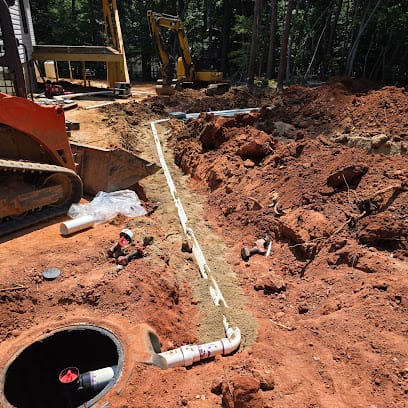
Downtown Newton homes built 1920s-1950s experience complete system failures from terracotta pipe deterioration—requiring full conveyance replacement from houses to tanks. Your historic property (built 1940s) has recurring drain problems: slow drains, frequent blockages requiring snaking, backups during heavy rain, wet spots appearing in yard. Plumbers clear roots annually. Then catastrophic failure—complete backup, standing water in basement or crawlspace. Excavation reveals collapsed terracotta pipes: 4-inch clay sections (standard 1940s material) crumbled with age, tree roots penetrated joints growing inside pipes until complete blockage, separated joints allowing soil infiltration and groundwater entry. This is terracotta complete failure—requiring full system overhaul, not repair. Symptoms include recurring root intrusion despite annual clearing (roots regrow in terracotta joints—permanent problem requiring pipe replacement), backups during wet weather (separated terracotta allowing groundwater infiltration overwhelming system capacity), wet spots from leaking pipes (terracotta discharging before reaching tank/drainfield), and complete collapse during excavation (pipes crumble when exposed—can't be reused). Terracotta can't be patched—entire conveyance system requires replacement. Solutions require complete PVC installation: excavating from house to tank/drainfield (exposing entire terracotta run—often 50-150 feet), removing collapsed clay pipes, installing modern PVC (4-inch schedule 40 meeting current code—tree roots can't penetrate solid PVC walls), properly bedding and backfilling (preventing future settling or breaks), and coordinating with any necessary tank or drainfield repairs (if original 1940s components also failing). Costs range $5,000-$12,000 for complete conveyance replacement (vs. $500-$1,500 for conventional line repair—reflecting excavation complexity and total replacement requirement). When combined with zero repair area constraints on small downtown lots, terracotta failure often triggers complete system redesign—sewer connection coordination (if municipal lines accessible), compact system retrofits (if any space exists), or holding tank installations (if no other options). Contractors in our directory specialize in historic Newton terracotta replacement—coordinating complete overhauls on constrained urban lots, minimizing landscape disruption (preserving mature trees, historic features), and preventing the recurring root/collapse cycles terracotta creates.
4. South Fork Catawba WS-IV Critical Area Regulatory Barriers
Properties within South Fork Catawba River basin face water supply protection regulations creating permit barriers compounding physical septic challenges. Your property along South Fork or tributary (built on 0.75-acre lot before current watershed rules) has a failing system. You apply for repair permit through Catawba County Environmental Health. They inform you your property falls within WS-IV Critical Watershed. Critical Area rules prohibit conventional drainfield repairs on your undersized lot. You need either: (1) acquire additional land to meet 1-acre minimum, (2) install expensive sand filter or ATU system ($15,000-$25,000), or (3) prove lot qualifies for variance (rarely approved). Symptoms aren't system failures—they're regulatory barriers. Permit denials (proposed conventional repairs don't meet Critical Watershed standards), inability to repair systems in place (must upgrade to advanced treatment), real estate complications (buyers discovering Critical Watershed restrictions on small historic lots), subdivision prohibitions (cannot split properties for family/heirs—watershed density protection), and vegetative buffer requirements (100-foot zones where limited septic work permitted). Solutions include sand filter systems (providing tertiary treatment meeting Critical Watershed standards—expensive at $15,000-$25,000 but sometimes only option), ATUs (aerobic treatment potentially qualifying for reduced lot size requirements), adjacent land purchase (buying enough additional property to meet 1-acre minimum—if available from willing neighbors), shared systems (coordinating with neighbors for community drainfield on combined suitable land), or sewer connection (if municipal lines accessible—rare in South Fork basin rural areas). Catawba County Environmental Health maintains Critical Watershed maps showing which properties face these restrictions. Contractors in our directory navigate WS-IV compliance routinely and design systems meeting drinking water protection standards—preventing permit rejections that halt repairs for months or years.
Complete Septic Solutions for Newton Homeowners
- Septic Tank Pumping & Terracotta Line Assessment: In historic downtown Newton with aging terracotta pipes, contractors in our directory pump tanks every 3 years while inspecting conveyance integrity—camera surveys identifying root intrusion (before complete blockage), checking for separated joints (early leak detection), documenting pipe condition (critical for repair planning), and properly disposing of waste. Early terracotta problem identification prevents catastrophic failures and allows proactive replacement planning.
- Downtown Historic Grid Impossible Lot Creative Solutions: For properties with zero repair area, contractors in our network design maximum-density systems: compact ATUs (reducing drainfield size 40%, possibly fitting in available space—$15,000-$25,000), sewer connection coordination (expediting city tap applications when downtown municipal lines accessible within 200-300 feet), holding tank installations (permanent pump-and-haul when no other option—minimizing property value impact), adjacent land easements (purchasing portions of neighboring lots for repair area—if cooperative neighbors), or variance applications (demonstrating no feasible alternatives—success uncertain). They understand downtown Newton crisis—these require real estate expertise, not just septic installation.
- Startown Plow Pan Deep Subsoiling & Ripping: For new construction on former farmland, contractors in our directory perform mandatory plow pan remediation: deep test pit excavation (exposing 18-24 inch profiles identifying compaction), subsoiling with tractor-mounted rippers (penetrating 18-24 inches—fracturing hardpan), multiple passes in grid pattern (ensuring complete breakup across drainfield areas), adequate drying time (allowing fractured soil to settle—2-4 weeks), and verification testing (confirming plow pan elimination). Costs: $800-$2,000 but prevents $15,000-$25,000 premature replacement within 10 years. They refuse to install on unbroken agricultural hardpan—protecting homeowners from preventable failures.
- Lloyd Red Clay Proper Sizing & Installation: For Newton's Lloyd Series firm clay, contractors in our directory design properly-sized systems: 600-900 sq ft drainfields for 3-4 bedroom homes (vs. 400-600 code minimums—Lloyd's moderate percolation requires adequate space), accounting for firm structure (designing for actual treatment capacity, not minimum compliance), using adequate stone aggregate (ensuring proper drainage in firm clay), and preventing the undersized installations that fail within 15 years. They understand Lloyd clay requires space—not accepting marginal designs on constrained lots.
- Terracotta Complete Conveyance Replacement: For historic homes with failing clay pipes, contractors in our network provide complete PVC installation: excavating entire terracotta runs (exposing 50-150 feet house to tank/drainfield), removing collapsed pipes, installing modern PVC (schedule 40 meeting current code—impervious to tree roots), properly bedding and backfilling (preventing future problems), and coordinating with any necessary tank/drainfield upgrades (if original 1940s-1960s components also failing). They minimize disruption on urban lots—preserving landscaping, mature trees, and historic features while performing necessary overhauls.
- South Fork Catawba WS-IV Critical Watershed Compliance: For properties in Critical Watershed, contractors in our directory install advanced treatment: sand filter systems (tertiary treatment meeting drinking water protection standards), ATUs (aerobic treatment potentially qualifying for lot size reductions), or coordinate land acquisition (purchasing additional property to meet 1-acre minimums). They handle permitting with Catawba County Environmental Health, document Critical Watershed boundaries, design compliant systems protecting South Fork water quality, and prevent permit rejections from watershed violations.
- Urban Infill Sewer Connection Coordination: When downtown Newton properties have municipal access within 200-300 feet, sewer connection is often most viable solution. Our directory includes contractors who coordinate city tap applications (expediting permitting with Newton utilities), design gravity or pump connections (based on house elevation vs. sewer line depth), install proper abandonment of septic systems (tanks pumped and crushed, drainfields properly closed), and prevent the permit delays that extend projects for months. Sewer eliminates septic constraints on impossible urban lots.
- Agricultural Conversion Site Assessment: For Startown and other growth corridor properties, contractors in our network perform comprehensive agricultural legacy evaluation: deep soil profiling (18-24 inches exposing plow pan if present), compaction testing (measuring penetration resistance—identifying hardpan), erosion assessment (determining topsoil loss from decades of tillage), and remediation planning (subsoiling, topsoil import if necessary). They don't assume former farmland is suitable for septic without evaluation—agricultural soils require specialized preparation.
- Historic Property Preservation Coordination: For downtown Newton courthouse grid properties, our network coordinates respectful retrofits: minimizing landscape disturbance (preserving mature trees, historic features, period landscaping), locating systems discretely (away from primary views, street frontage), using appropriate materials and techniques (matching property character), and coordinating with historic district requirements (if applicable). They understand these aren't just houses—they're Newton's architectural heritage.
- Real Estate Transfer Inspections (Catawba County County Seat): Catawba County requires septic inspections for property sales. Newton property inspections evaluate downtown lot constraints (measuring available repair area—often zero on courthouse grid), assess terracotta pipe condition (70-100 year old systems routinely failing), test Lloyd clay adequacy (ensuring proper sizing), verify South Fork WS-IV compliance (if applicable—Critical Watershed restrictions), and identify Startown plow pan presence (on agricultural conversions). Properties routinely reveal zero repair area (impossible conventional replacement), terracotta collapse (complete conveyance overhaul required), watershed non-compliance (undersized lots in Critical Areas), or plow pan issues (agricultural hardpan not remediated). Our directory connects you with certified inspectors familiar with Newton county seat challenges and contractors for compliant retrofits preventing months-long sale delays or deal failures.