Red Springs' Flatwoods Profile: Why Seasonal Water Tables and Historic Infrastructure Change Everything
Red Springs occupies Robeson County's Coastal Plain flatwoods—terrain carved by ancient marine processes when Atlantic Ocean extended far inland during higher sea-level periods (creating flat landscape barely above current sea level). Modern elevation ranges 140-180 feet (minimal variation over miles)—slight ridges feature Norfolk and Wagram Series well-drained sandy loam (where Flora Macdonald College and downtown positioned for natural drainage), surrounded by extensive Rains and Coxville Series wet gray clay occupying drainage bays, swamp edges, and Little Raft Swamp vicinity. Town name reflects geological reality—"Red Springs" from iron-rich mineral waters surfacing naturally where sand ridges contact underlying clay aquicludes (impermeable layers forcing groundwater to surface as springs). These same springs indicate HIGH WATER TABLE conditions—groundwater near surface creating both historic settlement attraction (mineral water springs) and modern septic constraint (saturated soils preventing conventional drainfield function). Seasonal water table fluctuations track Coastal Plain rainfall patterns—rising to 12-24 inches during wet seasons (November-April), receding to 36-48+ inches during dry seasons (May-October). Flora Macdonald College area and historic downtown feature brick or concrete block septic tanks (pre-1960s construction standard before modern fiberglass/concrete became available)—structures failing after 60-100 years from mortar deterioration, brick crumbling, walls collapsing inward.
- Seasonal High Water Table 12-24 Inches = Winter Wet-Season Drowning: Rains and Coxville Series wet gray clay (occupying drainage bays, swamp edges, lowland areas) have seasonal water tables rising to 12-24 inches below surface during wet seasons (November-April). Drainfields at standard 24-30 inch depths are SUBMERGED from below—water table rises above installation depth, soil saturated, effluent cannot percolate through already-waterlogged substrate. During dry seasons (May-October), water table drops to 36-48+ inches—drainfields have adequate separation, systems work perfectly. This creates predictable annual pattern—perfect performance May-October, recurring failures November-April, complete resolution by June when water table recedes. Systems aren't clogged or failing from age—they're being seasonally flooded from below by rising groundwater tracking Coastal Plain rainfall cycles.
- Norfolk/Wagram Ridges vs. Rains/Coxville Bays = Elevation Lottery: Red Springs properties on Norfolk or Wagram sandy loam ridges (where Flora Macdonald College, downtown positioned—often just 10-25 feet higher than surrounding bays, barely perceptible elevation changes in flat Coastal Plain) provide year-round adequate drainage IF water table separation maintained. These ridges have water tables 36-48+ inches depth year-round, conventional drainfields work reliably. Rains and Coxville wet gray clay dominate drainage bays, swamp edges, low areas—water tables 12-24 inches wet season, soils show grayish gleying (seasonal saturation indicators), roots concentrate in upper 12 inches (avoiding saturated zones). Historic development positioned on ridges—farmers and early settlers understood drainage importance. Modern infill and subdivision expansion pushes into bays and lowlands—developers maximize acreage ignoring why previous generations avoided building there (too wet for basements, septic challenges).
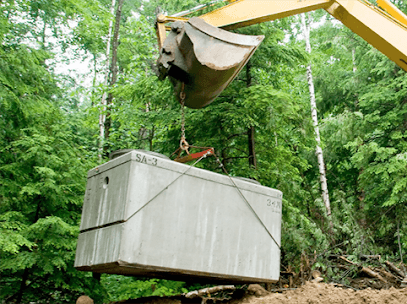
- Flora Macdonald Historic Brick Tank Collapse = 60-100 Year Structural Failure: Properties in Flora Macdonald College area and historic downtown (developed 1890s-1950s when college thriving, creating Victorian and early-20th-century residential neighborhoods) feature brick or concrete block septic tanks—pre-1960s construction standard before modern fiberglass tanks (1960s innovation) and precast concrete tanks (1970s-1980s widespread adoption) became available. Brick tanks constructed on-site by masons—laying brick or concrete block in rectangular chambers, mortar joints sealing, concrete slabs covering. After 60-100 years, mortar deteriorates (water infiltration breaking down cement), bricks crumble (fired clay degrading), walls collapse inward (structural failure flooding tank with soil). These failures create complete system breakdown—tanks filled with soil/sand cannot hold waste, effluent discharges directly to drainfield without settling (sending solids downstream clogging laterals immediately).
Common Septic Issues in Red Springs
1. Rains/Coxville Swamp Edge Seasonal Water Table Winter Drowning
Properties on Rains or Coxville wet gray clay experience perfect dry-season performance but recurring wet-season failures from seasonal high water table drowning drainfields. Your property in drainage bay or near Little Raft Swamp (on Rains Series wet gray clay) has system that works flawlessly May through October—drains fast, no backups, no concerns. Then every November or December, problems start: drains slow despite no heavy use, wet spots appear in yard during winter/spring (water seeping from ground), system backs up requiring pumping, mysterious saturation with no corresponding surface water. By June, everything resolves—drains work perfectly again. This cycle repeats annually for decades. This is Rains/Coxville seasonal water table winter drowning—groundwater rising from below saturating drainfield zones. The water table isn't constant—it fluctuates seasonally tracking Coastal Plain rainfall. During wet seasons (November-April), region receives 20+ inches rainfall. Groundwater rises to 12-24 inches below surface. Drainfields at 24-30 inches depth are BELOW water table—sitting in saturated soil. Effluent cannot percolate when soil already full of groundwater. During dry seasons (May-October), rainfall decreases, evapotranspiration increases, water table drops to 36-48+ inches. Drainfields now have adequate separation—systems work perfectly. Symptoms include perfect dry-season performance / wet-season failures (water table tracking rainfall creates predictable pattern), recurring problems November-April (every wet season brings same issues), wet spots appearing during winter without rain (groundwater surfacing from elevated table—not precipitation puddles), and complete resolution May-June (as groundwater recedes with dry weather). The drainfield isn't clogged or failing from age—it's being seasonally submerged by rising water table tracking Coastal Plain hydrology. Solutions require installation above seasonal high water table: mound systems (building drainfields 3-4 feet UP above natural grade using sand fill—entirely above wet-season water table elevation, $12,000-$20,000 vs. $8,000-$12,000 conventional—working year-round despite groundwater fluctuations), fill systems (excavating Rains/Coxville wet clay 12-24 inches, replacing with imported sand elevating drainfield installation above 12-24 inch seasonal high water), at-grade systems (shallow installations with sand caps minimizing excavation into saturated zones), or pump-to-Norfolk-ridge (if property has any higher Norfolk sandy loam areas—moving waste to better-drained locations with deeper year-round water tables). Many Red Springs Rains/Coxville properties require mounds as STANDARD practice—not alternatives. Swamp-adjacent locations near Little Raft Swamp have permanent high water tables requiring mounds universally. Contractors in our directory understand Coastal Plain seasonal hydrology and design systems that work year-round—not just during favorable dry seasons when water tables are low.
2. Flora Macdonald Historic Brick Tank Collapse Complete Replacement
Properties in Flora Macdonald College area discover brick or concrete block septic tanks collapsing after 60-100 years—requiring complete replacement when structural failure floods tanks with soil. Your historic property near former college campus (Victorian or early-20th-century home reflecting town's heritage as Presbyterian women's education center) has "septic system" that's worked for decades—you've never had problems, assume it's fine. During renovation (or required pre-sale inspection), excavation reveals brick tank—rectangular chamber constructed on-site by masons (pre-1960s standard before fiberglass tanks available). Tank walls are crumbling—mortar deteriorated, bricks breaking apart, portions of walls collapsed inward. Tank interior filled partially with soil/sand that infiltrated through failed walls. This is Flora Macdonald historic brick tank structural collapse—60-100 year deterioration requiring complete replacement. Brick and block tanks were quality construction when new (1890s-1950s)—masons built rectangular chambers (typically 1,000-1,500 gallon capacity), laid brick or block with mortar joints sealing, covered with concrete slabs. But after 60-100 years underground, mortar deteriorates (water infiltration dissolving cement binder), bricks crumble (fired clay degrading from constant moisture), structural integrity fails (walls no longer support themselves), and collapse occurs (walls fall inward flooding tank with surrounding soil). Symptoms often subtle until excavation: property may have worked "adequately" for years (partially-failed tank still providing some settling—but inadequate), frequent backups (collapsed tank cannot hold design volume—fills rapidly), drainfield problems (solids bypass inadequate tank clogging laterals quickly), or discovery during sale inspection (excavation revealing failed tank hidden from surface). The tank itself may be original 1920s-1940s construction—lasting impressive 80-100+ years but now structurally compromised beyond repair. Solutions require complete tank replacement: excavating failed brick structure (removing collapsed walls, interior soil infiltration—often 2-4+ tons material), installing modern fiberglass or precast concrete tank (meeting current 1,000-1,500 gallon capacity requirements—technology unavailable when brick tanks built), properly backfilling (preventing future settlement or damage), and coordinating with any necessary drainfield repairs (if solids bypassed failed tank and clogged laterals—may need complete system replacement). Costs range $8,000-$15,000 for complete replacement (vs. $3,000-$5,000 for modern tank replacement alone—reflecting excavation complexity and potential drainfield damage from decades of inadequate settling). When brick tanks fail, they cannot be repaired—mortar repointing or patching doesn't restore structural integrity to 100-year-old masonry subjected to constant groundwater exposure. Flora Macdonald property owners often discover failures during renovation or sale—adding unexpected $8K-$15K expense to historic preservation projects. Contractors in our directory specialize in historic Red Springs brick tank replacement—coordinating careful excavation (protecting surrounding historic landscaping, mature trees, period features), installing modern compliant tanks (meeting current standards while respecting property character), and preventing the drainfield damage inadequate settling from failed brick tanks causes over decades when solids bypass compromised structures.
3. Little Raft Swamp Proximity Permanent High Water Table Mound Requirements
Properties near Little Raft Swamp discover permanent high water tables (not just seasonal) requiring mound systems as standard installations—not alternatives. Your property within 500-1,000 feet of Little Raft Swamp (Lumber River Basin tributary, extensive wetland complex) has naturally beautiful wooded setting—privacy, wildlife, water features. Site evaluation reveals water table at 18-24 inches year-round—never dropping below 30 inches even during driest periods. This is Little Raft Swamp permanent high water table impossibility—swamp proximity creating perpetual saturation. Conventional drainfields at 24-30 inches would sit in saturated zone permanently—not seasonally. Little Raft Swamp and similar Lumber River Basin wetlands maintain high water tables year-round through several mechanisms: swamp acts as "sponge" storing water (releasing slowly to groundwater creating elevated tables in surrounding areas), proximity to water bodies (swamp surface at or near water table elevation—properties nearby have shallow groundwater by definition), flat terrain (minimal elevation change—properties 500 feet from swamp may be only 5-10 feet higher creating marginal separation), and Coastal Plain hydrology (regional water tables controlled by sea-level base elevation—cannot drop below certain thresholds regardless of local rainfall). Symptoms aren't seasonal failures—they're permanent constraints. Site evaluations revealing 18-24 inch water tables year-round (testing during dry season still shows shallow groundwater—not receding adequately), soil profiles showing gleying and mottling at shallow depths (indicating permanent saturation markers), inability to obtain conventional permits (Robeson County Environmental Health recognizing swamp proximity creates inadequate separation), and universal mound requirements (all nearby properties face same constraints—not property-specific). The water table doesn't fluctuate enough seasonally to matter—it's perpetually too high for conventional installations. Solutions require mound systems as standard practice: building drainfields 3-4 feet UP above natural grade using imported sand (creating elevation above permanent high water table—allowing adequate separation despite swamp proximity $12,000-$20,000), designing for permanent saturation conditions (not optimistic assumptions about seasonal drops that won't occur), sizing properly for swamp-adjacent sites (may require larger drainfields compensating for marginal conditions), and accepting mounds aren't "alternatives" for problem sites but STANDARD installations near swamps. Little Raft Swamp properties require understanding that scenic wetland proximity creating property appeal also creates permanent septic constraints—mounds necessary for ANY compliant installation, not just "problem" situations. Contractors in our directory understand swamp hydrology and refuse conventional installations near Little Raft Swamp—designing mound systems from start, preventing the permit rejections and conventional installation failures that occur when contractors ignore swamp proximity impacts on water tables.
4. Norfolk Ridge Site Selection vs. Rains Bay Unsuitable Development
Properties discover dramatic septic cost/feasibility differences depending on Norfolk ridge vs. Rains bay soil locations—creating $8,000-$15,000 valuation disparities from drainage constraints. Your property search in Red Springs reveals two similar homes—comparable size, age, condition. One on Norfolk sandy loam slight ridge (where historic downtown, Flora Macdonald positioned). Another on Rains wet gray clay in drainage bay (where developers subdivided former agricultural land). Septic evaluations show Norfolk property: conventional drainfield possible ($8,000-$12,000), adequate year-round water table separation (36-48+ inches), reliable performance expected. Rains property: mound system required ($12,000-$20,000), seasonal high water table at 18 inches wet season, ongoing wet-weather performance concerns. This is Norfolk ridge vs. Rains bay drainage disparity—seemingly minor elevation differences (often 10-20 feet over 500-1,000 feet horizontal distance—barely perceptible in flat Coastal Plain) creating dramatically different septic realities. Buyers discover these differences during due diligence. Properties on Norfolk ridges appraise higher (reliable conventional septic, basements possible, landscaping flexibility). Properties on Rains bays appraise lower (expensive mound requirements, no basements—water table too high, seasonal wet spots from saturation). This $8,000-$15,000 disparity reflects lifetime septic cost differences and reduced property utility from drainage constraints. Symptoms include comparable houses appraising differently based on soil series (Norfolk premium, Rains discount—sometimes $20K-$40K difference), real estate transaction failures when buyers discover mound requirements (financing challenges, negotiation breakdowns), and neighborhood value stratification (even within same subdivision—slight elevation creating drainage advantages worth tens of thousands). Solutions require transparent drainage disclosure: identifying soil series before purchase (Norfolk vs. Rains dramatically affects costs—site evaluation during due diligence critical), budgeting for appropriate system types (mounds on Rains, conventional on Norfolk), considering long-term ownership costs (30-year septic expenses vary dramatically by soil series), and coordinating real estate professionals understanding Coastal Plain drainage impacts property values. Contractors in our network provide pre-purchase drainage evaluations—assessing soil series, water table conditions, realistic system costs before buyers commit—preventing discovery surprises that sink transactions or create buyer regret when Rains bay realities emerge post-closing.
Complete Septic Solutions for Red Springs Homeowners
- Septic Tank Pumping & Seasonal Water Table Monitoring: In Coastal Plain seasonal water table areas, contractors in our directory pump tanks every 3 years while monitoring groundwater levels—checking for wet-season saturation indicators (mottling, gleying in soil profiles), documenting seasonal performance patterns (dry-season vs. wet-season function), assessing swamp proximity impacts (if near Little Raft Swamp—permanent high water concerns), and properly disposing of waste. Seasonal monitoring identifies water table problems before catastrophic failures—allowing proactive planning for mound retrofits.
- Rains/Coxville Mound System Installation Above Water Table: For drainage bays and swamp-edge properties with seasonal high water tables at 12-24 inches, mound systems work reliably. Contractors in our network design installations above wet-season water: building drainfields 3-4 feet UP above natural grade using imported sand (creating elevation above seasonal saturation—ensuring adequate year-round separation $12,000-$20,000), installing pump stations (lifting effluent to elevated mounds), sizing for Coastal Plain conditions, and preventing the wet-season drowning conventional systems experience. Mounds work on Rains/Coxville bays where conventional gravity systems fail November-April.
- Flora Macdonald Historic Brick Tank Complete Replacement: For properties with 60-100 year old brick or block tanks, contractors in our directory provide careful excavation and replacement: removing failed masonry structures (excavating collapsed walls, interior soil infiltration—protecting surrounding historic landscaping), installing modern fiberglass or precast concrete tanks (meeting current 1,000-1,500 gallon requirements), properly backfilling (preventing settlement), coordinating drainfield assessment (checking if solids bypassed inadequate tank clogging laterals—may need complete system replacement), and respecting Flora Macdonald historic character (minimizing disruption to period features, mature trees). They understand these aren't just tank replacements—they're historic preservation operations.
- Little Raft Swamp Proximity Standard Mound Practice: For properties near Little Raft Swamp with permanent 18-24 inch water tables, contractors in our network install mounds as standard (not "problem" alternatives): building 3-4 feet above grade (creating separation from permanent high groundwater—not seasonal conditions), designing for swamp hydrology (recognizing water tables won't drop adequately regardless of season), sizing appropriately (compensating for marginal conditions), and educating homeowners that scenic wetland proximity requires specialized engineering (mounds necessary for compliant installations—not optional). They refuse conventional installations near swamps—preventing permit rejections and inevitable failures.
- Norfolk Ridge Proper Site Selection Consultation: For property buyers, our directory includes contractors providing pre-purchase soil evaluation: identifying Norfolk ridges vs. Rains bays (dramatic cost/feasibility differences—Norfolk conventional $8K-$12K, Rains mounds $12K-$20K), assessing water table evidence (testing during appropriate seasons, evaluating saturation indicators), estimating realistic septic costs (conventional vs. mound based on actual conditions), and preventing purchase regrets when Rains bay drainage realities discovered post-closing. They help buyers prioritize Norfolk ridge properties when possible—recognizing lifetime value advantages.
- Seasonal High Water Table Deep Evaluation: Standard site evaluations don't always reveal seasonal patterns. Contractors in our network perform wet-season assessment: evaluating during wet seasons (January-March when water tables high—not dry season when everything looks adequate), excavating deep test pits (exposing 36-48+ inches revealing mottling and gleying indicating seasonal saturation), documenting wet-season conditions (not dry-season when water tables artificially low), designing for high water levels (not average or low conditions), and preventing wet-season failures common when evaluations miss seasonal hydrology. This identifies Rains/Coxville constraints before installation—not after failures.
- Red Springs Historic District Preservation Coordination: For properties in designated historic areas (Flora Macdonald vicinity, downtown), our network coordinates preservation-sensitive installations: minimizing landscape disruption (preserving period features, historic plantings, mature trees), locating systems discretely (away from primary views, street frontages), using appropriate equipment (small machinery on historic properties vs. large commercial equipment), and coordinating with preservation requirements (if applicable—obtaining approvals for work affecting contributing structures). They understand these aren't just homes—they're Red Springs' Scottish heritage defining community identity.
- Lumber River Basin Watershed Compliance: For properties draining to Lumber River system, contractors in our directory design watershed-appropriate systems: proper sizing preventing overload (avoiding excessive nutrient loading to sensitive waters), coordination with Robeson County on basin requirements, and preventing permit rejections from watershed non-compliance. They understand Red Springs sits in Lumber River drainage creating water quality protection considerations.
- Mill Village Community Solutions: For historic mill worker housing areas (typically small lots, older infrastructure), our directory includes contractors understanding community-scale challenges: designing systems fitting constrained properties (mill housing often on small lots similar to Flora Macdonald area), coordinating with community needs (multiple properties facing similar constraints may benefit from coordinated solutions), and respecting working-class heritage (affordable solutions when possible—not assuming affluent renovation budgets). They understand mill communities have different constraints than Flora Macdonald college area estates.
- Real Estate Transfer Inspections (Robeson County Flatwoods): Robeson County requires septic inspections for property sales. Red Springs inspections evaluate soil series (Norfolk vs. Rains dramatically affects costs/feasibility—ridge vs. bay identification critical), assess seasonal water table evidence (looking for mottling, gleying indicating wet conditions—testing during appropriate seasons), verify swamp proximity impacts (if near Little Raft Swamp—permanent high water table concerns), test historic infrastructure integrity (Flora Macdonald area routinely has brick tanks requiring replacement), and identify drainage constraints (Rains bays may require expensive mounds vs. Norfolk conventional). Properties routinely reveal brick tank collapse (Flora Macdonald historic requiring complete replacement $8K-$15K), Rains bay seasonal saturation (requiring mound retrofits), swamp-adjacent permanent high water (mounds mandatory), or inadequate water table separation (systems installed without proper evaluation drowning seasonally). Our directory connects you with certified inspectors familiar with Red Springs Coastal Plain challenges (seasonal water tables, historic infrastructure, swamp proximity) and contractors for compliant solutions preventing months-long sale delays when Scottish heritage properties or drainage constraints discovered during transactions.