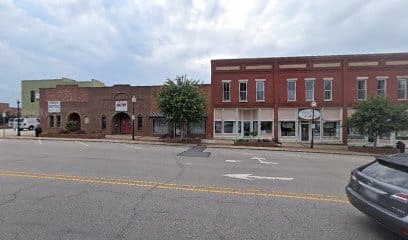
Spencer's Soil Profile: Why "The Clay & The River" Changes Everything
Spencer sits at the collision point of two geologic zones. The town center and historic grid were built on Lloyd and Mecklenburg series soils—the deep red Piedmont clay that defines central North Carolina. North Spencer, near the Yadkin River, sits on Congaree and Chewacla series soils—recent alluvial deposits laid down by centuries of flooding.
- Lloyd/Mecklenburg Clay (Historic District): This is dense, sticky clay formed from weathered granite and schist. Water percolates at 60-120 minutes per inch—extremely slow. Drainfields in clay develop thick biomat layers quickly, reducing the soil's ability to absorb effluent. In Spencer's tight lots, there's no room to expand when the field clogs, forcing homeowners into expensive advanced treatment systems or off-site easements.
- Congaree/Chewacla Alluvial Soils (Yadkin Riverfront): These are sandy loam deposits left by the Yadkin River's periodic floods. While they drain faster than clay, they're unreliable—the seasonal high water table rises within 12-18 inches of the surface during wet months, saturating drainfields and causing hydraulic failure. Rowan County requires minimum 24-inch separation between drainfield bottom and water table, which many riverfront lots cannot provide without expensive mound systems.
- The Density Problem: Southern Railway platted worker housing on 50x100 foot lots in the 1920s. Modern septic codes require 400-600 square feet of drainfield space plus setbacks from property lines, wells, and structures. On a 5,000 square foot lot with a 1,200 square foot house, there's often no legal space for a compliant system. This forces repairs into "alternative system" territory—aerobic treatment units, drip irrigation fields, or shared easements with neighbors.
- Yadkin River Watershed Rules: Everything in Spencer drains north to the Yadkin River, which supplies drinking water to communities downstream. Rowan County enforces strict nitrogen reduction requirements for systems within 1,000 feet of tributaries. Straight piping or failing systems that discharge into storm drains violate watershed protection laws and carry mandatory civil penalties.
Common Septic Issues in Spencer
1. Straight Pipe Legacy: The Hidden Infrastructure Crisis
Spencer's railroad-era homes were built before septic codes existed. Many still have direct discharge systems—waste flows from the house through a short pipe directly into a ditch, storm drain, or the river. Homeowners often don't know this is illegal until they sell or get caught during a compliance sweep. Symptoms include foul odors near storm drains after rain, unusually green grass in drainage ditches, or neighbors complaining about sewage smells. Rowan County Environmental Health can force immediate system installation with fines accumulating daily until compliance.
2. Cinder Block Tank Failures: When "Good Enough" Isn't
Pre-1970 Spencer homes often used cinder block septic tanks—literally mortared concrete blocks instead of poured concrete or fiberglass. These tanks deteriorate over 40-50 years, developing leaks that allow untreated sewage to escape and groundwater to infiltrate. You'll notice drains that work fine until it rains (groundwater flooding the tank), or wet spots in the yard that smell like sewage. Modern codes require watertight tanks with risers for inspection—retrofitting costs $3,000-$5,000 but prevents contamination of neighbors' wells.
3. The Off-Site Easement Dilemma: When Your Lot Can't Fit
On Spencer's small lots, mathematical reality often forces off-site drainfield placement. If your property can't provide the required setbacks and field area, Rowan County allows systems on adjacent properties with recorded easements. The challenge: negotiating with neighbors, surveying the easement, and maintaining legal access for future repairs. This adds $5,000-$10,000 in legal and surveying costs before the first shovel hits dirt. Contractors in our network can coordinate easement specialists and help navigate the county approval process.
4. Hydraulic Overload in Clay: The Biomat Acceleration Problem
Spencer's Lloyd clay builds biomat layers faster than sandy or loamy soils. The biomat is a biological slime that forms where effluent meets soil—it's normal and necessary for treatment, but too much clogs the field. In dense clay, biomat thickness can double in 2-3 years instead of the 5-7 years typical in better-draining soils. Early warning signs include slow drains throughout the house (not just one sink), soggy spots over the drainfield after showers or laundry, or sewage odors near the field. Hydro-jetting the laterals can restore flow temporarily, but ultimate failure requires field replacement or conversion to an advanced treatment system.
5. Seasonal Water Table Failures: The Yadkin River Effect
North Spencer's riverfront properties face seasonal high water table issues. During wet months (November-April), the water table rises to within inches of the surface, saturating drainfields and preventing effluent absorption. You'll see standing water over the field, sewage backing up into the lowest drains, or the high water alarm constantly activating. Rowan County requires 24-inch separation between field bottom and water table—if your lot can't provide this naturally, you'll need a mound system (an elevated sand drainfield) or conversion to an above-ground spray irrigation system, both costing $15,000-$25,000.
Complete Septic Solutions for Spencer Homeowners
- Septic Tank Pumping & Sludge Removal: Spencer's clay soil and small-lot systems require aggressive pumping schedules. Professionals in our directory recommend every 2-3 years for standard households, or every 18 months if you're on a small lot with limited drainfield capacity. Proper pumping includes removing the sludge layer at the bottom and the scum layer at the top—some fly-by-night operators only pump the liquid middle, leaving you vulnerable to solids overflow that destroys drainfields.
- Straight Pipe Abatement & System Installation: If your home has illegal direct discharge, contractors in our network can design compliant systems that fit Spencer's spatial constraints. This often means aerobic treatment units (ATUs) with reduced drainfield requirements, drip irrigation systems that use minimal space, or coordinating off-site easements. Expect $8,000-$15,000 for basic installations, more for advanced treatment or mound systems required by poor soils.
- Cinder Block Tank Replacement: Upgrading from deteriorating block tanks to modern fiberglass or concrete tanks with risers is essential for water quality protection. Contractors pump the old tank, excavate it, and install a new watertight unit with surface-level access lids. This prevents groundwater infiltration (which causes hydraulic overload) and untreated sewage leakage (which contaminates wells). Cost ranges from $3,000-$5,000 depending on tank size and access.
- Off-Site Drainfield Easement Services: For lots that can't accommodate on-site fields, licensed contractors coordinate with easement attorneys and surveyors to establish legal access to neighboring properties. This includes soil evaluations on the easement parcel, county approval for off-site placement, and recorded legal documents protecting future maintenance access. Total project costs typically run $15,000-$25,000 including legal fees, surveying, and system installation.
- Advanced Treatment Systems for Small Lots: When space is limited, aerobic treatment units (ATUs) provide higher-quality effluent that requires smaller drainfields. These "mini wastewater plants" use oxygen injection to break down solids faster than conventional tanks. Rowan County allows 50% drainfield reduction with approved ATUs, making them ideal for Spencer's tight lots. Expect $10,000-$15,000 installed, with annual maintenance contracts ($200-$300/year) for blower servicing and effluent testing.
- Mound Systems for High Water Tables: North Spencer's riverfront properties with seasonal saturation often require elevated sand mound drainfields. These build the drainfield 2-4 feet above natural grade using imported sand and loam, creating the vertical separation Rowan County requires. Mounds are visible (affecting aesthetics) and expensive ($18,000-$25,000), but they're often the only compliant solution for flood-prone alluvial soils near the Yadkin River.
- Hydro-Jetting for Biomat Restoration: When drainfields in Spencer's clay soil show early signs of clogging (slow drains, soggy spots), high-pressure water jetting can break up biomat buildup in the lateral lines and restore flow. This extends field life by 3-5 years and costs $800-$1,500, far less than the $12,000-$20,000 replacement cost. It's not permanent—biomat will rebuild—but it buys time to save for eventual replacement.
- Riser Installation & Tank Access Upgrades: Many Spencer homes have tanks buried 3-4 feet deep with no surface access. Installing risers (green or black plastic lids that extend to ground level) eliminates the excavation required for pumping and inspections, saving hundreds in digging costs per service call. Risers cost $400-$800 to retrofit and protect landscaping from repeated disturbance.