Tryon's Soil Profile: Why Thermal Belt Erosion Changes Everything
Tryon sits in the Blue Ridge foothills at 1,000-2,000 foot elevations where the "Thermal Belt" temperature inversion creates a unique microclimate. But the soil profile is defined less by climate and more by 19th-century agricultural erosion that fundamentally altered what septic systems encounter today.
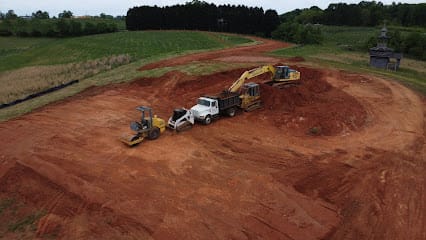
- Pacolet Series (The Severely Eroded Reality): This should be a decent mountain soil—red clay loam formed from weathered granite and gneiss. But Tryon's cotton and tobacco farming era (1800s-1920s) stripped the protective topsoil from steep slopes through decades of row-crop cultivation without terracing. What remains is classified as "Pacolet, severely eroded"—exposed sticky red subsoil that drains at 90-150 minutes per inch (extremely slow, nearly non-functional). This tight clay smears when wet, sealing trench walls during installation. It expands and contracts seasonally, damaging infrastructure. And it builds biomat (biological slime layers) so thick and fast that drainfields fail within 8-12 years instead of the 20-30 years normal in better soils. Conventional gravity drainfields in Pacolet subsoil are disasters waiting to happen.
- Saprolite (The Hidden Solution): Below the eroded Pacolet subsoil, at depths of 3-8 feet depending on slope position, lies saprolite—decomposed granite and gneiss that has chemically weathered but retains the original rock's crystalline structure. It looks like rock, feels gritty, and crumbles by hand. Crucially, it drains at 30-60 minutes per inch—2-5 times faster than the overlying Pacolet. This makes saprolite the preferred septic medium on Tryon's steep slopes. The challenge: standard inspectors see "rock-like material" and deny permits, classifying it as bedrock refusal. North Carolina regulations (15A NCAC 18A .1950) allow saprolite drainfield installation if certified soil scientists evaluate and approve it. This evaluation costs $600-$1,200 but is often the only path to permitting on Tryon's steep, eroded terrain. Without saprolite approval, properties become unbuildable or require $25,000-$40,000 alternative systems.
- Thermal Belt Seasonal Wetness: The "Thermal Belt" refers to a temperature inversion layer at 1,200-1,800 feet elevation where winter temperatures stay 5-10°F warmer than lower valleys or higher peaks. This microclimate allows tender plants to survive and extends biological activity in septic systems. But it also creates hydrological complexity: warm air rising up slopes condenses moisture, creating "seeps"—zones where groundwater emerges mid-slope as small springs or wet spots. These seeps make conventional drainfield installation impossible because the soil stays saturated year-round. You cannot drain a seep—it's where the water table intersects the land surface. Systems must be located upslope or downslope from seep zones, often requiring pump-up installations to reach usable soil.
- Steep Hollow Ravine Crossings: Tryon's terrain features narrow, steep-sided hollows cut by seasonal streams and permanent creeks. Houses built on one side of a hollow often have the only usable septic soil on the opposite side—requiring "aerial crossings" where pressurized pipes are suspended over ravines using insulated lines mounted on cable supports or trenched under creek beds through Polk County-approved culvert installations. Aerial crossings add $3,000-$8,000 to installation costs (engineering, cable systems, insulated piping, creek crossing permits from NC Division of Water Resources). They're mandatory when gravity routing would place pipes in flood zones or when elevation changes require uphill pumping to reach drainfield sites.
Common Septic Issues in Tryon
1. Historic Estate Dry Well & Cesspool Failures
Tryon's pre-1950 estates—particularly in Gillette Woods and older sections of Hunting Country—were built before modern septic codes existed. Many still operate on "dry wells" (rock-lined pits where sewage seeps into surrounding soil) or "cesspools" (underground chambers where solids settle and liquid overflows). These systems are illegal under current North Carolina regulations—they provide minimal treatment and discharge untreated pathogens directly into groundwater. Polk County Environmental Health identifies them during: (1) property transfers (required septic inspections), (2) renovation permits triggering code compliance reviews, or (3) neighbor complaints about contamination. When discovered, owners receive 90-180 day compliance orders: install a modern septic system or face $500/day fines. The challenge: estate properties on steep Thermal Belt slopes lack space for conventional drainfields. Solutions require: (1) saprolite evaluation to permit deeper installation in better-draining material ($600-$1,200 plus system installation $15,000-$25,000), (2) mound systems if slopes are too steep for conventional fields ($25,000-$35,000), or (3) aerobic treatment units with drip irrigation for minimal-space sites ($20,000-$30,000). The financial shock devastates estate buyers who didn't budget for septic replacement.
2. Severely Eroded Pacolet Premature Failures
Systems installed in Pacolet's eroded subsoil follow a predictable failure timeline: work adequately for 5-8 years, start showing symptoms (slow drains, soggy spots) at 8-12 years, and fail completely by 12-15 years. This is half the lifespan of systems in better soils. The mechanism: biomat clogging accelerated by the extremely slow percolation (90-150 min/inch). The biological slime layer at the soil interface thickens abnormally fast—reaching 8-12mm (impermeable) within a decade versus 20-30 years in sandy or loamy soils. Symptoms progress: drains work fine in summer but slow in winter (when clay stays saturated), soggy spots appear over the field after rain, sewage odors develop during wet periods. Before spending $20,000-$30,000 on full replacement, homeowners should explore: (1) Terralift soil fracturing—compressed air probes break up biomat and clay compaction, restoring function for 5-8 years ($3,000-$5,000), or (2) hydro-jetting laterals—high-pressure water clears biomat from pipes ($1,500-$3,000). These interim solutions buy time while saving for eventual replacement in saprolite.
3. Ravine Aerial Crossing Failures
Homes in Tryon's steep hollows—particularly in the Valhalla area and upper Thermal Belt slopes—often require septic pipes to cross seasonal streams or ravines to reach usable drainfield soil on opposite hillsides. "Aerial crossings" suspend pressurized pipes over ravines using insulated lines mounted on steel cables or concrete supports. The failures: (1) freeze damage—inadequate insulation causes pipes to freeze during mountain winters, blocking flow and causing sewage backups, (2) cable corrosion—steel support cables rust and fail after 15-20 years, dropping pipes into creeks, (3) flood damage—seasonal flooding undercuts support footings or washes out creek-bed buried sections. Symptoms include sewage backing up during cold weather, pump alarms activating, or visible pipe sagging over ravines. Repairs require: replacing insulation ($2,000-$4,000), reinstalling support cables ($3,000-$6,000), or complete crossing redesign if original engineering was inadequate ($8,000-$15,000). Prevention requires professional engineering of aerial crossings—not contractor improvisation.
4. Equestrian Hoof Compaction Damage
Tryon's horse country properties face a unique challenge: hoof compaction of drainfields located in or near pastures. A 1,200-pound horse generates 80-120 PSI of pressure per hoof—enough to compress soil and crush buried pipes when concentrated on small areas. Repeated traffic across drainfields compacts the soil, reducing percolation rates by 40-60% and causing premature failure. Symptoms include: slow drains after horses have been in that pasture, soggy spots appearing in hoof-trafficked zones, or sewage surfacing where pipes have been crushed. Polk County requires drainfields in horse pastures to be: (1) fenced with permanent barriers (board fence, electric fence) preventing equine access, (2) marked with above-ground markers identifying the protected zone, or (3) relocated outside active pastures if fencing is impractical. Remediation of compacted fields requires: excavating the compacted zone ($8,000-$15,000), replacing crushed pipes, and installing permanent fencing. Prevention costs $2,000-$4,000 for proper fencing versus $15,000-$25,000 for field replacement after damage.
5. Thermal Belt Seep Zone Saturation
Tryon's mid-slope seeps—where groundwater emerges at the land surface—create permanent wet zones unsuitable for drainfields. These seeps occur where the water table intersects hillside topography, often marked by lush vegetation, spring-fed streams, or muddy spots that never dry. Homeowners discover seep problems when newly installed drainfields immediately saturate—standing water appears within days, sewage backs up, and the system never functions. The seep cannot be "fixed" by drainage ditches or French drains—it's a permanent feature of the water table. Solutions require: (1) system relocation upslope or downslope from the seep zone ($18,000-$28,000 if pump-up is required), (2) mound systems elevating the drainfield above the seep ($25,000-$35,000), or (3) spray irrigation distributing effluent across hillsides above the seep ($22,000-$32,000). Pre-construction seep identification through seasonal water table monitoring ($400-$800) prevents expensive post-installation failures.
Complete Septic Solutions for Tryon Homeowners
- Septic Tank Pumping & Sludge Removal: Tryon's severely eroded Pacolet clay and rapid biomat formation require aggressive pumping schedules. Professionals in our directory recommend every 2 years for standard households (versus 3-5 years in better soils) because the extremely slow percolation causes solids to build faster—they can't escape into the drainfield like in better-draining soils. Estate properties with seasonal occupancy still need pumping every 3 years minimum even if lightly used, because biomat forms based on bacterial activity, not just volume. Proper pumping removes both sludge (bottom) and scum (top) layers—budget operators who only pump the liquid middle accelerate the biomat problems already endemic to Pacolet subsoil.
- Historic Estate Dry Well & Cesspool Replacement: When Polk County identifies illegal dry wells or cesspools during property transfers or permit reviews, contractors design compliant modern systems for challenging estate properties: (1) saprolite evaluation and installation—soil scientists certify deeper saprolite for drainfield use, allowing conventional systems on steep slopes ($600-$1,200 evaluation plus $15,000-$25,000 system), (2) mound systems for sites where saprolite is too deep or slopes too steep ($25,000-$35,000), or (3) aerobic treatment units with drip irrigation for minimal-space historic properties ($20,000-$30,000 including ATU, drip network, and required pre-treatment). Contractors coordinate 90-180 day compliance timelines and temporary use permits during installation.
- Saprolite Evaluation & Permitting: For properties on Tryon's steep eroded slopes where surface Pacolet subsoil is inadequate, contractors coordinate with certified soil scientists (NC Licensed Geologists or Soil Classifiers) who evaluate saprolite layers 3-8 feet below grade. Scientists perform: (1) infiltration testing in saprolite zones, (2) structural stability analysis ensuring the weathered rock won't collapse, (3) depth-to-bedrock determination, and (4) written reports satisfying Polk County's approval requirements. Evaluation costs $600-$1,200 but often results in permit approval for conventional systems in better-draining saprolite, saving $15,000-$30,000 versus unnecessary alternative systems. Critical for Tryon where saprolite is often the only permitable option.
- Ravine Aerial Crossing Design & Installation: For homes in steep hollows requiring septic pipes to cross ravines or streams, contractors coordinate with professional engineers who design compliant aerial crossings: (1) insulated pressurized piping (freeze-resistant to -10°F), (2) steel cable or I-beam support systems anchored in concrete footings, (3) proper slope and drainage to prevent water accumulation, (4) NC Division of Water Resources stream crossing permits. Installation costs $5,000-$12,000 depending on span distance (20-80 feet typical) and elevation gain. Alternatively, contractors can design creek-bed buried crossings using culverts and armor stone ($4,000-$8,000) when stream grades allow. Both require engineering to prevent failure from freezing or flooding.
- Equestrian Pasture Drainfield Protection: For horse farms and equestrian estates, contractors install drainfields with: (1) permanent board fencing creating 20x30 foot exclusion zones preventing horse access ($2,000-$4,000), (2) above-ground markers (posts, signs) identifying protected areas for property managers, (3) alternative siting outside active pastures when possible, locating fields in wooded areas or lawn zones. When existing fields have suffered hoof compaction damage, remediation includes: excavating compacted zones ($8,000-$15,000), replacing crushed laterals, and installing protective fencing. Prevention through proper fencing costs 1/5 of post-damage replacement.
- Terralift Soil Fracturing for Pacolet Biomat: When drainfields in severely eroded Pacolet subsoil reach 10-15 years old and show biomat clogging symptoms, Terralift soil fracturing offers a $3,000-$5,000 alternative to $20,000-$30,000 full replacement. This process uses specialized probes driven 4-6 feet into the drainfield, then injects compressed air at 1,200 PSI to physically fracture the clay and break up biomat layers. The fracturing creates new infiltration pathways, restoring percolation capacity for 5-8 years. Essential for Tryon properties where premature biomat failure in Pacolet is predictable and inevitable—Terralift extends life while homeowners save for eventual replacement in saprolite.
- Mound System Installation for Steep Slopes: When slopes exceed 25-30% or seep zones prevent conventional drainfield installation, contractors design engineered mound systems—3-4 foot elevated sand structures with: (1) imported sand meeting ASTM specifications, (2) pressure distribution with dosing pumps, (3) topsoil cap and grass stabilization, (4) erosion control for steep Thermal Belt terrain. Mounds are visible landscape features but provide reliable treatment on challenging mountain slopes. Cost: $25,000-$35,000 depending on required height and site access. Often the only compliant solution for Tryon's steepest estate properties.
- Spray Irrigation for Extreme Terrain: When conventional drainfields and mounds are both impractical due to slopes exceeding 35%, rock outcrops, or seep zones, spray irrigation systems distribute effluent through above-ground or shallow-buried spray heads across hillsides. These systems work on grades up to 45% and navigate around terrain obstacles. Requirements include: (1) advanced pre-treatment (ATU or sand filter), (2) multiple irrigation zones with controllers, (3) weather-based shut-off during rain, (4) winter shutdown protocols for freezing weather. Cost: $22,000-$32,000 depending on hillside coverage area and zone complexity. Common on Tryon's most challenging Thermal Belt slopes.
- Seasonal Occupancy Maintenance Programs: Many Tryon estates are used seasonally (summer getaways, winter snowbird homes). Contractors offer seasonal system maintenance: (1) pre-season inspections before occupancy, (2) winterization services (pumping tanks, draining exposed lines) before extended vacancy, (3) spring start-up testing after winter closure, (4) vacant period monitoring (checking for leaks, structural damage, animal intrusion). Annual seasonal maintenance costs $400-$800 but prevents $5,000-$15,000 damage from frozen pipes, tank failures, or animal damage during vacancy periods.
- Pre-Purchase Estate Property Assessments: Before buying Tryon historic estates, contractors perform comprehensive septic and terrain evaluations: (1) identifying dry wells, cesspools, or non-compliant systems requiring replacement, (2) assessing drainfield age and remaining life in Pacolet subsoil, (3) evaluating saprolite accessibility through soil probes, (4) identifying seep zones and slope limitations, (5) documenting aerial crossing condition if present. Assessment costs $500-$900 and identifies: (1) illegal systems requiring $20,000-$30,000 replacement, (2) aging drainfields approaching biomat failure, (3) terrain limitations requiring expensive alternatives, (4) equestrian hoof compaction damage. This prevents surprise expenses after purchase.
- Riser Installation for Mountain Terrain Access: Tryon's steep slopes require deep tank burial (4-7 feet) in hillside excavations to reach stable bearing capacity and protect from erosion. Installing risers (plastic access lids extending to grade level) eliminates the $800-$1,500+ excavation cost every time you need pumping or inspection—especially critical on steep terrain where equipment positioning is dangerous and expensive. Risers retrofit for $900-$1,600 on mountain slopes (accounting for deeper burial and challenging access). Essential for Tryon estates where steep driveways and established landscaping make repeated excavation destructive and costly.