West End's Soil Profile: Why Sandhills Sugar Sand Changes Everything
West End sits in the center of North Carolina's Sandhills region—a crescent of ancient beach deposits left behind when the Atlantic Ocean covered this area 100 million years ago. The soils here, primarily Candor and Lakeland series, are deep (60+ inches), excessively well-drained sands with virtually no clay content. Contractors call it "sugar sand" because it pours through your fingers like granulated sugar—there's zero cohesion between particles. This creates three critical septic challenges: (1) trench collapse during installation, (2) excessive percolation rates that prevent adequate sewage treatment, and (3) groundwater contamination risk from untreated nitrates reaching the shallow aquifer.
- Trench Collapse Hazard: Unlike Piedmont clay soils that hold vertical walls during excavation, Candor sand collapses the moment you dig. A 4-foot-deep trench will cave in within minutes if unsupported, burying equipment and creating lethal hazards for workers. OSHA regulations require protective systems (trench boxes—steel structures that hold walls apart, aluminum hydraulic shoring, or 1:1 sloping that widens trenches to twice their depth). Contractors without Sandhills experience underestimate this—we've seen backhoes buried to the cab in collapsed trenches. Proper shoring adds $2,000-$4,000 to installation costs but is mandatory for both safety and code compliance.
- Excessive Permeability: Standard septic drainfields rely on soil bacteria to treat effluent as it percolates through 24-48 inches of unsaturated soil before reaching groundwater. This process takes 7-14 days in typical Piedmont clay (which drains at 0.5-2 inches per hour). In West End's sugar sand, water percolates at 6-10 inches per hour—meaning effluent reaches the water table in 12-24 hours. This doesn't allow sufficient time for bacterial treatment, especially for nitrogen compounds. The result is groundwater contamination, primarily elevated nitrates (NO3), which are a health hazard at concentrations above 10 mg/L (EPA drinking water standard). Moore County Environmental Health requires larger drainfield footprints (to spread loading) and deeper installations (to maximize unsaturated zone thickness) in sugar sand.
- Low Water Table Challenges: The Sandhills' deep sandy soils typically have water tables at 10-20 feet depth during dry months, dropping to 25-30 feet in summer. This sounds beneficial (more vertical separation between drainfield and groundwater), but it creates two problems: (1) trees and vegetation send roots deep into the unsaturated zone searching for moisture, and these roots invade septic laterals even at 6-8 feet depth, and (2) during winter wet seasons, the water table rises rapidly (up to 5 feet higher than summer lows), which can saturate drainfields designed with inadequate seasonal margin.
- Seven Lakes HOA Aesthetic Requirements: The Seven Lakes Homeowners Association (particularly in West End's Seven Lakes West) enforces strict covenants prohibiting visible septic system components. Mound systems (raised drainfields used in areas with high water tables or poor soil) are prohibited in front yards and restricted in side yards unless screened by landscaping. Pump chambers, control panels, and access risers must be below grade or hidden behind fencing. This forces use of low-profile chamber systems (plastic arch structures that provide soil infiltration surface without raising grade) and subsurface pump chambers with flush-mounted lids. These aesthetic-compliant installations cost 20-30% more than standard systems but are mandatory to pass HOA architectural review.
Common Septic Issues in West End
1. Grinder Pump Failures in Seven Lakes West
Seven Lakes West (the Lake Auman section) has significant topography—many homes are built on slopes leading down to the lake, with driveways and garages below street level. These "walkout basement" designs mean the main sewer line exits the house below the elevation of the street or drainfield, requiring grinder pumps (sewage grinders that macerate solids and pump slurry uphill through small-diameter force mains). Unlike effluent pumps used in conventional pump-dosed systems, grinder pumps handle raw sewage with toilet paper, wipes, and debris. Common failure modes include: (1) impeller clogs from non-flushable items (wipes, feminine products, dental floss), (2) motor burnout from continuous cycling when the check valve fails and sewage flows backward, and (3) float switch malfunctions causing overflow into the garage or basement. Symptoms of grinder pump failure include sewage backing up into the lowest drains (basement toilets, garage utility sinks), a loud grinding or buzzing sound from the pump chamber, or visible sewage around the outdoor pump station lid. Emergency replacement is critical—a family of four can fill a 50-gallon grinder pump basin in 6-8 hours, causing rapid overflow. Contractors in our network stock replacement pumps (typically Liberty or Zoeller brands, $1,200-$2,000 installed) and offer 24/7 emergency service because grinder pump failures in Seven Lakes create immediate health hazards.
2. Trench Collapse During Installation or Repair
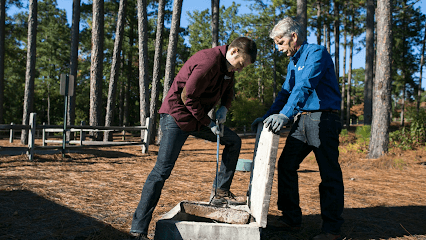
West End's sugar sand makes every septic excavation a technical challenge. When contractors dig drainfield trenches (typically 18-36 inches wide and 24-48 inches deep), the sand walls flow inward like liquid within minutes. Without proper shoring, the trench fills itself, burying distribution pipes, aggregate (gravel), and sometimes equipment. OSHA requires protective systems for trenches over 5 feet deep, but Moore County inspectors enforce shoring requirements at 4 feet due to documented collapse incidents. Proper protection involves: (1) trench boxes—heavy steel structures lowered into the excavation that hold walls 4-6 feet apart while workers install components, then lifted out as backfilling progresses ($500-$1,000/day rental), (2) aluminum hydraulic shoring—adjustable panels that press against trench walls ($300-$600/day), or (3) 1:1 sloping—widening trenches so walls are angled at 45 degrees (requires excavating 2x the width but eliminates collapse risk). Most West End installations use trench boxes despite the added cost ($2,000-$4,000 per project) because they're reusable and meet OSHA/Moore County requirements. Homeowners should verify that contractors have proper shoring equipment before work begins—"We'll be careful" isn't compliance.
3. Groundwater Nitrate Contamination from Rapid Percolation
The Sandhills' excessively drained sands create a paradox: while fast percolation prevents surface ponding and drainfield failures, it also prevents adequate sewage treatment. Septic effluent contains 40-60 mg/L of nitrogen (mostly as ammonium and organic nitrogen). In clay soils with slow percolation (0.5-2 inches/hour), bacteria have 10-14 days to convert this nitrogen to nitrate, then further convert nitrate to nitrogen gas through denitrification—a process requiring low-oxygen conditions in saturated soil. In West End's sugar sand (percolating at 6-10 inches/hour), effluent reaches the water table in 24-48 hours, with minimal bacterial contact time. Nitrogen reaches groundwater as nitrate (NO3) at concentrations often exceeding 10 mg/L—the EPA's maximum contaminant level for drinking water. Symptoms of nitrate contamination include well water that tests positive for nitrates (homeowners with private wells should test annually), blue-baby syndrome in infants (methemoglobinemia caused by nitrate interference with blood oxygen), and algae blooms in nearby ponds or lakes (nitrate is a nutrient fertilizer). Solutions include: (1) larger drainfield footprints to reduce loading per square foot (Moore County may require 50-100% larger fields in sugar sand), (2) deeper installations to maximize unsaturated zone thickness (placing laterals at 36-48 inches depth instead of standard 24 inches), or (3) nitrogen-reducing systems like sand filters or aerobic treatment units that pre-treat effluent before soil discharge.
4. Seven Lakes HOA Non-Compliance and Permit Denials
Seven Lakes' architectural covenants create a unique permitting challenge: even if Moore County Environmental Health approves a septic design, the HOA can reject it for aesthetic reasons. Common rejection triggers include: (1) visible mounds in front yards or side yards visible from streets (Seven Lakes West is particularly strict), (2) above-ground pump chambers or control panels not screened by fencing or landscaping, (3) access risers (tank lids) that protrude above grade instead of flush-mounted designs, and (4) excavation scars or disturbed landscaping not restored to HOA landscaping standards within 30 days. The solution is proactive HOA coordination before permit application. Contractors in our directory prepare aesthetic compliance packages showing: low-profile chamber systems (Infiltrator or Arc chambers that eliminate mounds), subsurface pump chambers with flush lids (only 4-6 inches visible), landscaping restoration plans, and construction access routes that minimize turf damage. HOA architectural review adds 4-8 weeks to project timelines, but attempting to bypass review results in stop-work orders and fines ($100-$500 per day). Some homeowners discover HOA restrictions only after installing non-compliant systems and facing mandatory removal/replacement at their own expense ($20,000-$40,000).
Complete Septic Solutions for West End Homeowners
- Septic Tank Pumping & Sludge Removal: Seven Lakes properties should maintain standard 3-5 year pumping intervals, but homes with grinder pumps need more frequent service. Why? Grinder pumps macerate solids but don't remove them—sludge still accumulates in the tank. If the tank isn't pumped regularly, sludge escapes into the grinder pump basin, clogging the impeller and causing pump failure. Contractors in our network service both gated communities (with gate access codes in their dispatch systems) and rural NC-211/Jackson Springs areas. Always include effluent filter cleaning—tanks installed after 2001 have filters that clog rapidly in sugar sand systems where groundwater infiltration is common. Seven Lakes West residents should schedule pumping during off-peak months (fall/winter) to avoid summer traffic congestion through the gated entries.
- Grinder Pump Replacement & Emergency Service: Grinder pump failures are Seven Lakes' #1 septic emergency. Symptoms include sewage backing up into basement drains, loud grinding noises, or visible overflow around the pump station. Stop all water usage immediately when a grinder pump fails—a family of four generates 200-300 gallons/day, which will overflow a 50-gallon pump basin in hours. Contractors in our directory stock replacement grinder pumps (Liberty ProVore, Zoeller Shark series) and offer 24/7 emergency service. Typical replacement costs $1,500-$2,500 including pump, electrical hookup, and testing. Preventive maintenance (annual inspection of floats, check valves, and impeller) costs $150-$300 but prevents $2,000+ emergency replacements. Never flush wipes (even "flushable" brands), feminine products, or dental floss—these are the top grinder pump killers.
- Low-Profile Chamber System Installation (HOA Compliant): Seven Lakes HOA requirements force use of chamber systems instead of traditional gravel-and-pipe drainfields. Chambers (Infiltrator Quick4, Eljen GSF, or similar products) are plastic arch structures placed in trenches that provide 30-40% more infiltrative surface than pipe laterals without raising grade above natural soil level. This eliminates visible mounds while maintaining treatment capacity. Chamber systems cost $8,000-$15,000 for typical 3-bedroom installations in West End's sugar sand, plus $2,000-$4,000 for trench shoring. Installation requires 4-6 feet of unsaturated sand above the seasonal high water table—properties with shallow water tables (under 4 feet from surface) can't use chambers and may need alternative systems like drip irrigation or sand mounds (which HOA may reject).
- Trench Box Shoring Services: Every West End installation requires trench protection due to sugar sand collapse risk. Contractors equipped with trench boxes (4-foot and 6-foot sizes) can safely excavate, install components, and backfill without cave-in risk. Trench boxes are lowered into the excavation by excavator hydraulics, held in place while workers install distribution pipes and chambers, then lifted progressively as backfilling occurs. This adds 1-2 days to installation timelines and $2,000-$4,000 to costs, but it's mandatory for both OSHA compliance and worker safety. Homeowners should verify contractor insurance specifically covers trench collapse incidents—some general liability policies exclude excavation work without supplemental coverage.
- Groundwater Nitrate Mitigation Systems: If well testing reveals nitrate contamination (over 10 mg/L), or if Moore County requires nitrogen reduction due to proximity to Lake Auman or Lake Sequoia, engineered solutions include: (1) recirculating sand filters where effluent passes through a sand bed multiple times before soil discharge ($12,000-$18,000), (2) aerobic treatment units (ATUs) that use oxygen injection to accelerate bacterial treatment ($10,000-$16,000), or (3) drip irrigation distribution that spreads effluent over large shallow areas maximizing treatment ($15,000-$25,000). All three reduce nitrate discharge to 5-15 mg/L from standard 40-60 mg/L. Moore County increasingly requires these systems within 500 feet of lake shorelines to protect water quality. Maintenance is mandatory—sand filters need periodic sand replacement, ATUs need air pump service every 6 months, and drip systems need filter cleaning quarterly.
- Seven Lakes HOA Coordination Services: Contractors in our directory handle HOA architectural review applications for septic work, preparing compliant design drawings showing low-profile installations, subsurface components, and landscaping restoration plans. This includes: (1) pre-application meetings with HOA architectural committees to discuss constraints, (2) CAD drawings showing system placement relative to property lines and sight lines from streets, (3) material specifications for flush-mounted risers and decorative pump chamber lids, and (4) landscaping restoration timelines showing sod replacement, shrub replanting, and mulch refreshment. HOA review adds 4-8 weeks but prevents stop-work orders and fines. Some HOAs require performance bonds ($5,000-$10,000) guaranteeing landscape restoration—contractors familiar with Seven Lakes processes handle these requirements routinely.
- Seasonal Water Table Monitoring & System Sizing: West End's sandy soils have water tables that fluctuate 5-8 feet seasonally (low in summer, high in winter/spring). New installations require deep hole evaluations during wet season (January-March) to measure seasonal high water table depth. Moore County requires 4 feet minimum vertical separation between drainfield bottom and seasonal high water table. Properties with less separation need mound systems (raising drainfield above grade with imported sand fill), which conflicts with Seven Lakes HOA restrictions. The workaround is oversized low-profile chambers placed in deeper trenches (36-48 inches) to maintain separation while avoiding mounds. This requires larger lot footprints and costs $12,000-$20,000 but satisfies both county and HOA requirements.
- Tree Root Management in Deep Sandy Soils: Sandhills trees (longleaf pine, oak, hickory) send roots deep into unsaturated sand searching for the water table. These roots invade septic laterals at depths of 6-8 feet—much deeper than Piedmont systems where roots concentrate in the shallow clay layer. Contractors use bio-barrier root shields (fabric impregnated with herbicide that stops root growth) installed vertically along drainfield perimeters during construction. This adds $1,000-$2,000 but prevents root intrusion for 10-15 years. Existing systems with root problems require hydro-jetting (high-pressure water cutting roots out of pipes) every 3-5 years at $300-$600 per service. Seven Lakes properties with mature longleaf pines near drainfields should budget for routine root maintenance.
Navigating Moore County's Sandhills Septic Regulations
Moore County Environmental Health has specific requirements adapted to Sandhills geology. For new installations, percolation tests showing rates faster than 6 inches/hour trigger mandatory design modifications: (1) drainfield sizing increased by 25-50% to reduce loading per square foot, (2) vertical separation increased to 4-5 feet above seasonal high water table (standard is 3 feet), and (3) consideration of nitrogen reduction systems if within 500 feet of public water supply lakes (Lake Auman, Lake Sequoia). The county requires deep hole soil evaluations during wet season (January-March) to document seasonal high water table—summer evaluations underestimate this critical design parameter.
Trench excavation safety is strictly enforced. Inspectors verify trench protection systems (boxes, shoring, or proper sloping) before approving installations. Contractors without OSHA-compliant equipment face stop-work orders and must demonstrate compliance before resuming. This protects both workers and homeowners from liability.
Grinder pump installations require electrical permits, licensed electrician involvement for 240V circuits, and high water alarm systems connected to both audible alarms (in garage/house) and visual indicators (outdoor warning lights). The county audits grinder pump systems during routine inspections, checking for proper check valve function, adequate venting, and emergency overflow containment.
Seven Lakes properties face dual permitting—Moore County Environmental Health reviews septic design for code compliance, then Seven Lakes HOA reviews for aesthetic compliance. Both approvals are required before installation. Contractors in our directory familiar with this dual process coordinate simultaneous applications, saving 2-4 weeks compared to sequential reviews. Permit fees for standard installations: Moore County $500-$800, Seven Lakes HOA architectural review $150-$300.
Repair permits follow the 50% rule: if repair costs exceed 50% of a full replacement's cost, the entire system must be replaced to current code. This often catches homeowners off guard when "just fixing a pump" triggers mandatory low-profile chamber installation and HOA review. The county works with contractors in our directory who provide transparent cost estimates separating repair vs replacement scenarios upfront.