Willard's Soil Profile: Why Wet Coastal Plain Flatwoods Change Everything
Willard sits in the Upper Coastal Plain—the transition zone between the Piedmont's rolling hills and the flat, wet terrain of North Carolina's coast. The dominant soils are Lynchburg and Rains series: poorly drained, gray sandy loams formed in ancient marine and stream deposits. These "wet flatwoods" have a distinctive layered structure: a sandy surface layer (6-12 inches) over a dense, impermeable clay layer called a "fragipan" or "hardpan" that sits 18-30 inches below the surface. This clay layer acts like a bathtub bottom—water can't percolate downward, so it pools on top, creating a perched water table that fluctuates between 6-18 inches from the surface depending on rainfall. This is perfect for blueberries (which need consistent moisture) but disastrous for septic systems (which need dry, unsaturated soil for effluent treatment).
- Shallow Water Table Hazard: Lynchburg soils have water tables within 12 inches of the surface during wet months (December-April), rising to within 6 inches after heavy rains. Standard drainfield installation requires 18-24 inches of unsaturated soil between the drainfield bottom and the seasonal high water table. In Willard's wet flatwoods, this separation doesn't exist naturally—dig 2 feet down and you hit saturated gray clay. The consequence is immediate system failure if conventional gravity drainfields are attempted: effluent has nowhere to go except back to the surface, creating sewage ponding, basement backups, and health hazards. North Carolina Onsite Wastewater rules (15A NCAC 18A .1950) prohibit drainfield installation where vertical separation is under 12 inches, making conventional systems illegal in most of Willard's flat terrain.
- Norfolk Ridge Exception: Scattered throughout the wet flatwoods are slightly elevated "islands" of Norfolk series sandy soils—remnants of ancient beach ridges formed when this area was underwater. The original 1930s Penderlea farmhouses were intelligently sited on these Norfolk ridges because they provided well-drained locations for homes and septic systems. Norfolk soil has a water table at 30-48 inches depth, adequate for conventional systems. The problem today is that available buildable land on Norfolk ridges is largely exhausted—modern development occurs on the surrounding Lynchburg flatwoods, forcing use of expensive mound or fill systems. When evaluating rural Willard property, identify whether the lot is on a Norfolk ridge (suitable for standard systems) or Lynchburg flatwoods (requiring mounds/fills). Topographic difference is subtle (2-4 feet elevation change) but septic cost impact is massive ($8,000 vs $20,000).
- Agricultural Drainage Infrastructure: During the New Deal era (1933-1939), the federal Resettlement Administration dug an extensive network of deep drainage canals throughout Penderlea to convert wetlands into farmable land. These 6-10 foot deep ditches border most properties and discharge into local creeks. The canals lower the water table by 1-2 feet in adjacent fields, making agriculture viable. However, homeowners mistakenly view these ditches as "storm drains" and illegally connect failing septic systems to them. Pender County conducts annual ditch surveys using dye testing—fluorescent dye introduced into suspect septic systems appears in downstream ditch flow within hours, proving illicit discharge. Fines start at $10,000 and escalate to $25,000 for repeat violations, plus mandatory system replacement costs.
- Depression-Era Infrastructure Legacy: Penderlea homesteads built 1934-1945 used septic technology of that era: brick cesspools (unlined pits where sewage pooled and eventually overflowed into ditches), terracotta clay pipe mainlines (brittle 4-inch diameter pipes with open joints that leak and attract roots), and simple "seepage pits" (hand-dug trenches filled with rocks). These systems were never designed for modern water usage (washing machines, dishwashers, multiple bathrooms) or regulatory compliance. Many still function—poorly—by discharging partially treated effluent into farm ditches. Pender County grandfathers these systems until property sale or major repair, at which point full code compliance is mandatory. Buyers of historic Penderlea properties should budget $20,000-$35,000 for septic replacement as part of closing costs.
Common Septic Issues in Willard
1. Illicit Discharge to Agricultural Drainage Ditches
Willard's most common code violation is illicit discharge—connecting septic systems to farm drainage ditches, either intentionally (via pipes from failing tanks) or accidentally (via overflow from saturated conventional drainfields that seep into adjacent ditches). Pender County Environmental Health treats this as a serious water quality violation because ditches discharge into Doctor's Creek, Moores Creek, and ultimately the Northeast Cape Fear River. Symptoms of illicit discharge include: (1) visible sewage staining or odor in ditch water near your property, (2) lush green algae growth in ditch sections downstream of your drainfield, or (3) dye test confirmation during county inspections (they inject fluorescent dye into your septic tank and monitor downstream ditches with UV lights—if dye appears, discharge is proven). Penalties include immediate cease-and-desist orders (stop all water usage until compliant system is installed), fines of $10,000-$25,000 depending on duration and severity, and mandatory system replacement. The permanent solution is installing a mound or fill system that elevates the drainfield above the water table, with properly sized tanks and distribution systems that contain effluent on-site. Costs range $18,000-$30,000 depending on site conditions. Never attempt temporary pumping into ditches during repairs—neighbors report this, and Pender County responds within 24 hours with site visits and enforcement actions.
2. Shallow Water Table System Failures and Surface Ponding
Properties on Lynchburg wet flatwoods that installed conventional gravity drainfields (either before regulations tightened or through unpermitted work) experience chronic failures during wet seasons. The scenario: homeowner notices wet spots in the yard above the drainfield during winter/spring, accompanied by slow drains, gurgling toilets, and sewage odors. The cause is hydraulic failure—the drainfield trenches fill with groundwater (from the 12-inch water table), leaving no space for effluent absorption. Sewage backs up through the distribution pipes and surfaces through the soil, creating ponding and health hazards. This is not a tank problem (pumping won't fix it) or a clog (snaking won't help)—it's a fundamental design failure where the system was installed without adequate water table separation. The only permanent solution is system replacement with a mound or fill design that raises the drainfield 18-36 inches above natural grade. Mound systems use imported sand fill to create artificial unsaturated zones above the wet flatwoods, with pressure-dosed distribution (pumps that push effluent evenly across the mound surface). Costs: $15,000-$25,000 including sand import, pump chamber installation, and electrical hookup. Pender County requires mound systems on any site where seasonal high water table is within 24 inches of natural ground surface—this includes 70-80% of buildable land in Willard.
3. Depression-Era Terracotta Pipe and Cesspool Failures
Historic Penderlea homesteads (1934-1950 construction) have aging infrastructure that's reached end-of-life. Common failure modes include: (1) terracotta pipe collapse where brittle clay mainlines from house to tank crack under ground settlement or tree root pressure, causing sewage leaks along the pipe route (visible as patches of super-green grass or standing water), (2) brick cesspool infiltration loss where unlined brick pits that once absorbed sewage now overflow because biomat (biological slime) has sealed the pit walls, and (3) open joint root intrusion where tree roots (especially willow, maple, and sweet gum common in wet flatwoods) grow into terracotta pipe joints seeking water and nutrients, creating complete blockages. Diagnosis requires camera inspection—contractors snake a video camera through the mainline from house to tank, revealing cracks, root masses, and structural failures. Repair isn't viable for terracotta systems—the entire mainline must be replaced with modern Schedule 40 PVC pipe ($3,000-$6,000 for 50-100 feet), and cesspools must be abandoned and replaced with proper tanks and mound/fill drainfields ($20,000-$30,000 total project cost). Pender County requires full system replacement when terracotta infrastructure fails—no grandfathering exceptions during active failures.
4. Mound System Design Failures on Improperly Compacted Fill
Willard's reliance on mound systems creates a unique failure mode: improperly constructed mounds that settle, tilt, or erode within 5-10 years. Mound systems require precise engineering—imported sand must meet specific gradation specifications (ASTM C-33 or equivalent), fill depths must be calculated based on soil loading rates, and distribution laterals must be perfectly level to ensure even effluent distribution. Contractors who don't understand coastal plain mound design make critical errors: (1) using "any sand" instead of washed, graded fill (incorrect sand compacts unevenly and percolates poorly), (2) insufficient compaction of sand layers (each 6-inch lift must be compacted to 90% standard Proctor density), or (3) inadequate erosion control (mounds built without vegetative cover or riprap erode during heavy rains, exposing laterals and causing system failure). Symptoms of mound failure include visible settling (one end of the mound is 6-12 inches lower than design height), surface breakouts (effluent appears on the mound side slopes), and wet spots at the mound toe (base). Repair requires partial mound reconstruction—excavating failed sections, replacing fill sand, re-leveling distribution laterals, and re-establishing vegetation. Costs: $8,000-$15,000 depending on failure extent. To prevent this, verify contractors have coastal plain mound experience and request compaction testing during installation.
Complete Septic Solutions for Willard Homeowners
- Septic Tank Pumping & Sludge Removal: Willard's wet flatwoods properties should maintain 3-5 year pumping intervals, but mound systems require more frequent attention. Why? Mound systems rely on pressure-dosed distribution—pumps in a separate chamber push effluent up into the mound. If the septic tank isn't pumped regularly and solids escape into the pump chamber, they clog the pump impeller and distribution lines, causing system failure. Contractors in our network service both historic Penderlea homesteads (with aging terracotta access issues requiring excavation to locate tanks) and modern mound systems (with clearly marked risers). Always include effluent filter cleaning—filters installed after 2001 trap solids before the pump chamber and need cleaning every 12-18 months in high-use homes.
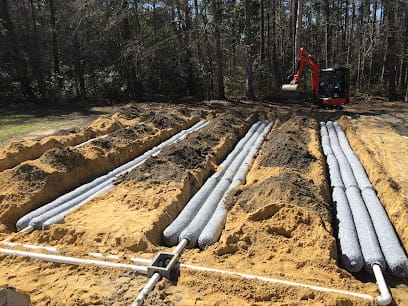
- Mound System Installation for Wet Flatwoods: This is Willard's signature septic solution. Mound systems elevate drainfields 18-36 inches above natural grade using imported sand fill, creating artificial unsaturated zones above the shallow water table. Installation requires: (1) soil evaluation confirming seasonal high water table depth and existing soil loading rates, (2) engineered sand fill meeting ASTM specifications (delivered and spread in 6-inch lifts, compacted to 90% density), (3) pressure distribution system with pump chamber, dosing controls, and high water alarm, (4) distribution laterals placed in the sand fill at precise elevations, and (5) vegetative cover (grass seeding or sod) to prevent erosion. Costs: $18,000-$28,000 for typical 3-bedroom systems including sand import (100-150 cubic yards at $30-$40/yard), pump chamber installation, and electrical hookup. Pender County permits require engineer stamped designs for mounds over 3 feet tall or serving homes over 4 bedrooms.
- Illicit Discharge Correction & Ditch Disconnection: Properties identified with illicit discharge to farm ditches face mandatory correction. Contractors in our directory handle: (1) disconnection of illegal pipes from ditches (capping at property line with concrete), (2) abandonment of old cesspool or seepage pit systems (filling with sand/gravel after pumping), (3) installation of code-compliant mound or fill systems with proper containment, and (4) coordination with Pender County Environmental Health for compliance verification and permit closure. Grant funding may be available through USDA Rural Development or North Carolina Clean Water Management Trust Fund for income-qualified homeowners. Typical illicit discharge correction projects: $20,000-$35,000 depending on distance from house to new mound location and whether grinder pumps are needed to reach uphill sites.
- Depression-Era Infrastructure Replacement: Historic Penderlea homesteads need full system replacement, not repair. Modern installations include: (1) terracotta mainline replacement with Schedule 40 PVC (3-4 inch diameter, properly sloped at 1/4 inch per foot), (2) new two-chamber septic tank (1,250-1,500 gallons for typical homes) with effluent filter and access risers, (3) pump chamber for pressure-dosed distribution, and (4) mound or fill drainfield sized for actual water usage (not 1930s assumptions of 40 gallons/person/day—modern usage is 70-100 gallons/person/day). Total costs: $22,000-$35,000 depending on site conditions, mainline distance, and whether electric service upgrades are needed for pump operation. Historic preservation grants sometimes cover portion of costs for Penderlea Homestead Museum-eligible properties—contact Pender County Historic Preservation office.
- Norfolk Ridge Conventional System Installation: Properties fortunate enough to be sited on Norfolk sandy ridge soils can use conventional gravity drainfields, avoiding mound costs. Installation requires: (1) soil scientist evaluation confirming Norfolk series identification and water table depth over 30 inches, (2) percolation tests (typically 30-60 minutes/inch in Norfolk sand), (3) standard drainfield excavation with gravel aggregate and perforated distribution pipes, and (4) grass cover restoration. Costs: $8,000-$15,000 for typical installations—significantly less than mound systems. The key is verifying Norfolk soil presence through professional soil evaluation before design—contractors can't make soil classification decisions, licensed soil scientists must document this in permit applications submitted to Pender County.
- Mound System Maintenance & Pump Chamber Service: Mound systems require routine maintenance beyond tank pumping. The pump chamber (separate tank between septic tank and mound) needs annual inspection of: (1) pump operation (checking for worn impellers, damaged floats, or electrical issues), (2) check valve function (preventing sewage backflow when pump stops), (3) high water alarm testing (ensuring garage/house alarm sounds when pump fails), and (4) distribution line flushing (clearing any biomat or solids buildup in pressure pipes). Contractors in our directory offer annual maintenance contracts ($200-$400/year) covering these services. Neglected mound pumps fail prematurely (5-7 years vs 15-20 years with maintenance), requiring $1,500-$2,500 emergency replacements during wet seasons when pumps can't be shut down.
- Agricultural Property Setback Consulting: Willard's 10-acre Penderlea tracts and surrounding farms have complex setback requirements when siting new septic systems near agricultural drainage ditches, irrigation ponds, and livestock areas. North Carolina rules require: (1) 100 feet from wells, (2) 50 feet from streams and drainage ditches, (3) 10 feet from property lines, and (4) 100 feet from Class I or II surface waters. Farm ditches are classified as drainage features, not surface waters, but still require 50-foot setbacks. Properties with limited siting options due to blueberry fields, equipment barns, or existing ditches need professional survey work showing setback compliance. Contractors in our directory work with surveyors to prepare compliant site plans for Pender County permit applications, identifying viable system locations that don't conflict with agricultural operations.
- Sand Fill Sourcing & Quality Verification: Mound systems depend on proper sand quality—not all sand works. Pender County requires imported fill to meet specific gradation: mostly medium-to-coarse sand (0.5-2mm diameter particles), less than 10% fines (particles under 0.05mm), and minimal clay content. "Bank sand" or "mason sand" from local pits often contains too much silt/clay and compacts into impermeable layers. Contractors in our network source washed concrete sand meeting ASTM C-33 specifications from certified suppliers, typically hauling 100-150 cubic yards ($3,000-$5,000 in materials alone) for residential mounds. Quality verification involves sieve analysis—testing sand samples through graduated screens to confirm particle size distribution. This adds $200-$400 to project costs but prevents mound failures from improper fill materials.
Navigating Pender County's Coastal Plain Septic Regulations
Pender County Environmental Health enforces strict water table separation requirements adapted to wet coastal plain conditions. For new installations or repairs, soil evaluations must document seasonal high water table depth through deep hole observations during wet season (December-March). Properties with water tables within 24 inches of surface automatically require mound or fill systems—conventional drainfields aren't permitted. The county requires 12 inches minimum vertical separation between drainfield bottom and seasonal high water table, but this applies to the bottom of the mound's sand fill, not the natural soil surface. Mound designs must show adequate "fill depth" above existing grade.
Illicit discharge enforcement is aggressive. Environmental Health staff conduct annual ditch surveys along Doctor's Creek, Moores Creek, and agricultural canals, using dye testing to identify illegal connections. Properties suspected of discharge receive notice letters requiring immediate correction. Continued discharge after notification triggers escalating fines ($10,000 first offense, $25,000 repeat offenses) and potential criminal charges for willful violations. The county works with USDA and state agencies to provide grant assistance for qualifying low-income homeowners facing mandatory correction orders.
Historic Penderlea properties have special considerations. The county recognizes the Depression-era infrastructure legacy and doesn't force proactive replacement of functioning old systems. However, any property sale, major repair (over 50% replacement cost), or documented failure triggers full code compliance requirements. Buyers should demand septic inspection reports before closing—many Penderlea home sales include $20,000-$30,000 post-closing septic replacement costs that weren't disclosed. Real estate agents familiar with Penderlea understand this and budget accordingly.
Mound system permits require detailed engineered designs showing: (1) existing soil properties and water table depth, (2) sand fill specifications and compaction requirements, (3) pressure distribution system components and dosing calculations, (4) expected loading rates and hydraulic capacity, and (5) erosion control measures. Permit fees: $400-$700 for residential installations. Review times: 6-10 weeks during peak season (spring/summer construction period). Contractors in our directory manage permit applications, coordinate soil scientist evaluations, and handle inspection scheduling with county staff.